Presenting our baby to Anesa’s family for the first time was lovely, although December Bosnia is somewhat less fun than in summer. However, it brings one advantage: greenery is resting and allows more to be seen in forests. So after some deliberation in my head I decided to do a day trip to look for some rests of Narentabahn around Ivan pass, being it a perfectly suitable destination for a winter day trip, as the recently finished highway ends with an already third tunnel being built under Ivan pass, and car journey from Zenica takes only some 45 minutes.
I prepared myself the previous evening by downloading a bunch of historical pics of traffic on the railway and started my day by getting a filter coffee in Sarajevo. While there were some two cafes with specialty coffee in the whole Sarajevo in 2022 when I first visited, now there are 7 (mainly branches of Fabrika chain) and a barista in Fabrika told me that they are planning to open one in Zenica too. Yikes!
Pazarić and Tarčin
First true stop was in Pazaric, where some remains of a small viaduct are still to be seen, followed by a tunnel between Pazaric and Tarčin, built in the 1930s to remove the rack section. The entrance to the tunnel was busy, with an elderly man standing near his truck between the opened doors. A well lit tunnel behind him showed that the tunnel was in use. Using my broken Bosnian, I tried to negotiate an entry and journalist photoshoot permission, but to no avail. Later I found out that champignons are grown in this tunnel – it is nice to see some use. Tarčin train station, where Franz Ferdinand (the monarch, not the band) was photographed, looked in a bad shape, however was still inhabited. One local saw me from his flat on the first floor and came out for a chat. I showed him historical pics on my phone and somehow managed to deliver the message that I like trains. He was a chatty fella and complained about the municipality not giving a damn about them and letting the house fall apart. I expressed pity with my face, asked him for a pic and was on my way.
Friendly local living in Tarčin station

Concrete remnants of small bridge near Beganovi

Railway tunnel used today for champignon business

The worker was rather unfriendly and did not let me look inside

Tarčin train station has flats inside

Narrow gauge line went in the valley, 1966 standard gauge railway Sarajevo – Mostar on the viaduct in the back, newest infrastructure addition, highway, in the forefront
The line zigzaged in the valley before starting to climb to Ivan

Raštelica
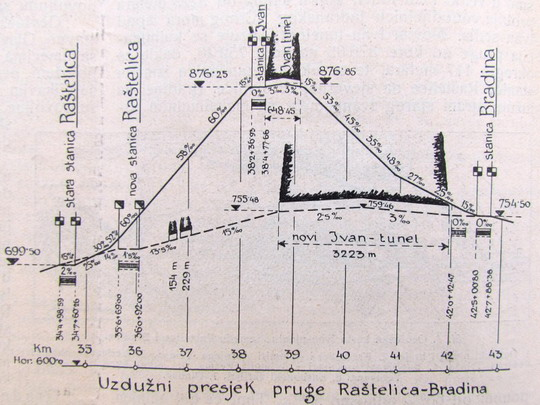
Raštelica is an interesting village (from a railroad enthusiast´s perspective, otherwise it does not deviate from the line of average Bosnian countryside settlements), having not one but two unused train stations – original Habsburg one and one built in 1931 after the railway was moved. Despite the line from Sarajevo to Mostar and Ploče being significant for the state, rack operated single line over Ivan pass, as designed in in 1880s, was painfully slow and costly to operate, requiring precise schedule, splitting of trains and sharing of locos which were double coupling trains over the steep (for a train, not for a mountain goat) slopes. Therefore, Jugoslav authorities proposed an improvement right after the First World War in 1920.
Drawing showing height differences between both routes over the Ivan pass
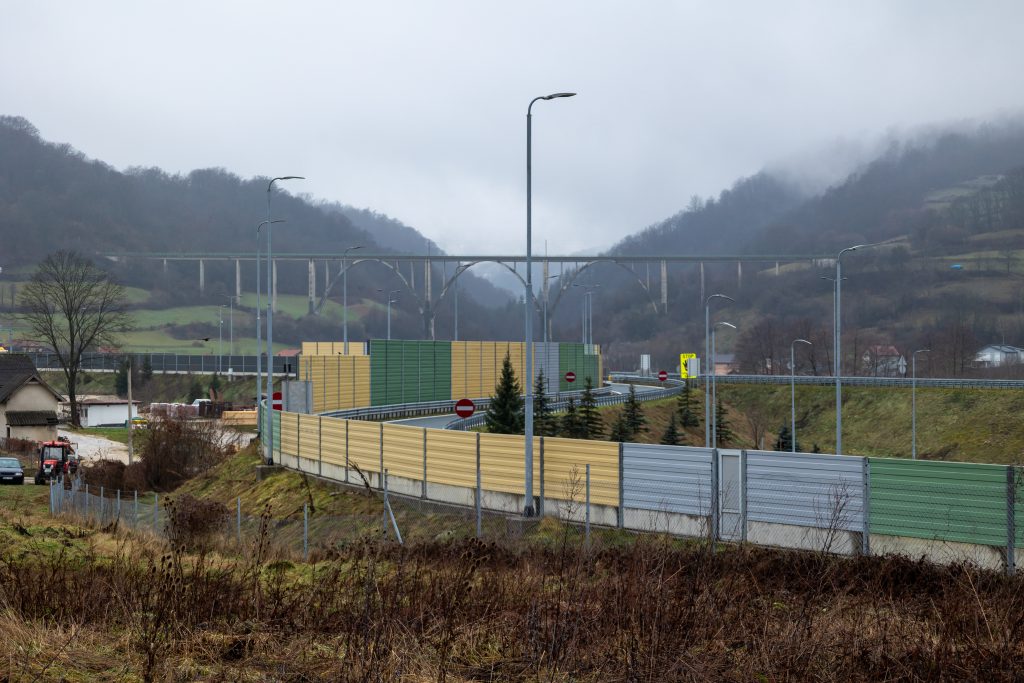
Concrete pillars under the new highway

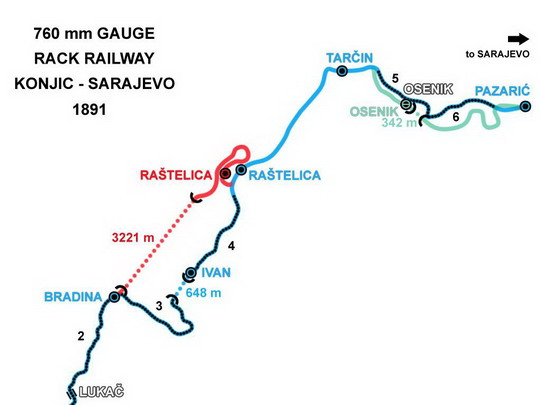
Construction started in 1927 and the new section began operations in 1931. The main simplification was building a new tunnel which would be 3221 m long and be made in a wide profile so it could eventually serve for the planned standard gauge railway. However, it was not until 1935 when the section between Pazarić and Tarčin was converted and the rack section north of Ivan completely replaced by adhesion. However, the operational headache remained, as the traffic was limited by the weakest link in the chain – remaining rack section near Bradina, planned to be replaced too, but another war happened (source: Keith Chester).
Drawing showing the differences in routing after building a new Ivan tunnel (source: željeznice.net)
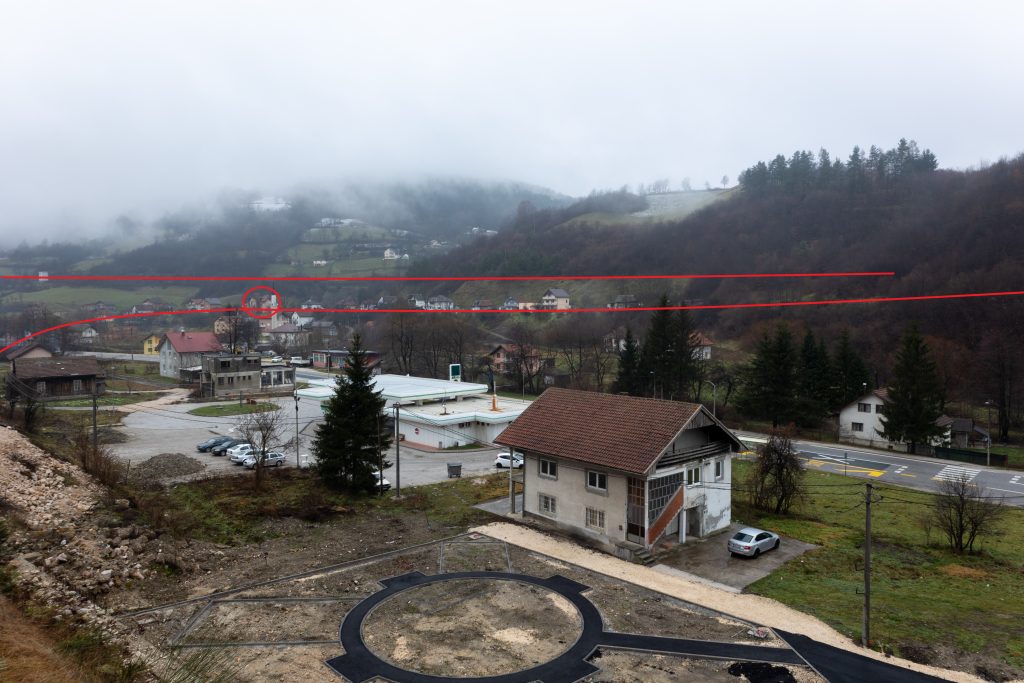
View from the old Raštelica station toward the new one, showing how the railway slowly gained height. Circled is the newer train station, higher line just got out of a tunnel.
1930s Raštelica station is a sad sight


The result was a loop in Raštelica with a brand new railway station. I followed the path of the railway north of the new Raštelica station which turned out to be in a desperate state. Windows boarded, walls crumbling, roof collapsed. It does not seem that the building can be still saved. What can the weather do in 60 years! I left the village in a car and drove through the first tunnel, being used by a farmer living above. There I parked and tried to get into the second tunnel, which turned out to have collapsed or was intentionally blocked by soil. Right above the portal the standard gauge Sarajevo – Ploče railway was running, currently stopped due to November floods south of Ivan. After some crawling through bushes I found the other entrance to the tunnel, explored a bit further and then drove back to the decrepit station.
On the way to the first Raštelica tunnel, original Habsburg station would be in the valley on the right
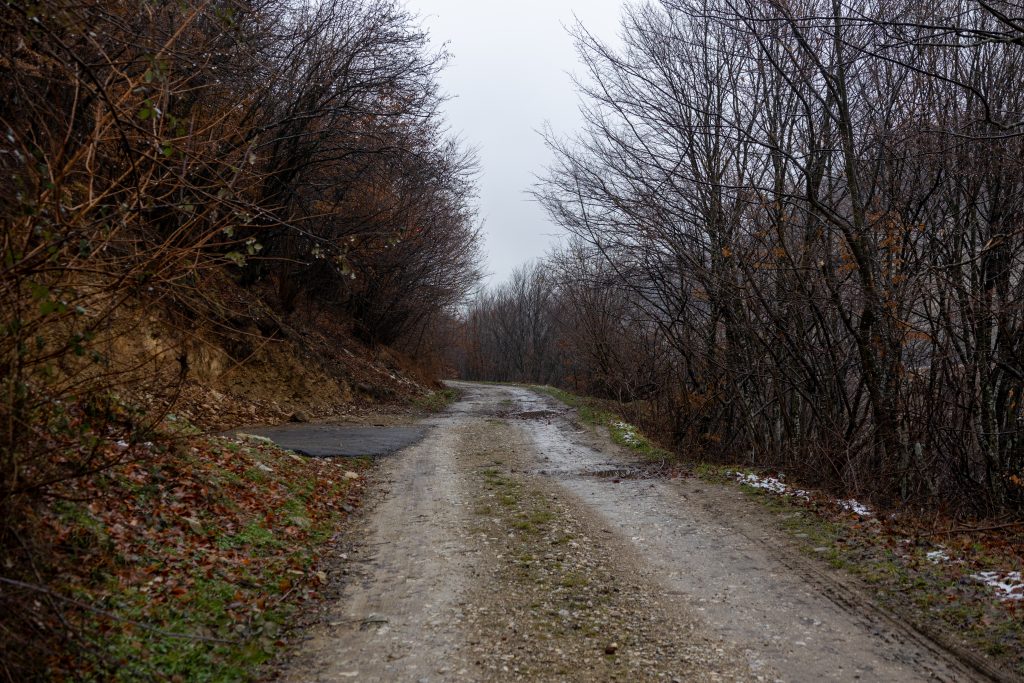
Standard gauge above, narrow gauge below.The tunnel is used today to drive to few farming houses behind it.
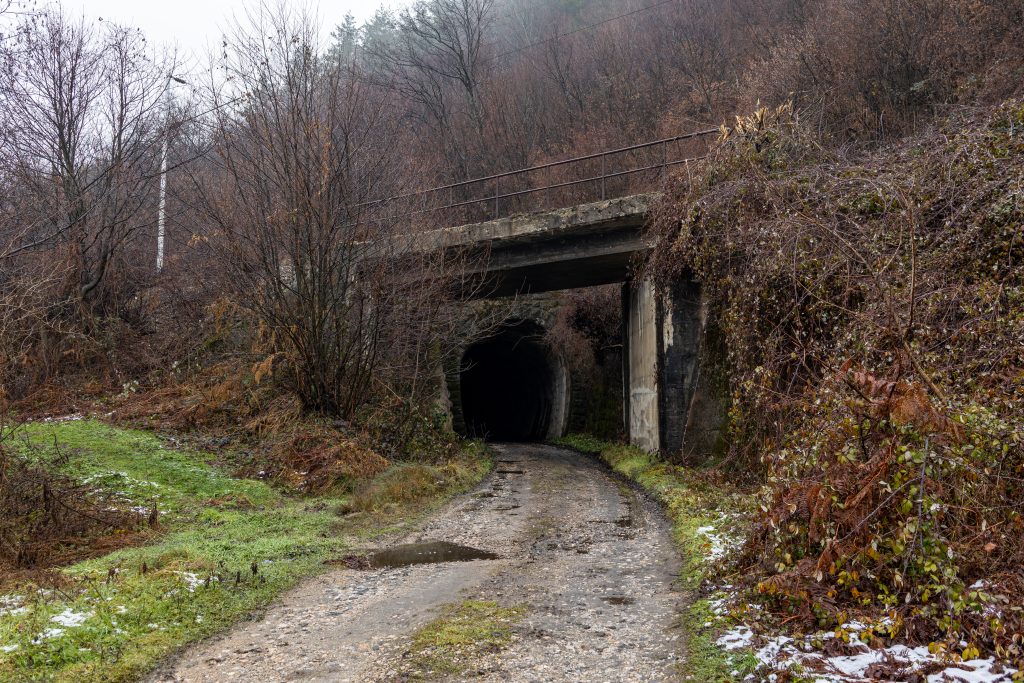
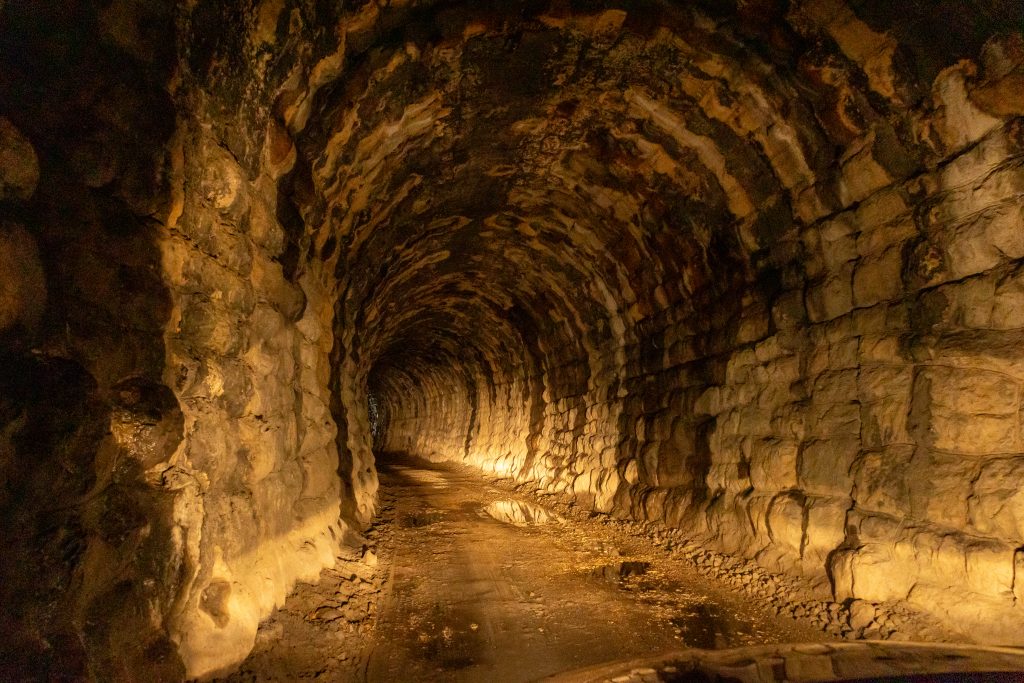
Second tunnel is blocked by dirt and overgrown.

Railway ran on this bank above Raštelica
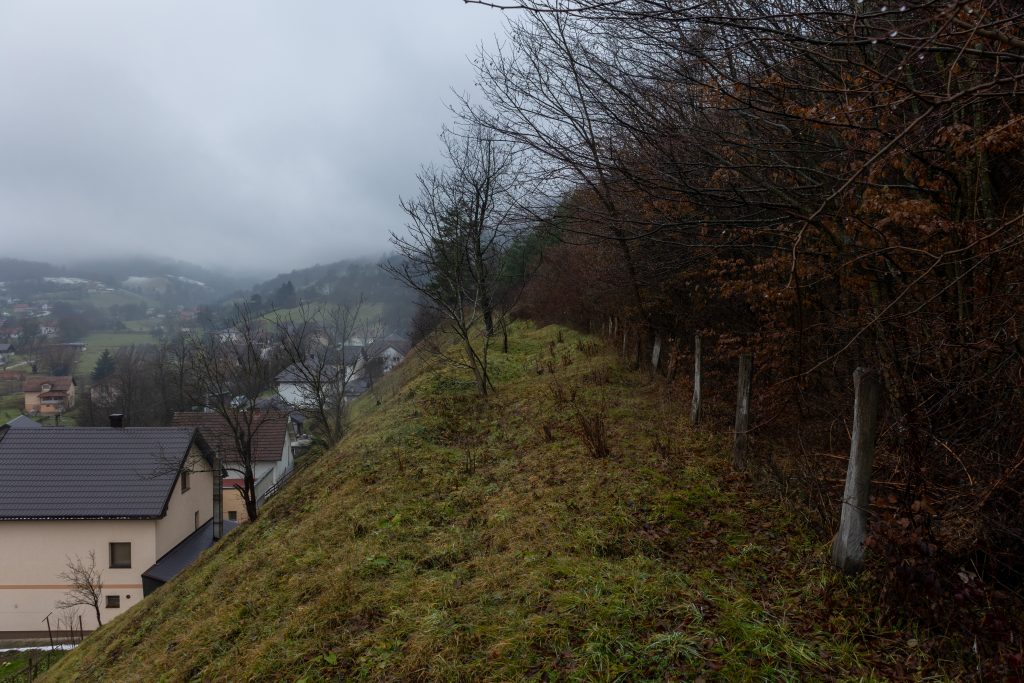
Raštelica. The railway ran on the road, along the hill, before turning around.
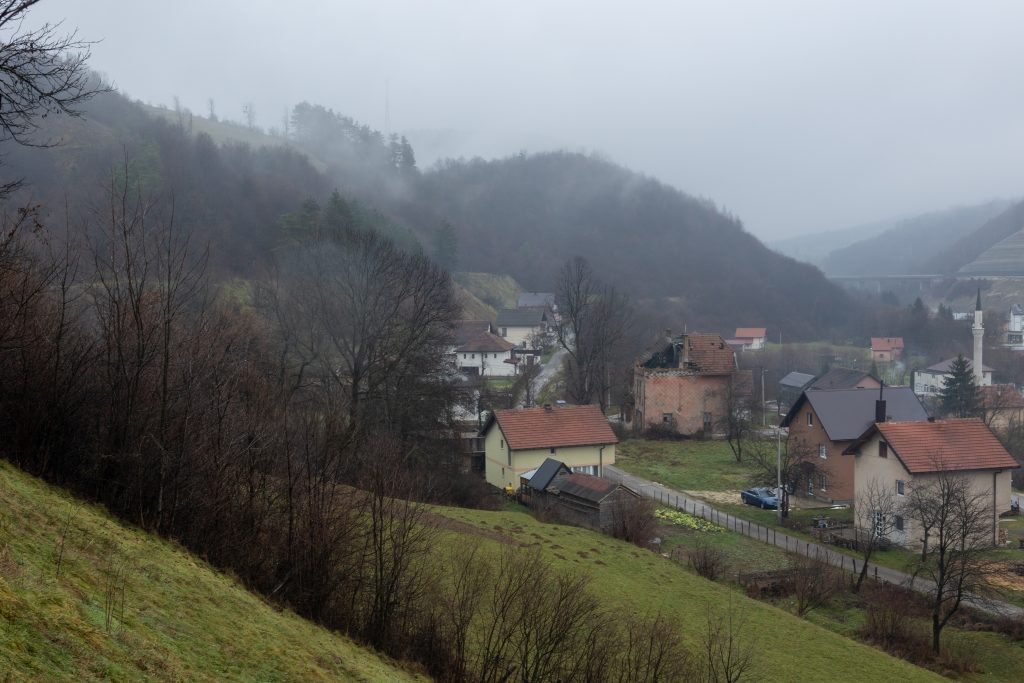
I asked a man working outside of his house about the train station and he pointed me towards a shiny white building I saw when arriving. I was genuinely happy that at least the old Habsburg train station is in a perfect shape and has found a new purpose. Kids having a school day were observing me as I climbed the nearby slope of the newly constructed highway to take some pictures. Behind the building the old railway route I drove on one hour before was visible, cutting the slope.
The original Raštelica station before rerouting in 30s took place (so this is the Habsburg station) was renovated and serves as a school. Note that the 1930 rerouting was running along the hill in the back before looping 180 degrees through tunnel back.
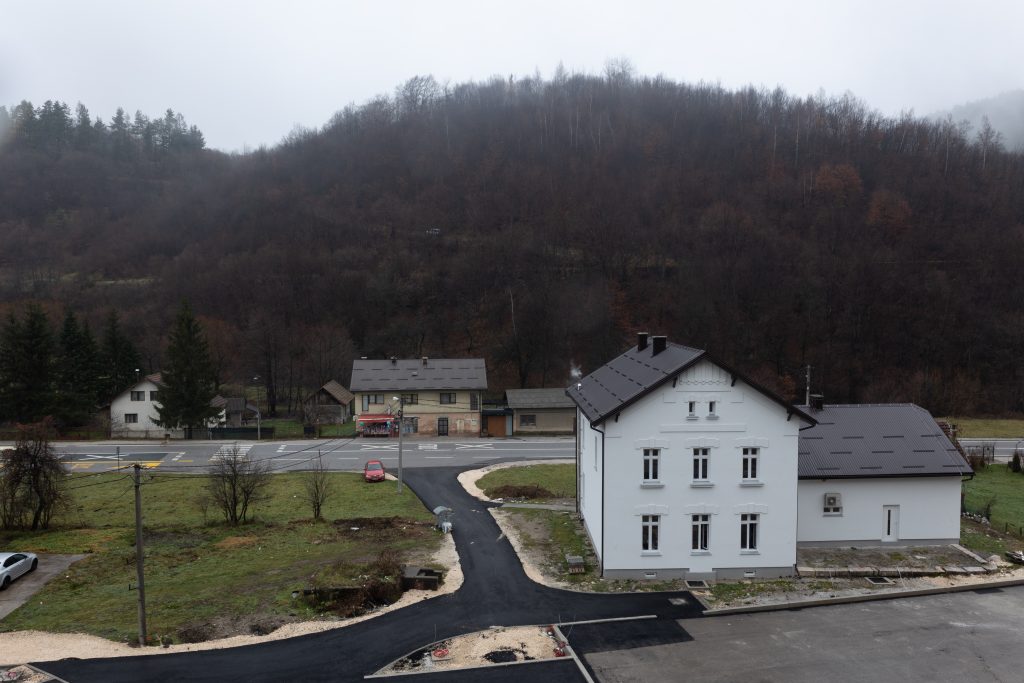
Bradina
It was time for some more tunnels! I drove over the Ivan pass, following the original path from the 1880s and through the old Ivan tunnel which was widened and serves for cars till today. I did check the other side of the newer Ivan tunnel. Narrow gauge enters the rock through a different tunnel mouth and they join after some 30 metres.
Narrow gauge entrance into Ivan tunnel, Bradina
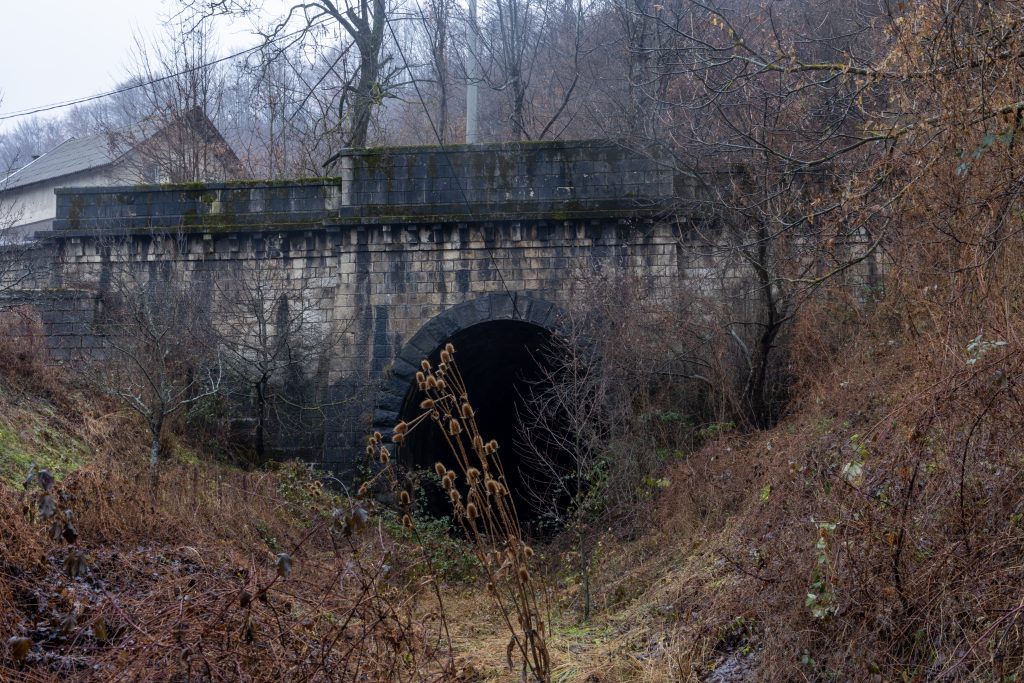
Bradina

Lukač Bridge & Brdjani
Not long after I took a turn to the left towards the village Šunji, again following the route trains used to take. Parked right at the end of the village, I embarked on foot towards the bridge over Luka gorge. One of the most famous parts of Narentabahn, definitely very photogenic. On each side remnants of Austrian forts for defending this vital part of the railway were built, one is still somewhat preserved, the other resembling a medieval castle ruins. Not that I was surprised to find something creepy again – besides a somewhat rundown hut (later I read that it is a water mill) in the gorge itself, the slope was covered by a garden with various pieces of junk and garbage flying in the air on a string, serving to protect lonely freezing cabbage against birds and evil spirits. I carefully crossed the steel bridge on foot. I tried taking pictures, but despite it being winter and trees being naked, nothing good really came out of it, everything hidden behind thick branches. Seems like I will have to come back with a drone.
Leaving the main road, I turned towards the village Šunji. Railway ran just next to the strengthening wall on the left and first tunnel followed.

Škoda, look at that!
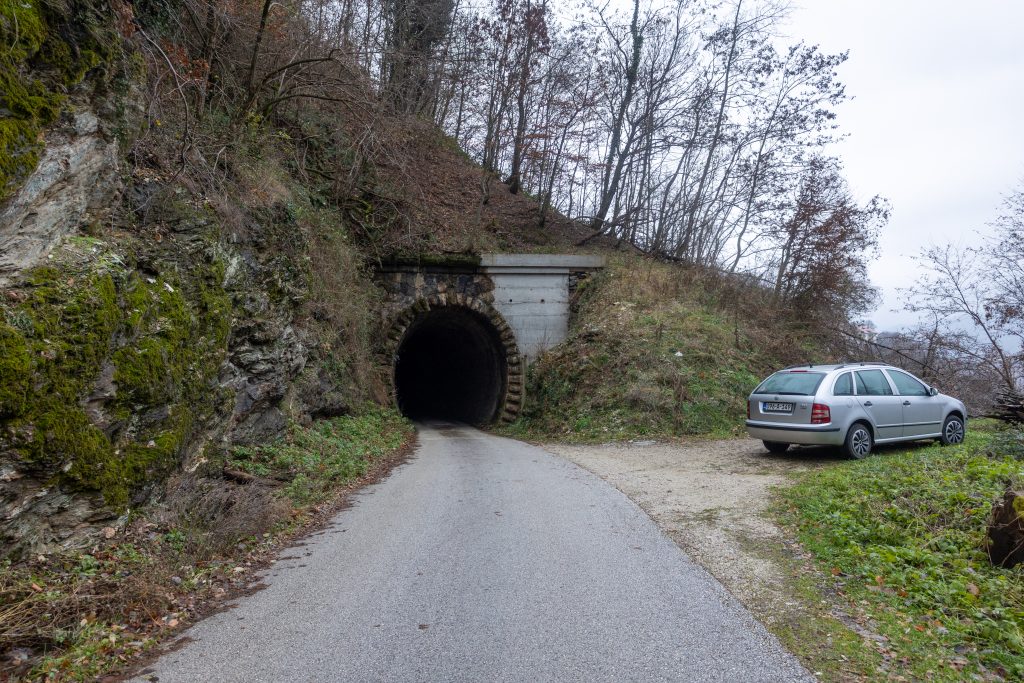
Leaving Šunji towards the iconic Luka bridge.

After leaving the village of Šunji, remnants of a small bridge appear

The tunnel is somewhat blocked, but you can drive through wit a semi-decent car.

After getting out of the tunnel, an Austrian fort appears on the left. This fort was built on both sides of the bridge. The one closer to Šunji is in much better shape.

The famous bridge over the Luka gorge.


The remnants of the fort after crossing the gorge ressemble ruins of some medieval castle.

Approaching Brdjani, looking back to Luka

After a few hundred meters I reached an old railway station Brdani, proudly serving as a residence today, looking in a fit shape and what is more, having a little railway enthusiast display in the garden, with rails, rack and signpost. Lovely! While walking back I took a path around the Luka gorge and confirmed that the whole path between Šunji and Brdani is driveable if you have balls and hate your car enough. Great day!
Brdjani train station is inhabited. It even has a small display dedicated to the railway with rack parts! The railway continued to the left side of the station, current dirt road follows it.


Below Brdjani station

Tunnel below Brdjani. Time to get back, it´s getting late.
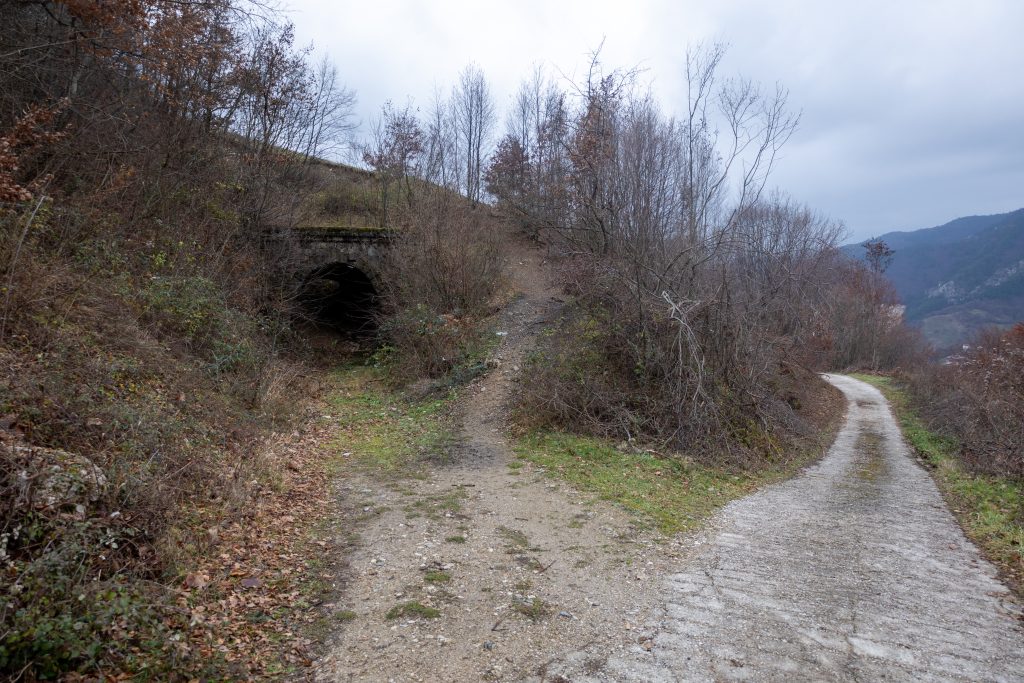
Last spot was this place, old narrow gauge ran on the ride side of this valley, with standard gauge running in the back on the viaduct.

Leave a Reply