Habsburg Era
Mirror, mirror on the wall, which narrow gauge railway in Bosnia was the most beautiful of them all? Many would answer Ostbahn and who could blame them? With its 99 tunnels and 118 bridges, it was a spectacular feat of engineering, running through beautiful gorges of rivers Miljacka, Prača and Drina. But it also characterized what was wrong with Habsburg occupation of Bosnia, not very fondly remembered till today: vanity project with little significance for Bosnians, relevant only for the Habsburg occupier who made the local government (and therefore local taxpayers) pay for it.
Origins of railways in Bosnia are closely connected to the rule of Austria-Hungary. It is undeniable that the province under Habsburg rule developed, the question is how much and if it could have been better (obviously yes, it can always be better, but that is not what I mean). I originally tended to see Habsburg rule of Bosnia as an era of development. Stunning railways, beautiful city hall and housing in Sarajevo, rise of literacy. However, Habsburgs were no altruists, and Bosna served them somewhat as a colony, as they did not have any oversea ones. Exploitation of natural resources was number one priority, along with military control and possible expansion in the Balkans. Regarding the railway construction, the problem with development of railways in Bosnia under Austria-Hungary was twofold.
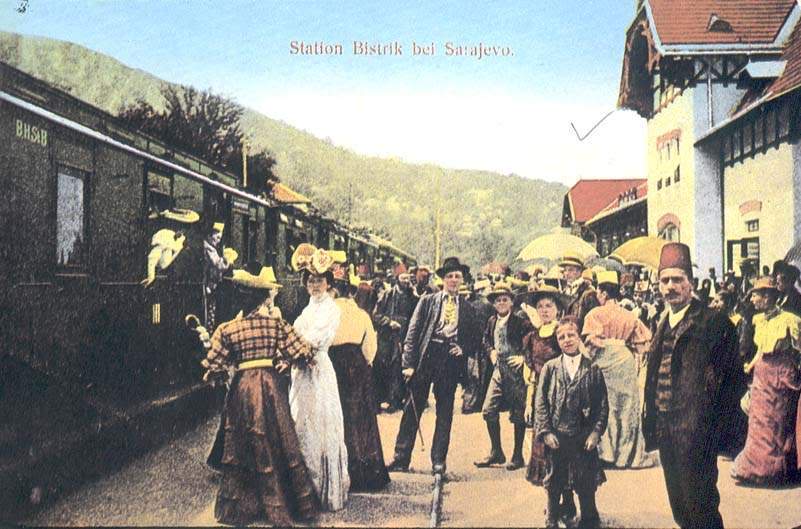
This stunning pic was taken in 1910
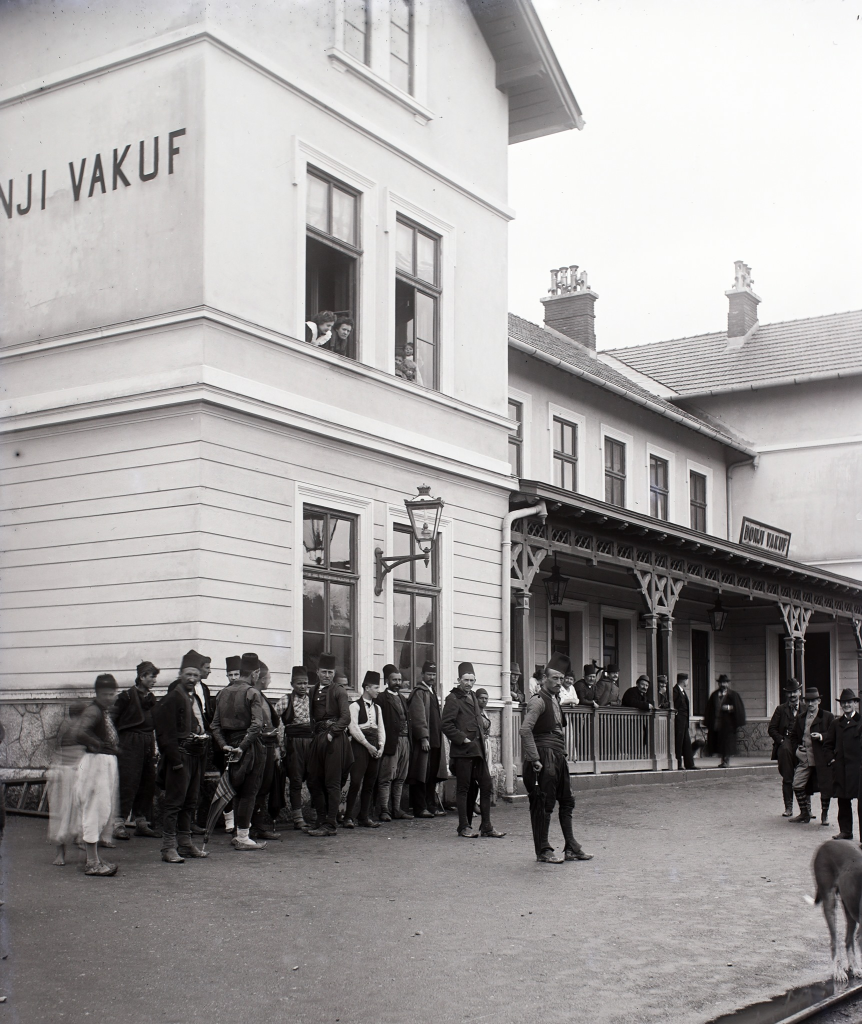
Firstly, new railroads mostly did not have the interest of the province at heart. Besides some main lines that were undeniably beneficial also to the locals (such as first Bosnian railroad Bosnabahn in the valley of river Bosna, north of Zenica; or Narentabahn, connecting Sarajevo with Mostar and the Adriatic sea), most railways served the interest of the monarchy. Militarily, as was the case with Ostbahn or Dalmatinerbahn, or economically (various railroads serving exploitation of Bosnian natural resources). Ostbahn was truly an engineering marvel. Navigating difficult terrain along three river gorges, it required 99 tunnels and 118 bridges along its length of 166 km! The views were stunning and the railway quickly became popular with tourists. However, it was very expensive and fully funded by Bosnian taxpayers even though it served no other purpose than strategic and force projection for the empire. It was built in a poor quality, requiring immediately some degree of repairs; and did not connect any important settlements (that is except Višegrad) or industrial centers. Traffic was therefore rather small. Effectively the locals were funding a very expensive vanity project for the occupiers because they said so.
Beautiful Bistrik station in Sarajevo, part of Ostbahn
Secondly, the development of the railway network in Bosnia was thwarted by power games between ever-competing Austria and Hungary, sharing somewhat equal powers in the empire since 1867. Unfortunately for Bosnia this meant that the mutual blocking prevented construction of several railways. Jajce and Banja Luka were never connected. Spalatobahn, which was intended as a second connection to the sea by reaching Split (Spalato is Split in Italian), was finally mutually agreed to between Austrians and Hungarians in exchange for a Hungarian wet dream, the standard gauge connection between Sarajevo and Budapest, just before the war (after decades of bickering). Before any of these proposed railways could materialize, world war happened, and proved the railway network of Bosnia hopelessly inadequate for any war effort.
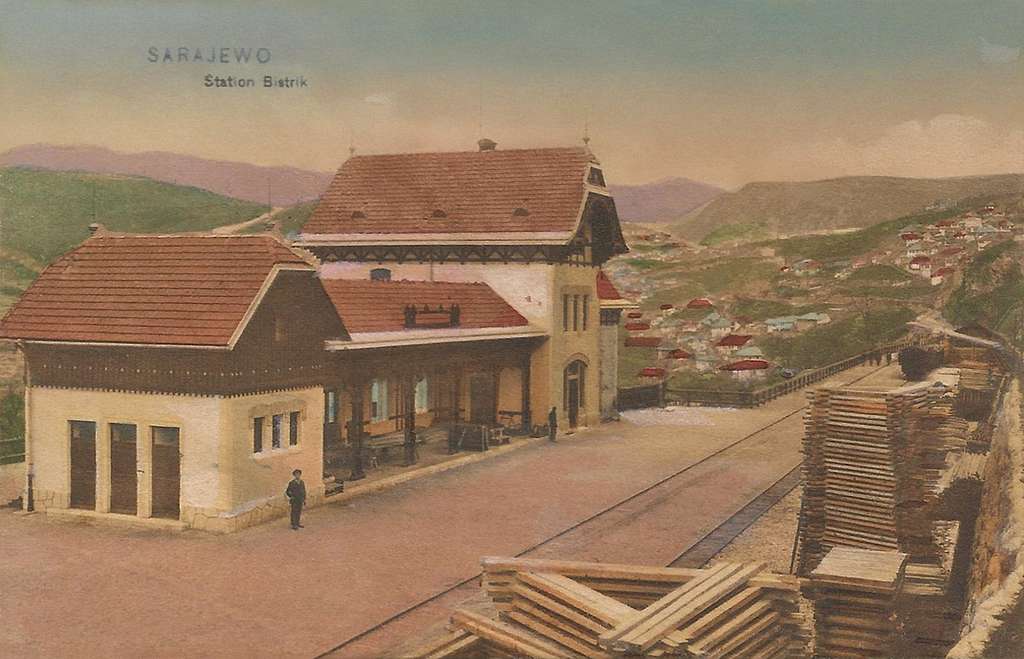
Ostbahn above Sarajevo is clearly visible in this pic from the end of 19th century

Other characteristic developments were various industrial and forestry railways, among which Steinbeisbahn, named after Austrian businessman Otto Steinbeis, is the most prominent. Forestry railway can mean a lot: most common in Europe were lighter tracks, starting with light rails only for cargo cars carrying logs that were moved up the hills empty using horses and down with logs using gravity, or for smaller locos. These tracks were often moved from valley to valley after the timber was harvested. The network of forestry railways often looked like a tree of life. Steinbeis also had a vast number of side branches, but the main line Knin – Drvar and beyond had parameters of a standard narrow gauge line when it comes to its overall quality, size of the network and its organisation. Otto Steinbeis chose Drvar as his seat in Bosnia and the line right behind the town is rather interesting, with its reversal point at Oštrica, climbing the slopes above the town towards Oštrelj before disappearing into deep neverending woods on a mountain plateau. There were of course other forestry railways, Usoratalbahn or Krivayatalbahn among others, but Steinbeis was by far the most vital.
First World War
Internal squabbles between Austrians and Hungarians backfired and cost them dearly when the fighting broke, leaving their armies dependent on supply horses. Extension of Steinbeisbahn to Prijedor was quickly finished and proved vital to the Austro-Hungarian war effort. Steinbeisbahn was later also connected to Spalatobahn in Jajce. Fighting and defeating Serbia took the empire longer than anticipated and showed that the empire was in a worse state than it seemed before the war. Montenegro and Albania were finally conquered in 1916. Austrian dream of overseeing the Balkans was finally fulfilled (as the Habsburgs would say: endlich!), but lasted only two years (leider!), until Austria, after hundreds of years of being a European superpower, became a small state of local significance (Gott verdammt!).
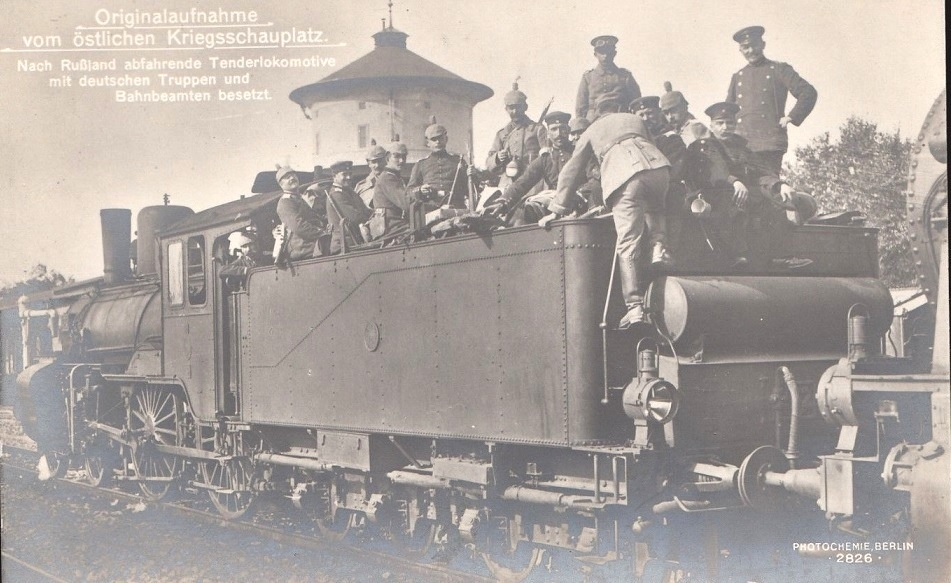
Soldiers on top of a loco sometime in 1916 in Serbia
Yugoslav Kingdom Era
Yugoslavia was a dream destination for Czechs in the 1980s and it continues to this day in the shape of the successor Croatia. I had my fair share of visits to the Adriatic coast as well, despite not being a big seaside vacation fan. However, it was only when I was reading the chapter about railways in Yugoslavia in Keith Chester´s book when I finally realized that Yugoslavia comes from Yugoslavs = southern slavs. It feels so obvious now! The idea was a state unifying all slavic nations living in the south of Europe, and somewhat replaced the original idea Serbs had about reinstating Big Serbia (what is up with the never ending number of used-to-be-big countries that miss their old dominant days?). When the old Austro-Hungarian oppressor finally collapsed in 1918, it was the time to make it happen. And so on 29 October 1918, the day after Czechoslovakia was declared, the Kingdom of Serbs, Croats and Slovenes was declared, since 1929 officially named the Kingdom of Yugoslavia.
War damage on railways was fixed quickly (and as Keith Chester writes in his book, was rather small, main issue were years of neglect). Many grand schemes for development of the railway network were presented. It needs to be stated that until 1918, the whole area of Yugoslavia was separate and under the interests of different players. The new state was a group of different ethnicities without much in common that could define them as a nation and bring some unified national feeling. It seems that the railway network needed the same thing as the new state: cohesion, connection and unified goal and plan. Unfortunately, neither the state nor the railway network in the interwar years have achieved that. Besides having a reliable connection to the sea port with a decent capacity, lack of railway connection between Serbia and Bosnia are cited by Keith Chester as main issues. But at least some railways were given a line of life, such as Ostbahn, which was extended to Serbia and connected Sarajevo with Belgrade.
Main construction relating to Bosnia was following:
- Ostbahn: connection between Sarajevo and Belgrade via Ostbahn from border station Vardište to Užice in Serbia (1925) and Uvac – Priboj in Serbia (1929)
- Dalmatinerbahn: Trebinje to Bileća in Montenegro (1931) and Nikšić (1938)
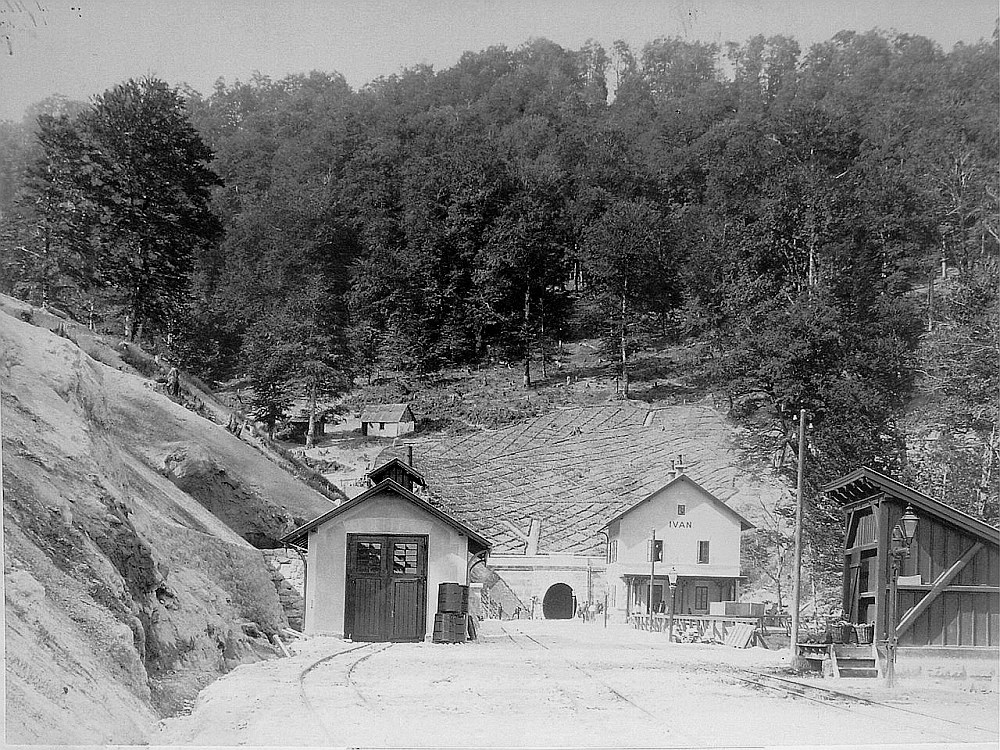
- Narentabahn: removal of rack sections around Raštelica and Tarčin and new Ivan tunnel (1931)
- new line Ustiprača – Goražde – Foča (1939)
- rebuilding of the line Bosanska Rača – Ugljevik to 760mm gauge, which remained isolated from the rest of the 760mm network (1922)
New Ivan tunnel, 1930s
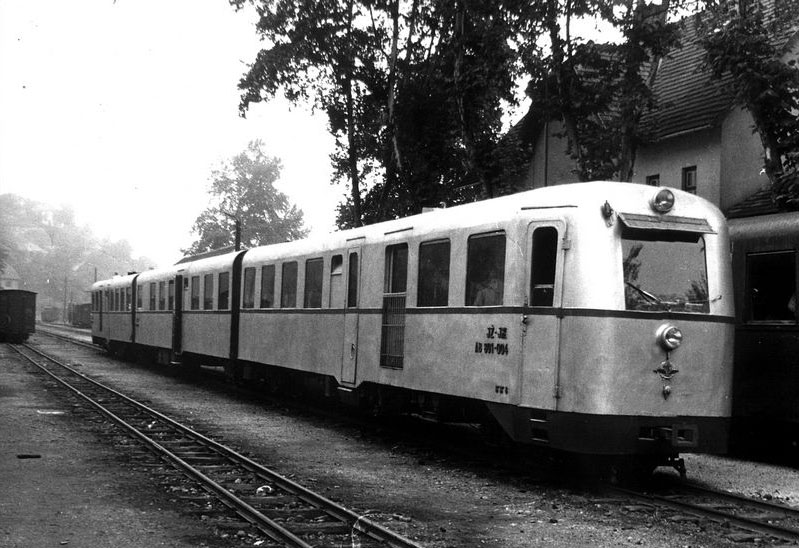
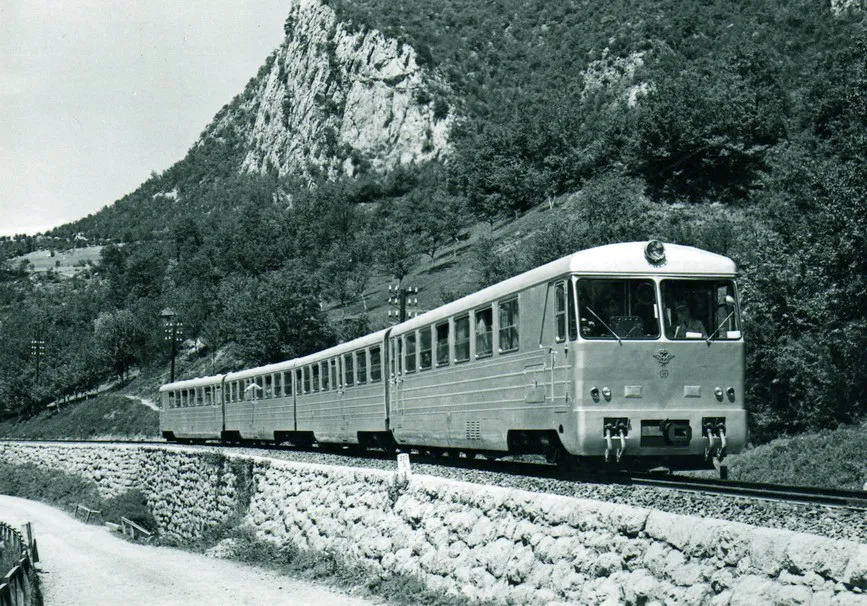
The interwar period also brought the first diesel engines to Bosnia: modern, shiny and handsome diesel trains were run mainly on Narentabahn from 1938 onwards and earned the nickname “Mad Sarajevan”. Besides bringing comfort to passengers, they were also capable of overcoming the remaining rack section south of Ivan tunnel by adhesion and therefore, shortening the trip between Sarajevo and the Adriatic coast from 23 hours 58 minutes to 16 hours 38 minutes (credits again to Keith Chester who studied the timetables). Needless to say, these were purely passenger trains. Unfortunately they were also expensive and were soon moved to provide connection between Sarajevo and Belgrade. Benz railcars nicknamed the Mad Sarajevan were somewhat the only glimpse of modernity on railways of the interwar Bosnia, other plans such as electrification of Narentabahn or introduction of sleeper cars unfortunately did not go to fruition.
Behold the Mad Sarajevan!
Second World War
On 6 April 1941, the war finally directly entered Yugoslavia as Nazi Germany attacked, their goal being securing the Balkans which Italians previously failed to do. The days of careful balancing in order not to enter the war were over when Yugoslavia was forced to sign a treaty with Axis. Following a coup against this, the country got invaded to enforce Hitler´s will. Yugoslavia turned out to be a tough nut to be cracked. Despite the fact that the country itself was conquered very quickly (blitzkrieged, shall we say?), in just over 10 days, the partisan movement soon turned out to be a huge headache for occupiers and became a symbol of resistance against Nazis. Leading the partisans catapulted Tito, the communist leader, into the presidency of Yugoslavia after the war.
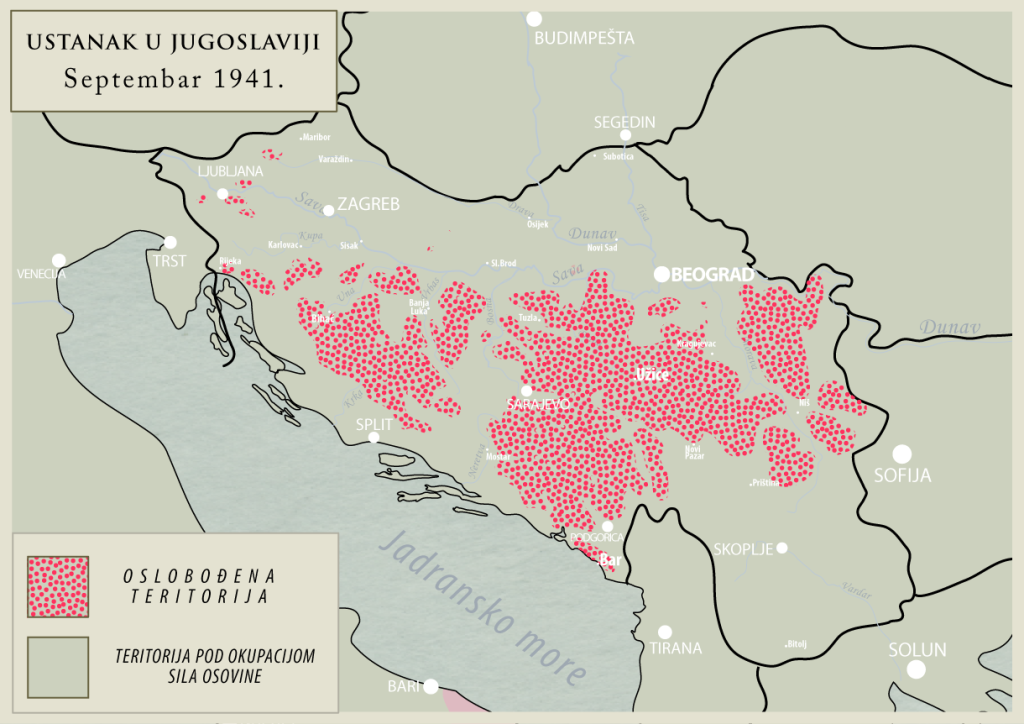
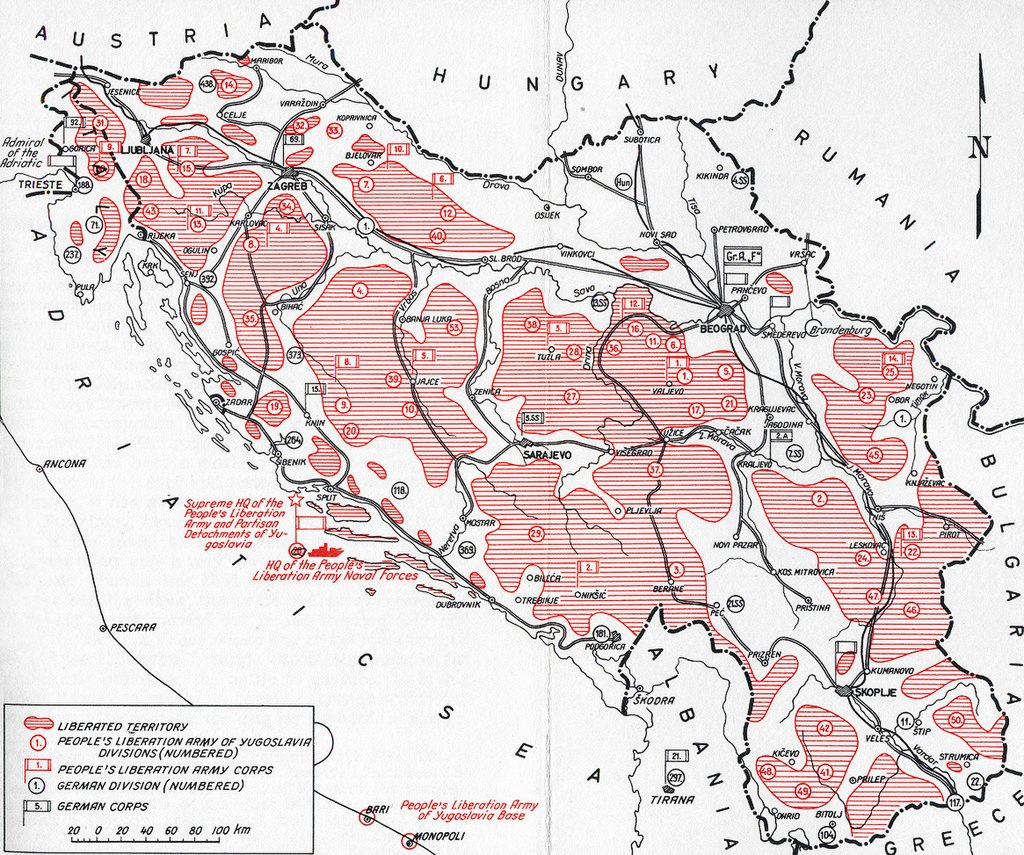
Partisans utilized the railway network to their benefit. Occupiers (Germans and Italians) often did not manage to hold more territory than just bigger towns and the closest vicinity of railways, and this was actually true already from the autumn of 1941 (when Germany was still on winning streak in Europe and Africa). Just look at the map of partisan held territories from that period (source Wikipedia):
In 1944, when Germany was already losing the war on all fronts and Italy was out of the picture, it looked even more desperate for Germans and their allies (source Wikipedia):
The terrain of Yugoslavia was very difficult for constructing railways and even more difficult to occupy. There were two biggest groups opposing Germans: Partisans led by Tito and supported by the USSR, and royalist Chetniks led by Draža Mihailović and supported by the West. Tito is remembered today mainly because they gave the occupiers the biggest headache. Their bold actions and courage meant that they were eventually recognized even by the West. Chetniks and Mihailović were less active and remain highly controversial due to their alleged collaboration with Germans (against communists) and atrocities towards civilians (it shall be noted that communist Partisans did the same – you know, war..). I will leave discussing where exactly the truth lies to historians.
Keith Chester states in his book that the role of Partisans is somewhat exaggerated due to them emerging victorious, and it is true that they spent a lot of time actually fighting Chetniks and other groups. However, their activity was significant. Among the most famous actions remain Partisan activities against railroads, disrupting the German and Italian supply chain. Yugoslav roads were not particularly suitable for trucks, therefore, railways were vital. They were also prone to attacks – it was almost impossible to guard hundreds of kilometers of railway tracks, mostly single tracked. Mountainous terrain also meant a lot of vulnerable infrastructure such as bridges, and many opportunities to hide.
Collapsed bridge in Rakite, part of Ostbahn, after a partisan attack
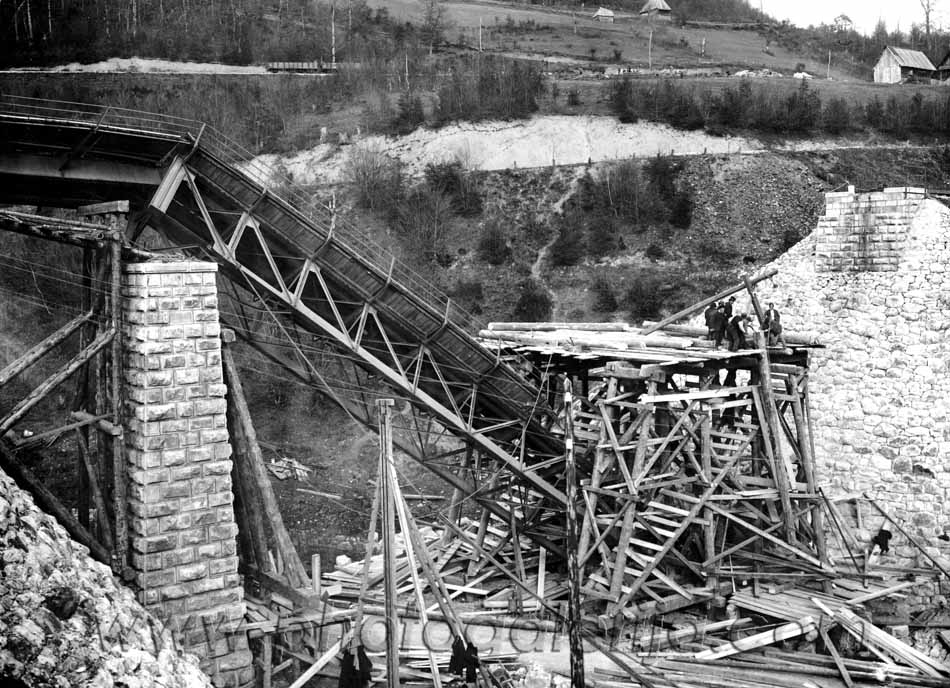
In September 1941, Užice in Serbia was captured by Tito, and the Partisans created the Užice Republic, which survived for some 2 months before they were forced to move by German and Chetnik forces. Užice Republic truly resembled a functioning state, with some 250 km of railways, schools, hospitals and some industry. The following 2 years were tough ones, with Partisans being chased by Germans. In July 1942, Tito decided to move to western Bosnia and in the meantime attacked the rack section near Ivan Pass, destroying 11 stations, 40 locos, 110 wagons, and many bridges (such as the one over Luka gorge). This large attack disabled the railway for some 6 weeks (I must admit to being astonished at the speed the occupiers managed to repair such a vast destruction).
After the attack on Ivan pass, Tito operated from his train “Proleterka” on Steinbeisbahn, operating near Oštrelj and nearby mountainous forest plateau. Axis attacked the Partisans in January 1943 and the forest railway between Oštrelj and Mlinište saw heavy use before Tito´s forces fled towards Konjic. The Partisans famously crossed over the recently destroyed bridge in Jablanica, its torso still peeking above the water (some remains are still in place today serving as a monument to Partisans), and Tito yet again narrowly escaped capture at the battle of Sutjeska in May and June 1943. Establishing their base in Jajce, they operated the railway between Jajce and Donji Vakuf until the end of 1943, until they were forced to move to Drvar. In 1944, Germans were already weakened and pressed hard by the Red Army, the retreat of the German army from southern Balkans was ordered by Hitler in the beginning of October 1944. The Partisans attacked them as much as possible, however, the German army was strong enough to force their way from Serbia to Sarajevo via Ostbahn. Sarajevo was evacuated on April 5th 1945 and soon the Partisans held the whole Bosnia.
Tito´s train Proleterka, somewhat forgotten in Oštrelj, 2023

Tito´s Era & The End
The after war times of Bosnian narrow gauge can be seen as two periods: restoration and development after the war and rapid decline and abandonment in the 70s. The narrow gauge was obviously very limited. Already under Austria-Hungary many railways were built with the vision of standard gauge eventually replacing them. Ostbahn was considered for standard gauge originally and as a compromise was built at least with standard gauge clearing (of course this was rather unrealistic, as all tunnels were not built with standard gauge profile). Sometimes the standard gauge was a first choice, only to be switched to narrow gauge due to economic reasons. The 1931 tunnel under Ivan pass was built with standard gauge clearing for the future regauging of the railway between Sarajevo and Mostar (which turned out to be rather a new railway than rebuilding of the old one). Nevertheless, despite narrow gauge being arguably obsolete in the after war period due to low capacity and low speeds, it remained heavily in use. Yugoslavia suffered such heavy damage in the war that it was not thought possible to speedily replace the narrow gauge network. The new socialist republic quickly managed to restore many railways back to somewhat working order. Keith Chester states that approximately 50 % of the network was damaged from war. Retreating Germans destroyed what they could from bridges and other infrastructure to tracks themselves using the infamous Schienenwolf.
Busy Višegrad station in the afterwar period

Besides the repairs and new lines of the vast network of forestry railways (such as ŠIPAD railway or the Ugar system), and new construction of industrial lines (Banovići mine, mining at Bosanska Mezgraja or Zenica steelworks), the state narrow gauge lines were barely constructed anymore. The focus was on standard gauge which started replacing the obsolete narrow gauge on the main lines. Main line from Sarajevo north to Doboj was regauged to standard gauge already in 1947 as part of the new line from Šamac to Doboj. The Bosnabahn tracks were lifted and the remaining part was operated from Brod to Doboj. Narrow gauge tracks to Zenica were preserved to provide Zenica steelworks with iron ore from Dubrovnik. Una valley railway, started in 1936, was finally finished in 1948, shortening Steinbeisbahn from Knin to Lička Kaldrma. The biggest undertaking was, however, the long planned Sarajevo – Ploče line. Started in 1948, this turned out to be more complicated than expected and was finished finally in 1966.
Part of complex network of Ugar system on the old Yugoslav map
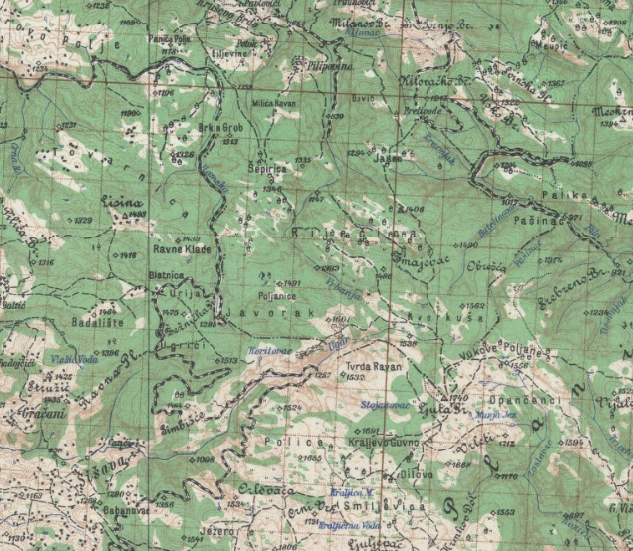
The authorities counted on maintaining the narrow gauge network as a supplementary system to the standard gauge all the way until the 1960s. Yugoslavia was not a typical centrally planned economy, and after the split from the Soviet Union, the country pursued a hybrid model with decentralized management. Railways were divided between separate entities following their nation borders with Bosnian railways under ŽTP Sarajevo, one of five regional Railway Transport Enterprises. Yugoslav Railways as the national transporter had surprisingly very little to say when it came to decisions about the fate of railways. So while in the 1960s ŽTP Sarajevo generally counted on the remaining narrow gauge as secondary lines, this suddenly changed in the 1970s. The narrow gauge had its limitations and in the 1960s it was not only obsolete, but also in a need of investments, with infrastructure being worn out and rolling stock as well as locos being several dozens years old.
Timber industry
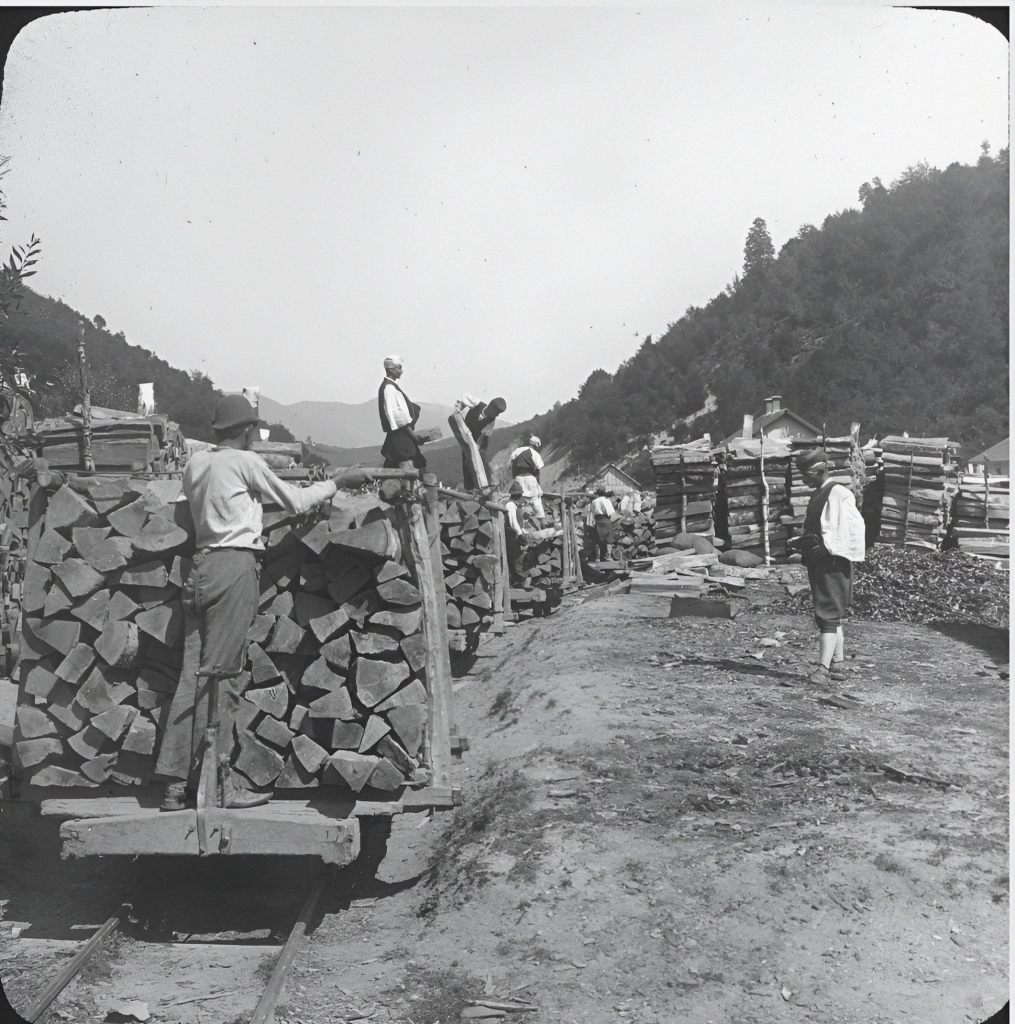
Some railways were closed due to being replaced by standard gauge, as was the case with old Bosnabahn north of Zenica, or more importantly, new line Sarajevo – Ploče, opened in 1966. This was a severe blow to narrow gauge, as it divided all remaining lines into two parts: southern, with railway from Gabela via Hum to Dubrovnik, Zelenika and Nikšić in Montenegro, and northern consisting of Ostbahn, Steinbeisbahn, Spalatobahn, Krivajatalbahn and some other smaller ones. This prevented sharing of locos and rolling stock in case of need. Following this, there were some line closures towards the end of sixties: section between Olovo and Han Pijesak of Krivajatalbahn was closed in 1968, line from Hum to Zelenika was closed in 1969, same as Bosanski Brod – Derventa and Šipovo – Srnetica part of the Steinbeisbahn. In 1970, Jajce – Šipovo was closed.
Steam remained the workhorse of the narrow gauge until the end (1970s)

However, the rest was planned to be preserved. Yugoslav producer Duro Dakovic provided modern diesel engines which were supposed to replace aging steam motors. It was even hoped that they could overcome Komar pass by adhesion, but this turned out to be too hopeful. Another modern train by the same producer was class 802 intended for passenger use and serving mainly Dalmatinerbahn. However, this was insufficient to sway the new management of ŽTP Sarajevo away from the decision to get rid of the narrow gauge as fast as possible in the mid 1970s, despite recent investment in dozens of diesel locos. Narrow gauge was slow and was facing competition from bus companies. Buses were seen as modern and with the development of the road network, passenger numbers were dwindling. Dalmatinerbahn was, however, a proof that if modernization was pursued, narrow gauge had a future. With new 802 rail cars bringing comfort and speed, passenger numbers went back up. But the drop was not only in passenger traffic – forestry, a large and important industry, invested rather in forest roads and lorries, and the importance of “šumske pruge” was decreasing.
Duro Dakovic modern diesel somewhere on Steinbeis (taken from Eric Scherer video on YouTube)
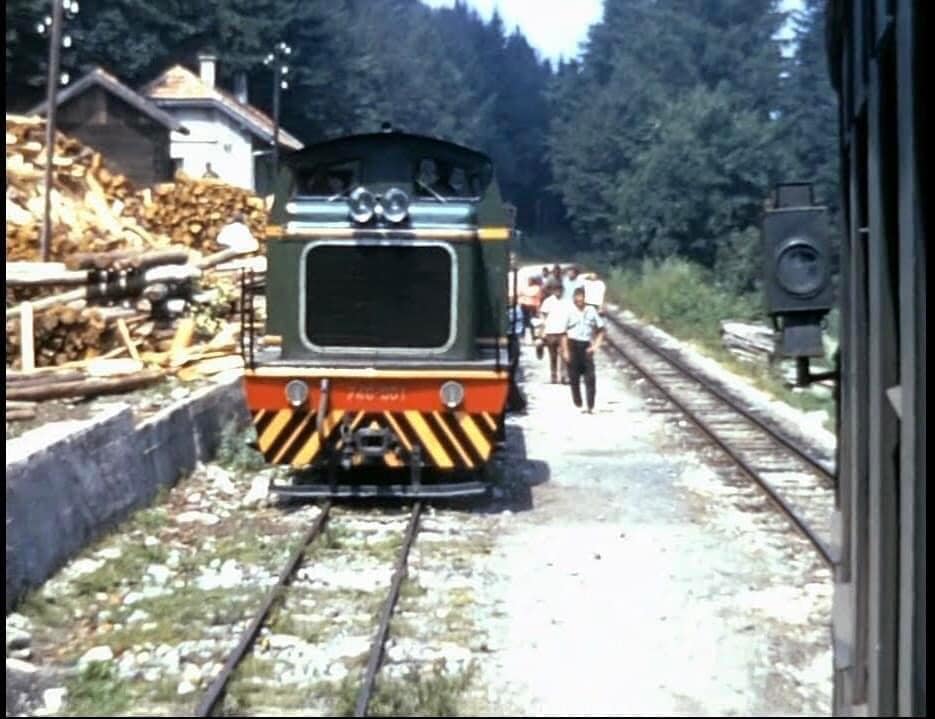
And modern 802 railcars, here entering Ustiprača
And so the remaining narrow gauge was closed within a few years: 1972 saw closure of the line Donji Vakuf – Gornji Vakuf, 1973 of Lašva – Jajce. Ostbahn was to be regauged to standard gauge, which never happened, and section Titovo Užice in Serbia to Višegrad closed in 1974. The new management of ŽTP Sarajevo wanted to get rid of the remaining lines as fast as possible, and in 1975 decided to shut down the remaining railways, even though it was very detrimental towards locals without any good alternative of transport. The remaining part of Dalmatinerbahn between Čapljina and Dubrovnik & Nikšič was having steady passenger traffic and new diesel trains, but was closed in 1976. Ustiprača – Miljevina was first cut down to Foča and then closed completely in 1977. Steinbeisbahn between Prijedor and Drvar shut down in 1975, between Lička Kaldrma and Drvar in 1978, same year as Ostbahn. All tracks were usually removed immediately afterwards with the exception of Ostbahn, which was considered for tourist purposes as well as for Sarajevo winter Olympic games in 1984. Wouldn’t it be lovely if it transported visitors between Sarajevo and Jahorina mountain near Pale?
Decrepit Bistrik, tracks avoiding removal for few more years thanks to plans to use it for Winter Olympic Games

“What if” is a popular way of pointlessly contemplating what could have been, easing our mind in imagining a preferred result in spite of the real life. What if ŽTP Sarajevo was more open minded, ballsy and tried to preserve remaining narrow gauge lines in the 1970s? I believe that we would have at least one more preserved railway in place. Even if the traffic would be preserved all the way till the civil war, it is questionable whether there would be a desire to renew the traffic after the war. Steinbeisbahn area was hit and many inhabitants were forced to leave (Oštrelj is a good example). Without connection to Steinbeis, it is questionable whether a railway from Travnik to Jajce made sense, however it is doubtful if there would be finances to renew the traffic even if there would be the will to do so. It needs to be stated that even major railways struggle to survive in the Balkans nowadays – a good example is Una railway (officially Sunja – Knin), effectively dead for personal traffic since 2012, or railway connection between Podgorica and Shkodër in Albania. But I am positive that Dalmatinerbahn would be preserved and renewed for traffic, even if only for touristic purposes. And who knows? Maybe the Ostbahn would survive too.
Abandoned yet again. Višegrad, 2025

With the damage done in the 90s and overall economic situation in the Balkans I consider it somewhat of a miracle that narrow gauge was resurrected over the Šargan mountain in Serbia, right behind the border with Bosnia. Eventually extended through Vardište to Višegrad, a small part of Ostbahn in its later stage came back to life. Outside of Banovici mine, narrow gauge finally returned to Bosnia for passenger traffic too. Sadly, due to neglected maintenance on the Bosnian side, trains are no longer running between Mokra Gora and Višegrad, after only 10 years of traffic. But the Serbian side is definitely worth visiting. Tourist trains are well maintained and the experience is great. There were other initiatives, such as to revive part of Dalmatinerbahn from Dubrovnik or Steinbeisbahn, with enthusiasts having their base in Srnetica. It is highly doubtful that parts of Steinbeis can be rebuilt, as the area is not frequented by tourists and the initiative makes little economic or other sense besides pure nostalgia. But maybe Dalmatinerbahn will one day be luckier.