Habsburška era
Ogledalce, ogledalce na zidu, koja uskotračna željeznica u Bosni je bila najljepša od svih? Mnogi bi odgovorili Ostbahn, i ko bi im mogao zamjeriti? Sa svojih 99 tunela i 118 mostova, bila je to spektakularna inženjerska tvorevina koja je prolazila kroz prekrasne klisure rijeka Miljacke, Prače i Drine. Ali ona je također karakterizirala i ono što je bilo pogrešno u habsburškoj okupaciji Bosne, koja se ni danas ne pamti s naročitom naklonošću: bio je to projekt taštine s malim značajem za same Bosance, važan prvenstveno za habsburškog okupatora, koji je pritom natjerao lokalnu upravu (a time i lokalne poreske obveznike) da ga finansiraju.
Porijeklo željeznica u Bosni usko je povezano s vladavinom Austro-Ugarske. Neosporno je da se pokrajina pod habsburškom upravom razvijala; pitanje je samo koliko i da li je moglo biti bolje (naravno da je uvijek moglo biti bolje, ali to nije ono na šta mislim). U početku sam habsburšku vladavinu u Bosni sklon bio posmatrati kao razdoblje razvoja. Zapanjujuće željezničke pruge, prelijepa Vijećnica i stambena arhitektura u Sarajevu, porast pismenosti. Međutim, Habsburgovci nisu bili altruisti, a Bosna im je u određenoj mjeri služila kao kolonija, budući da nisu imali prekomorske posjede. Eksploatacija prirodnih resursa bila je njihov glavni prioritet, uz vojnu kontrolu i moguću ekspanziju na Balkanu. Što se tiče izgradnje željeznica, problem razvoja željezničke mreže u Bosni pod Austro-Ugarskom bio je dvostruk.
Ova zadivljujuća fotografija snimljena je 1910. godine.
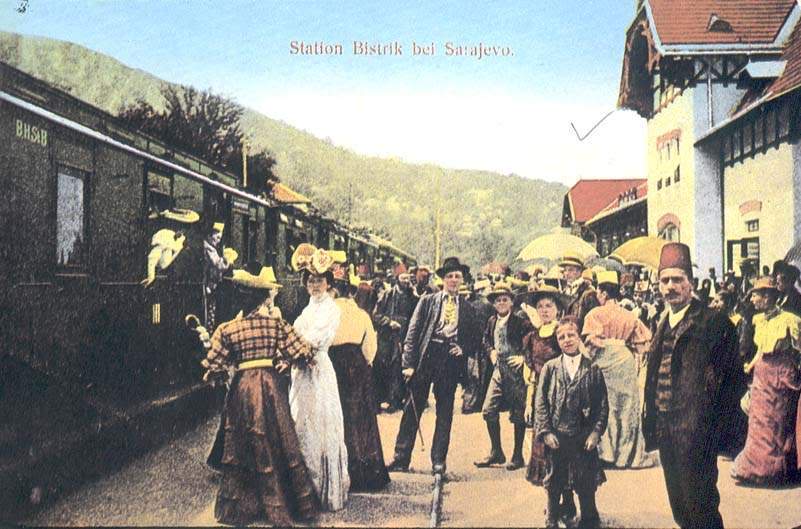
Prije svega, nove željezničke pruge uglavnom nisu bile građene imajući u vidu interese same pokrajine. Pored nekih glavnih linija koje su nesumnjivo koristile i lokalnom stanovništvu (kao što je prva bosanska željeznica Bosnabahn u dolini rijeke Bosne, sjeverno od Zenice; ili Narentabahn, koja je povezivala Sarajevo s Mostarom i Jadranskim morem), većina pruga služila je interesima monarhije. Neke su imale prvenstveno vojnu svrhu, kao što je bio slučaj s Ostbahnom ili Dalmatinerbahnom, dok su druge služile ekonomskim interesima, odnosno eksploataciji bosanskih prirodnih resursa. Ostbahn je zaista bila inženjersko čudo. Prolazeći kroz zahtjevan teren duž klisura triju rijeka, njena izgradnja zahtijevala je čak 99 tunela i 118 mostova na ukupnoj dužini od 166 kilometara. Pogledi su bili spektakularni i željeznica je ubrzo postala popularna među turistima. Međutim, bila je izuzetno skupa i u potpunosti finansirana od strane bosanskih poreskih obveznika, iako nije služila gotovo nijednoj drugoj svrsi osim strateškim interesima i projekciji vojne moći carstva. Izgrađena je u prilično lošem kvalitetu, pa su popravke bile potrebne gotovo odmah nakon završetka. Također nije povezivala važnija naselja (osim Višegrada) niti industrijske centre, pa je promet bio relativno mali. U suštini, lokalno stanovništvo je finansiralo vrlo skup projekt taštine za okupatora — jednostavno zato što je tako odlučeno.
Prelijepa stanica Bistrik u Sarajevu, dio pruge Ostbahn.
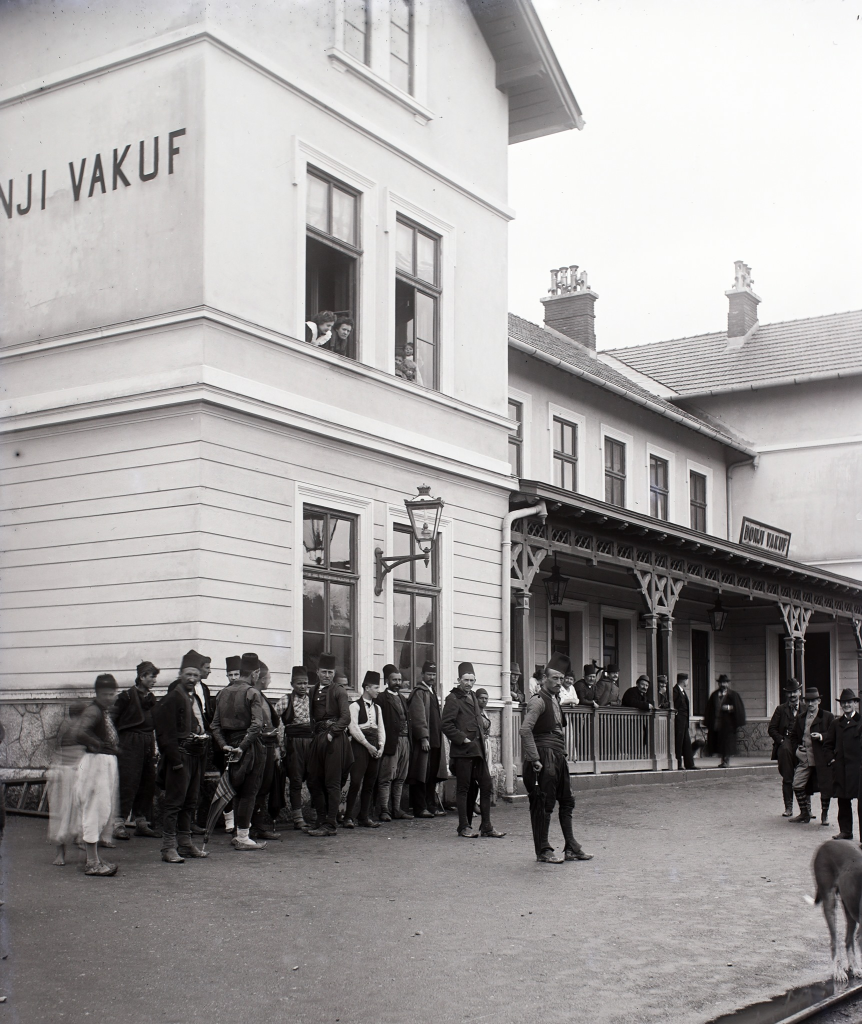
Drugo, razvoj željezničke mreže u Bosni bio je sputan političkim nadmetanjem između Austrije i Mađarske, koje su od 1867. dijelile približno jednaku vlast u okviru Carstva. Nažalost za Bosnu, to je značilo da su međusobne blokade često sprječavale izgradnju važnih pruga. Tako, na primjer, Jajce i Banja Luka nikada nisu bili povezani željeznicom. Spalatobahn, koja je trebala predstavljati drugu vezu s morem dolaskom do Splita (Spalato je talijanski naziv za Split), napokon je bila usaglašena između Austrijanaca i Mađara — ali tek u zamjenu za mađarsku dugogodišnju želju: izgradnju pruge standardnog kolosijeka između Sarajeva i Budimpešte. Do tog dogovora došlo je neposredno prije rata, nakon decenija prepirki. Međutim, prije nego što je ijedan od tih planiranih projekata mogao biti realiziran, izbio je Prvi svjetski rat, koji je ubrzo pokazao da je željeznička mreža u Bosni bila krajnje nedovoljna za ozbiljnije ratne potrebe.
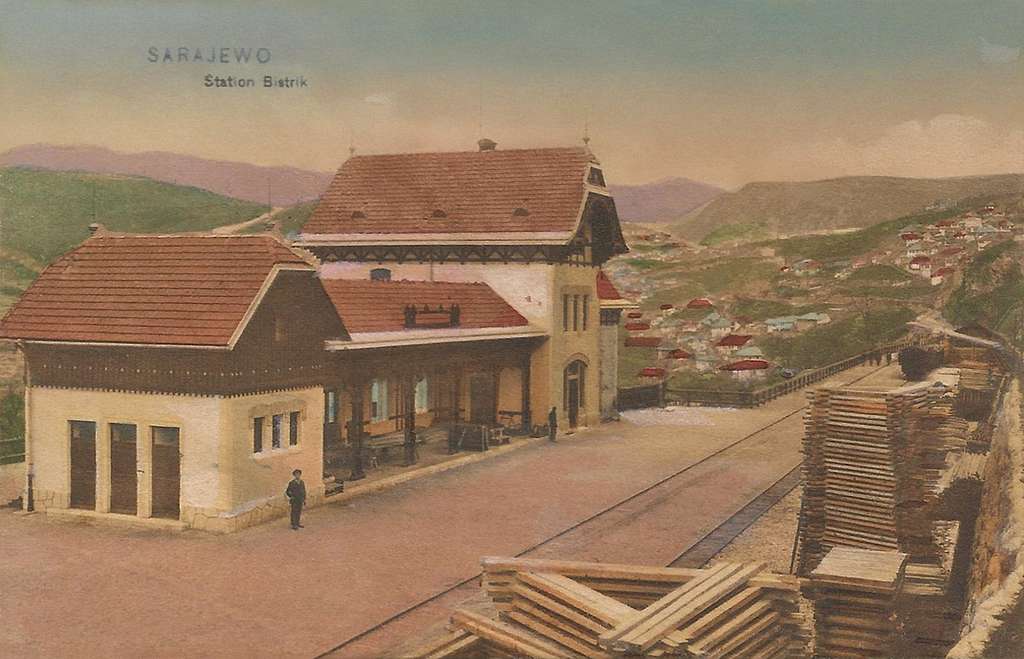
Ostbahn above Sarajevo is clearly visible in this pic from the end of 19th century

Other characteristic developments were various industrial and forestry railways, among which Steinbeisbahn, named after Austrian businessman Otto Steinbeis, is the most prominent. Forestry railway can mean a lot: most common in Europe were lighter tracks, starting with light rails only for cargo cars carrying logs that were moved up the hills empty using horses and down with logs using gravity, or for smaller locos. These tracks were often moved from valley to valley after the timber was harvested. The network of forestry railways often looked like a tree of life. Steinbeis also had a vast number of side branches, but the main line Knin – Drvar and beyond had parameters of a standard narrow gauge line when it comes to its overall quality, size of the network and its organisation. Otto Steinbeis chose Drvar as his seat in Bosnia and the line right behind the town is rather interesting, with its reversal point at Oštrica, climbing the slopes above the town towards Oštrelj before disappearing into deep neverending woods on a mountain plateau. There were of course other forestry railways, Usoratalbahn or Krivayatalbahn among others, but Steinbeis was by far the most vital.
Prvi Svjetski Rat
Internal squabbles between Austrians and Hungarians backfired and cost them dearly when the fighting broke, leaving their armies dependent on supply horses. Extension of Steinbeisbahn to Prijedor was quickly finished and proved vital to the Austro-Hungarian war effort. Steinbeisbahn was later also connected to Spalatobahn in Jajce. Fighting and defeating Serbia took the empire longer than anticipated and showed that the empire was in a worse state than it seemed before the war. Montenegro and Albania were finally conquered in 1916. Austrian dream of overseeing the Balkans was finally fulfilled (as the Habsburgs would say: endlich!), but lasted only two years (leider!), until Austria, after hundreds of years of being a European superpower, became a small state of local significance (Gott verdammt!).
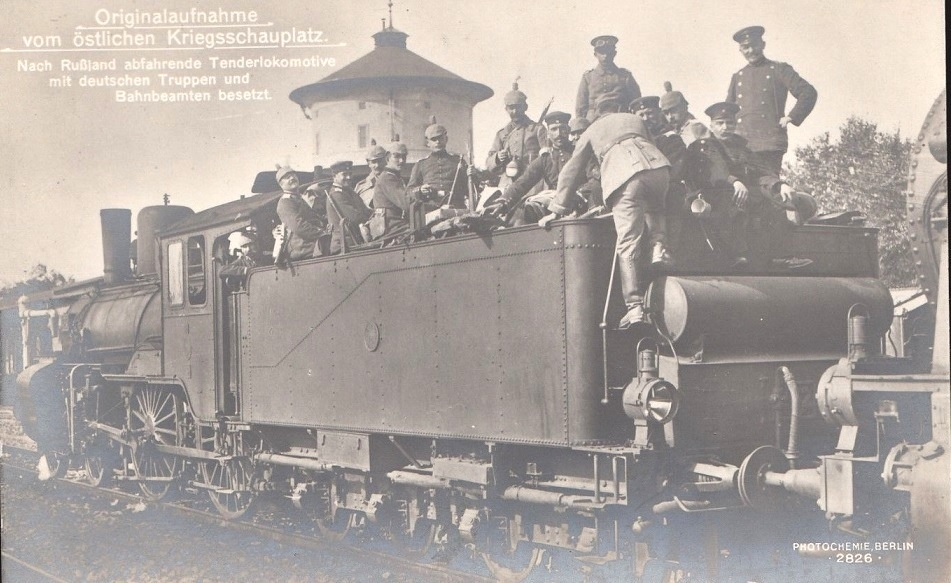
Vojnici na vrhu lokomotive nekad u 1916 u Srbiji
Jugoslovensko Kraljevstvo Era
Yugoslavia was a dream destination for Czechs in the 1980s and it continues to this day in the shape of the successor Croatia. I had my fair share of visits to the Adriatic coast as well, despite not being a big seaside vacation fan. However, it was only when I was reading the chapter about railways in Yugoslavia in Keith Chester´s book when I finally realized that Yugoslavia comes from Yugoslavs = southern slavs. It feels so obvious now! The idea was a state unifying all slavic nations living in the south of Europe, and somewhat replaced the original idea Serbs had about reinstating Big Serbia (what is up with the never ending number of used-to-be-big countries that miss their old dominant days?). When the old Austro-Hungarian oppressor finally collapsed in 1918, it was the time to make it happen. And so on 29 October 1918, the day after Czechoslovakia was declared, the Kingdom of Serbs, Croats and Slovenes was declared, since 1929 officially named the Kingdom of Yugoslavia.
Ratna oštećenja na željeznicama brzo su popravljena (a kako Keith Chester piše u svojoj knjizi, bila su prilično mala; glavni problem bile su godine zapuštenosti). Predstavljeni su mnogi ambiciozni planovi za razvoj željezničke mreže. Treba naglasiti da je do 1918. cijelo područje Jugoslavije bilo podijeljeno i pod interesima različitih aktera. Nova država bila je skup različitih etničkih grupa koje nisu imale mnogo zajedničkog što bi ih moglo definisati kao jednu naciju i stvoriti jedinstven nacionalni osjećaj. Čini se da je željeznička mreža trebala isto što i nova država: koheziju, povezanost i jedinstven cilj i plan. Nažalost, ni država ni željeznička mreža u međuratnom periodu to nisu postigle. Osim potrebe za pouzdanom vezom s morskom lukom dovoljnog kapaciteta, Keith Chester kao glavne probleme navodi nedostatak željezničke veze između Srbije i Bosne. Ipak, barem su neke pruge dobile novi život, poput Ostbahna, koji je produžen prema Srbiji i povezao Sarajevo s Beogradom.
Glavne izgradnje povezane s Bosnom bile su sljedeće:
- Ostbahn: veza između Sarajeva i Beograda preko Ostbahna od granične stanice Vardište do Užica u Srbiji (1925) i Uvac – Priboj u Srbiji (1929) Dalmatinerbahn: Trebinje – Bileća u Crnoj Gori (1931) i dalje do Nikšića (1938) Narentabahn: uklanjanje zupčastih dionica oko Raštelice i Tarčina te izgradnja novog Ivan-tunela (1931) nova pruga Ustiprača – Goražde – Foča (1939) obnova pruge Bosanska Rača – Ugljevik na kolosijek širine 760 mm, koja je ostala izolovana od ostatka mreže širine 760 mm (1922)
- Dalmatinerbahn: Srpske da Bileća u Gore (1931) i uradila lokalna uprava (1938)
- Narentabahn: uklanjanje rack sekcije oko Raštelica i Tarčin i novi Ivan tunel (1931)
- nova linija Ustiprače – Samouprave – Foča (1939)
- obnova liniju Bosanska Rači – Općina da 760mm manometar, koji je ostao izolirana od ostatka 760mm mreže (1922)
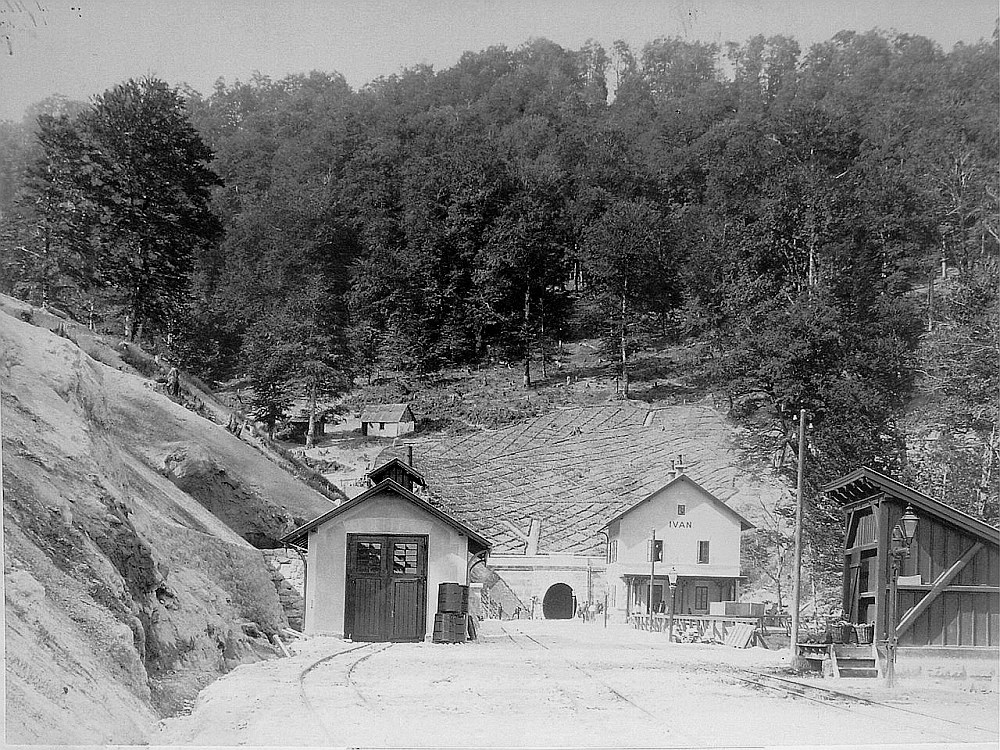
Novi Ivan tunel, 1930
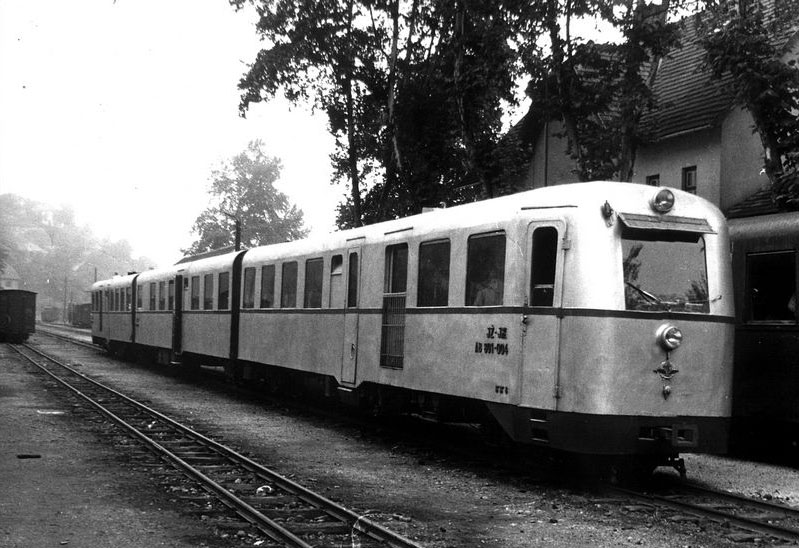
Međuratni period donio je i prve dizel motore u Bosnu: moderni, sjajni i elegantni dizel vozovi počeli su saobraćati uglavnom na Narentabahnu od 1938. godine i dobili su nadimak „Ludi Sarajlija“. Osim što su putnicima donosili veći komfor, bili su sposobni da pređu preostalu zupčastu dionicu južno od Ivan-tunela samo pomoću adhezije, čime je putovanje između Sarajeva i jadranske obale skraćeno sa 23 sata i 58 minuta na 16 sati i 38 minuta (zasluge ponovo Keithu Chesteru koji je proučavao vozne redove). Nepotrebno je reći da su to bili isključivo putnički vozovi. Nažalost, bili su i skupi za održavanje, pa su ubrzo premješteni da obezbijede vezu između Sarajeva i Beograda. Benzovi motorni vagoni, prozvani „Ludi Sarajlija“, bili su gotovo jedini tračak modernosti na željeznicama međuratne Bosne. Drugi planovi, poput elektrifikacije Narentabahna ili uvođenja spavaćih kola, nažalost nikada nisu ostvareni.
Gledajte — Ludi Sarajlija!
Drugi Svjetski Rat
On 6 April 1941, the war finally directly entered Yugoslavia as Nazi Germany attacked, their goal being securing the Balkans which Italians previously failed to do. The days of careful balancing in order not to enter the war were over when Yugoslavia was forced to sign a treaty with Axis. Following a coup against this, the country got invaded to enforce Hitler´s will. Yugoslavia turned out to be a tough nut to be cracked. Despite the fact that the country itself was conquered very quickly (blitzkrieged, shall we say?), in just over 10 days, the partisan movement soon turned out to be a huge headache for occupiers and became a symbol of resistance against Nazis. Leading the partisans catapulted Tito, the communist leader, into the presidency of Yugoslavia after the war.
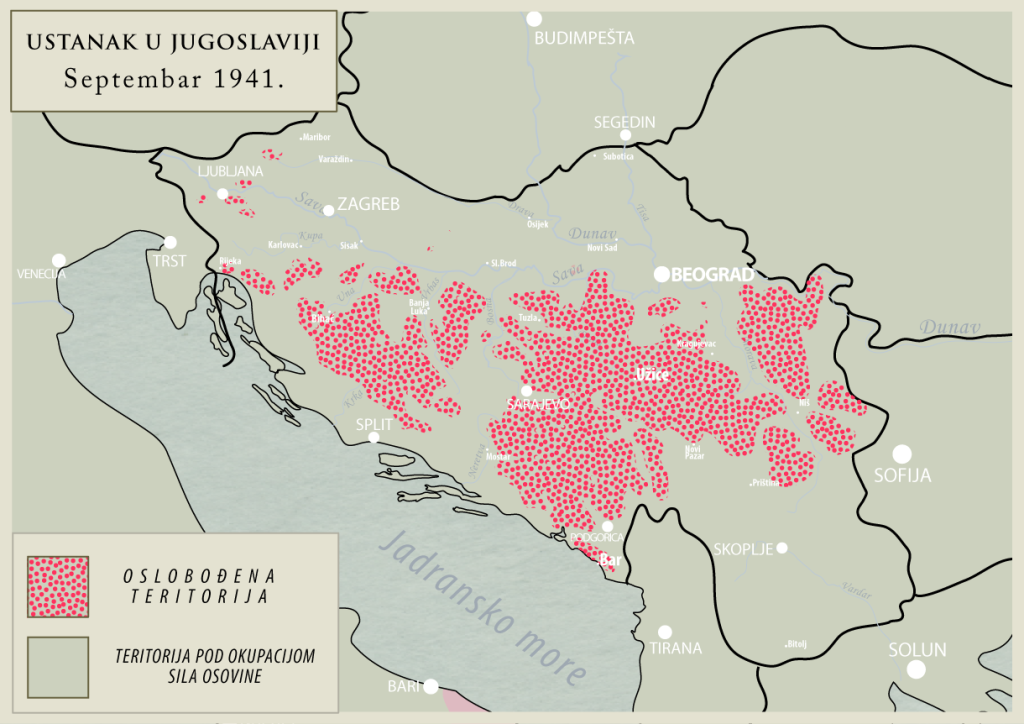
Partizani iskoristiti željezničke mreže u njihovu korist. Okupatora (Nijemci i Italijani) često nije uspio izdržati više teritorija od većih gradova i najbliže blizini željeznice, i da je to ustvari istina već od jeseni 1941 (kada Njemačka je još uvijek na pobedničkom nizu u Evropi i Africi). Samo pogledaj mapu partizan, održao je teritorija od tog perioda (izvor Wikipedia):
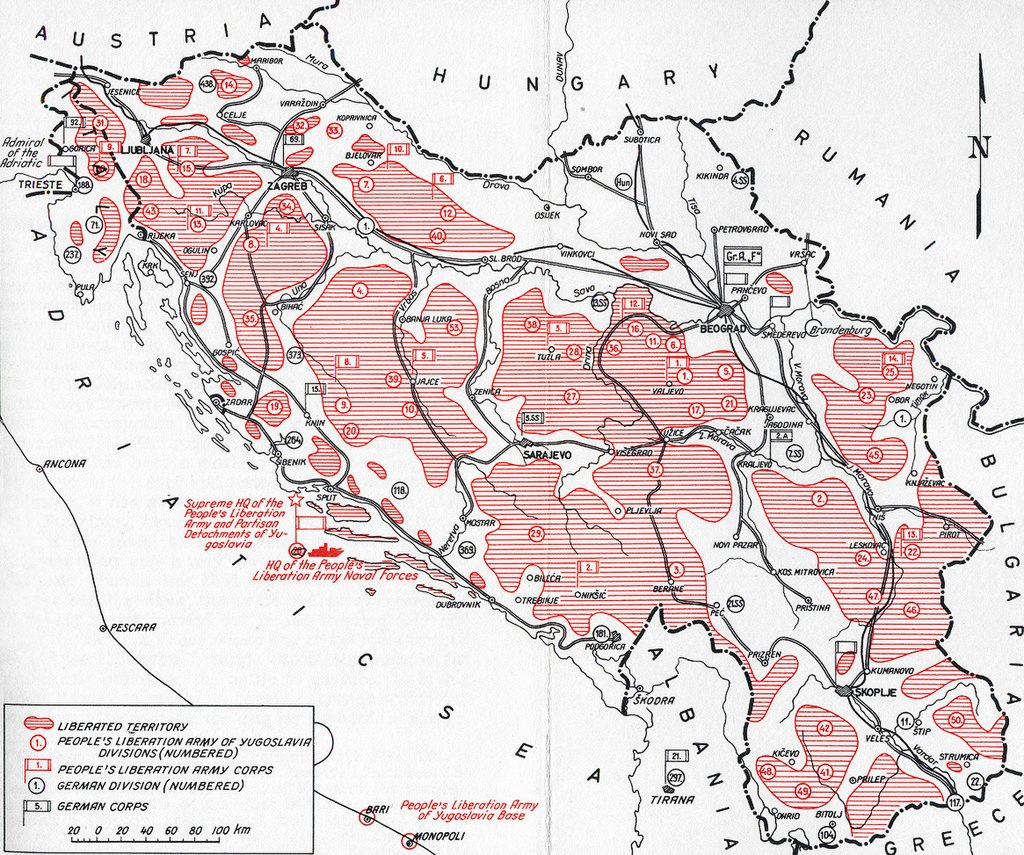
Godine 1944., kada je Njemačka već gubila rat na svim frontovima, a Italija više nije bila u ratu na strani Sila osovine, situacija je za Nijemce i njihove saveznike izgledala još očajnije (izvor: Wikipedia):
The terrain of Yugoslavia was very difficult for constructing railways and even more difficult to occupy. There were two biggest groups opposing Germans: Partisans led by Tito and supported by the USSR, and royalist Chetniks led by Draža Mihailović and supported by the West. Tito is remembered today mainly because they gave the occupiers the biggest headache. Their bold actions and courage meant that they were eventually recognized even by the West. Chetniks and Mihailović were less active and remain highly controversial due to their alleged collaboration with Germans (against communists) and atrocities towards civilians (it shall be noted that communist Partisans did the same – you know, war..). I will leave discussing where exactly the truth lies to historians.
Keith Chester states in his book that the role of Partisans is somewhat exaggerated due to them emerging victorious, and it is true that they spent a lot of time actually fighting Chetniks and other groups. However, their activity was significant. Among the most famous actions remain Partisan activities against railroads, disrupting the German and Italian supply chain. Yugoslav roads were not particularly suitable for trucks, therefore, railways were vital. They were also prone to attacks – it was almost impossible to guard hundreds of kilometers of railway tracks, mostly single tracked. Mountainous terrain also meant a lot of vulnerable infrastructure such as bridges, and many opportunities to hide.
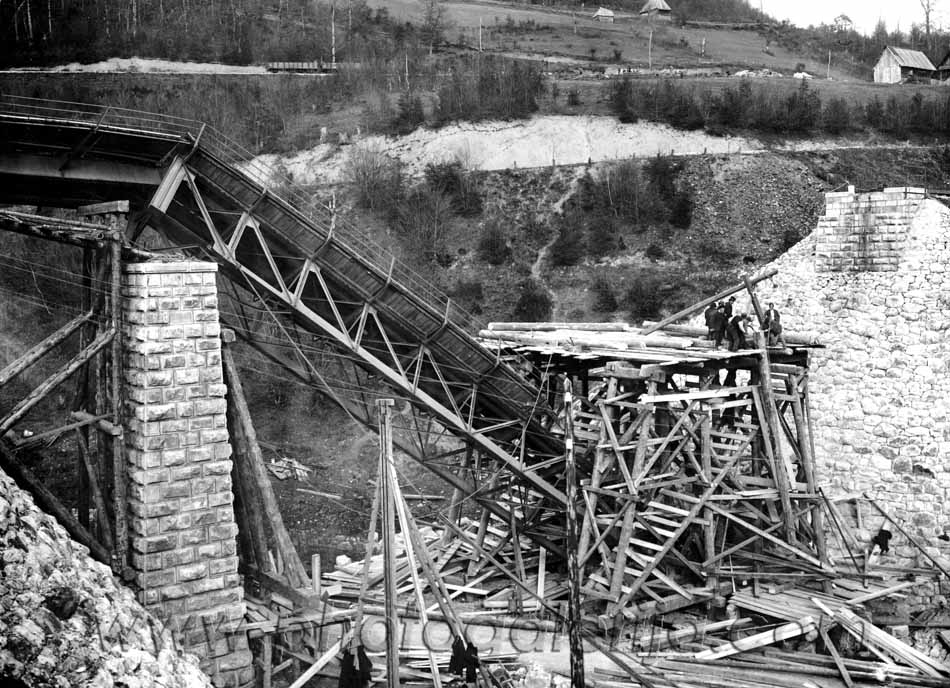
Srušeni most u Rakiti (Ostbahn) nakon partizanskog napada
In September 1941, Užice in Serbia was captured by Tito, and the Partisans created the Užice Republic, which survived for some 2 months before they were forced to move by German and Chetnik forces. Užice Republic truly resembled a functioning state, with some 250 km of railways, schools, hospitals and some industry. The following 2 years were tough ones, with Partisans being chased by Germans. In July 1942, Tito decided to move to western Bosnia and in the meantime attacked the rack section near Ivan Pass, destroying 11 stations, 40 locos, 110 wagons, and many bridges (such as the one over Luka gorge). This large attack disabled the railway for some 6 weeks (I must admit to being astonished at the speed the occupiers managed to repair such a vast destruction).
After the attack on Ivan pass, Tito operated from his train “Proleterka” on Steinbeisbahn, operating near Oštrelj and nearby mountainous forest plateau. Axis attacked the Partisans in January 1943 and the forest railway between Oštrelj and Mlinište saw heavy use before Tito´s forces fled towards Konjic. The Partisans famously crossed over the recently destroyed bridge in Jablanica, its torso still peeking above the water (some remains are still in place today serving as a monument to Partisans), and Tito yet again narrowly escaped capture at the battle of Sutjeska in May and June 1943. Establishing their base in Jajce, they operated the railway between Jajce and Donji Vakuf until the end of 1943, until they were forced to move to Drvar. In 1944, Germans were already weakened and pressed hard by the Red Army, the retreat of the German army from southern Balkans was ordered by Hitler in the beginning of October 1944. The Partisans attacked them as much as possible, however, the German army was strong enough to force their way from Serbia to Sarajevo via Ostbahn. Sarajevo was evacuated on April 5th 1945 and soon the Partisans held the whole Bosnia.
Titov voz „Proleterka“, zaboravljen u Oštrelju (2023)

Titovo doba i kraj
Poslijeratno razdoblje bosanskohercegovačkih uskotračnih željeznica može se podijeliti u dvije faze: obnovu i razvoj nakon rata te brzi pad i napuštanje tokom 1970-ih. Uskotračna mreža imala je očita ograničenja. Još u vrijeme Austrougarske, mnoge pruge su građene s idejom da će ih jednog dana zamijeniti standardni kolosijek. Primjer je Ostbahn, koji je prvobitno razmatran kao pruga standardnog kolosijeka. Kao kompromis barem je građen s tzv. standardnim profilom prolaza (clearing), iako je to u praksi bilo prilično nerealno jer tuneli nisu imali puni profil standardnog kolosijeka. Ponekad je standardni kolosijek bio čak i prvi izbor, ali se od njega odustajalo zbog ekonomskih razloga i prelazilo na uži kolosijek. Tunel ispod Ivan Pass iz 1931. izgrađen je sa standardnim profilom kako bi se jednog dana omogućila promjena kolosijeka na pruzi između Sarajevo i Mostar. U praksi se kasnije pokazalo da je za standardni kolosijek bilo potrebno izgraditi gotovo potpuno novu prugu, a ne samo rekonstruirati staru. Ipak, iako je uskotračna mreža u poslijeratnom razdoblju već bila donekle zastarjela — zbog male propusne moći i niskih brzina — ostala je u širokoj upotrebi. Jugoslavija je nakon rata bila toliko razrušena da nije bilo moguće brzo zamijeniti cijelu uskotračnu mrežu. Nova socijalistička država relativno brzo je obnovila mnoge pruge i vratila ih u barem djelimično funkcionalno stanje. Prema Keithu Chesteru, oko 50% željezničke mreže bilo je oštećeno tokom rata. Njemačke trupe u povlačenju uništavale su što su mogle — mostove, infrastrukturu, pa čak i same šine koristeći zloglasni Schienenwolf (specijalno vozilo za razaranje pruga).
Prometna stanica Višegrad u poslijeratnom periodu

Besides the repairs and new lines of the vast network of forestry railways (such as ŠIPAD railway or the Ugar system), and new construction of industrial lines (Banovići mine, mining at Bosanska Mezgraja or Zenica steelworks), the state narrow gauge lines were barely constructed anymore. The focus was on standard gauge which started replacing the obsolete narrow gauge on the main lines. Main line from Sarajevo north to Doboj was regauged to standard gauge already in 1947 as part of the new line from Šamac to Doboj. The Bosnabahn tracks were lifted and the remaining part was operated from Brod to Doboj. Narrow gauge tracks to Zenica were preserved to provide Zenica steelworks with iron ore from Dubrovnik. Una valley railway, started in 1936, was finally finished in 1948, shortening Steinbeisbahn from Knin to Lička Kaldrma. The biggest undertaking was, however, the long planned Sarajevo – Ploče line. Started in 1948, this turned out to be more complicated than expected and was finished finally in 1966.
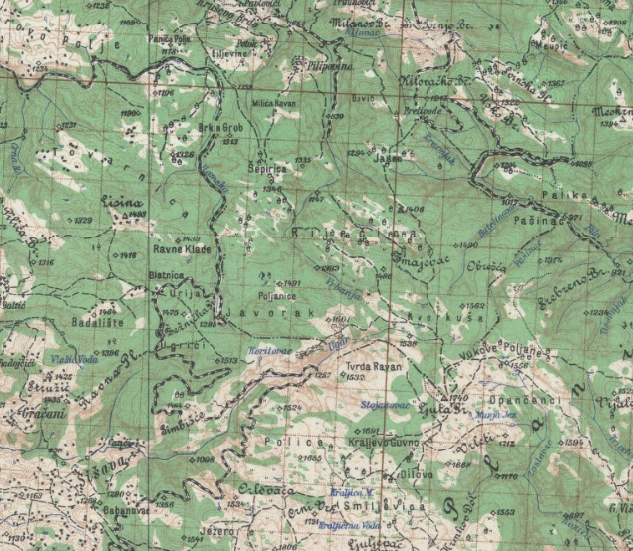
Dio složene mreže Ugar sistema na staroj jugoslavenskoj karti
The authorities counted on maintaining the narrow gauge network as a supplementary system to the standard gauge all the way until the 1960s. Yugoslavia was not a typical centrally planned economy, and after the split from the Soviet Union, the country pursued a hybrid model with decentralized management. Railways were divided between separate entities following their nation borders with Bosnian railways under ŽTP Sarajevo, one of five regional Railway Transport Enterprises. Yugoslav Railways as the national transporter had surprisingly very little to say when it came to decisions about the fate of railways. So while in the 1960s ŽTP Sarajevo generally counted on the remaining narrow gauge as secondary lines, this suddenly changed in the 1970s. The narrow gauge had its limitations and in the 1960s it was not only obsolete, but also in a need of investments, with infrastructure being worn out and rolling stock as well as locos being several dozens years old.
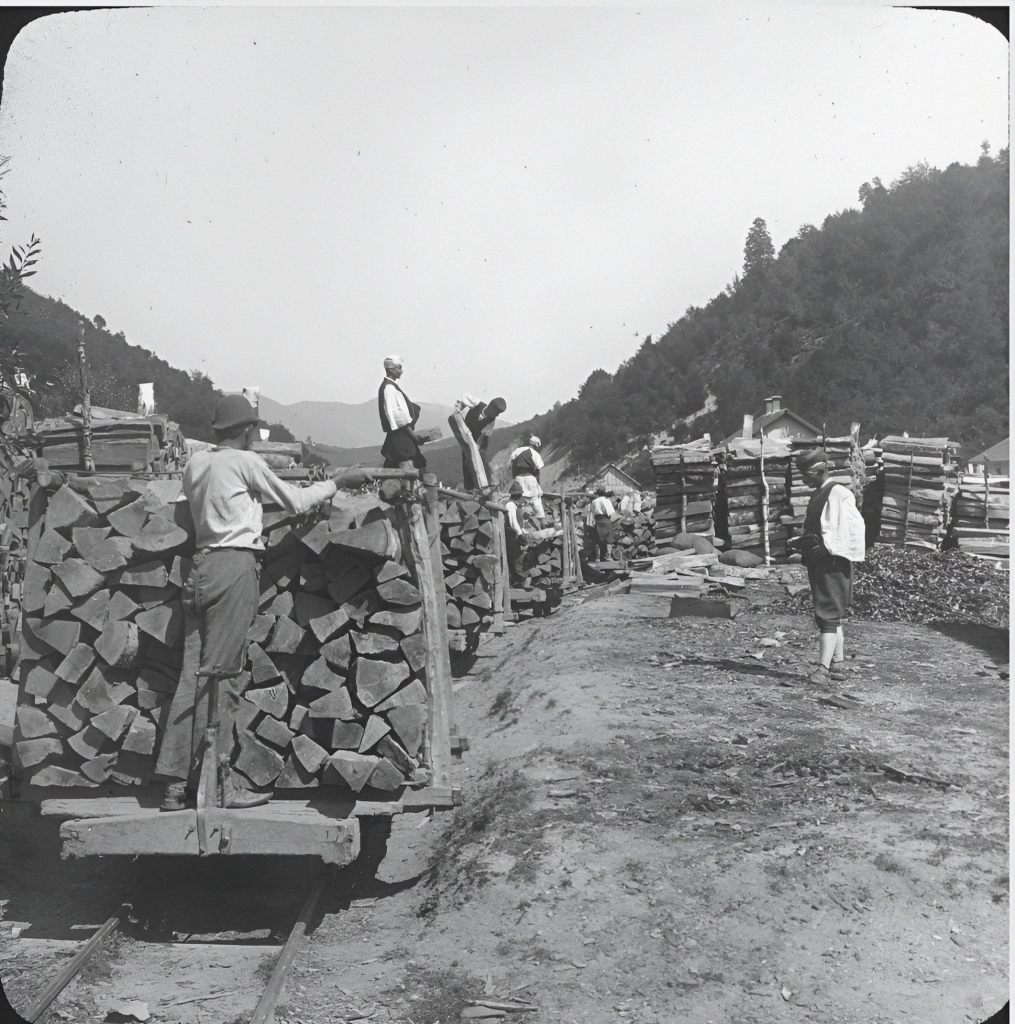
Šumska industrija
Some railways were closed due to being replaced by standard gauge, as was the case with old Bosnabahn north of Zenica, or more importantly, new line Sarajevo – Ploče, opened in 1966. This was a severe blow to narrow gauge, as it divided all remaining lines into two parts: southern, with railway from Gabela via Hum to Dubrovnik, Zelenika and Nikšić in Montenegro, and northern consisting of Ostbahn, Steinbeisbahn, Spalatobahn, Krivajatalbahn and some other smaller ones. This prevented sharing of locos and rolling stock in case of need. Following this, there were some line closures towards the end of sixties: section between Olovo and Han Pijesak of Krivajatalbahn was closed in 1968, line from Hum to Zelenika was closed in 1969, same as Bosanski Brod – Derventa and Šipovo – Srnetica part of the Steinbeisbahn. In 1970, Jajce – Šipovo was closed.
Parne lokomotive ostale su glavni radni konj uskotračnih pruga sve do kraja njihove eksploatacije, odnosno 1970-ih.

However, the rest was planned to be preserved. Yugoslav producer Duro Dakovic provided modern diesel engines which were supposed to replace aging steam motors. It was even hoped that they could overcome Komar pass by adhesion, but this turned out to be too hopeful. Another modern train by the same producer was class 802 intended for passenger use and serving mainly Dalmatinerbahn. However, this was insufficient to sway the new management of ŽTP Sarajevo away from the decision to get rid of the narrow gauge as fast as possible in the mid 1970s, despite recent investment in dozens of diesel locos. Narrow gauge was slow and was facing competition from bus companies. Buses were seen as modern and with the development of the road network, passenger numbers were dwindling. Dalmatinerbahn was, however, a proof that if modernization was pursued, narrow gauge had a future. With new 802 rail cars bringing comfort and speed, passenger numbers went back up. But the drop was not only in passenger traffic – forestry, a large and important industry, invested rather in forest roads and lorries, and the importance of “šumske pruge” was decreasing.
Moderni dizel Đuro Đaković na Steinbeisbahnu (izvor: Eric Scherer video na YouTubeu)
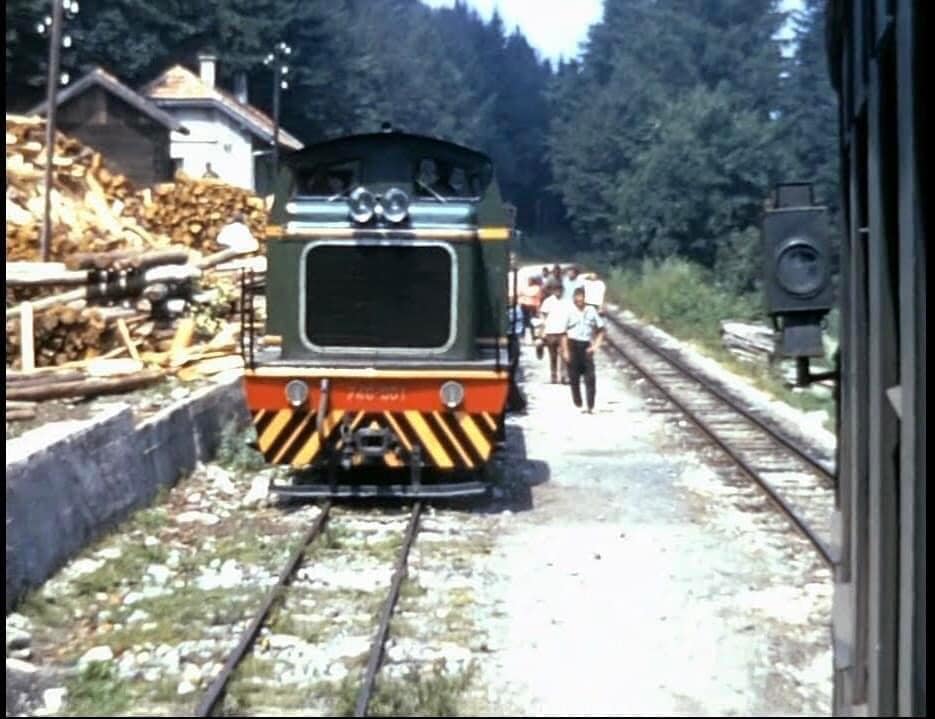
I moderni 802 motorvagoni, ovdje ulazeći u Ustipraču.
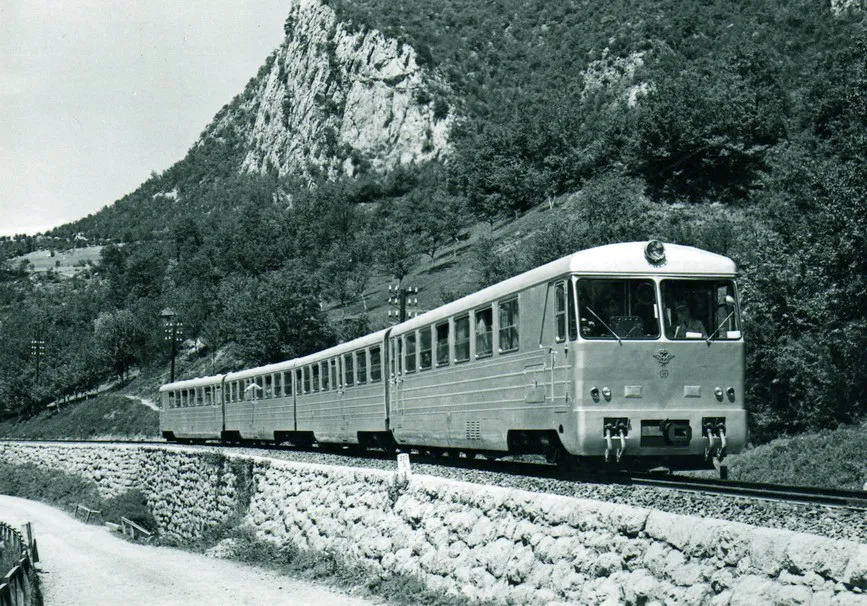
And so the remaining narrow gauge was closed within a few years: 1972 saw closure of the line Donji Vakuf – Gornji Vakuf, 1973 of Lašva – Jajce. Ostbahn was to be regauged to standard gauge, which never happened, and section Titovo Užice in Serbia to Višegrad closed in 1974. The new management of ŽTP Sarajevo wanted to get rid of the remaining lines as fast as possible, and in 1975 decided to shut down the remaining railways, even though it was very detrimental towards locals without any good alternative of transport. The remaining part of Dalmatinerbahn between Čapljina and Dubrovnik & Nikšič was having steady passenger traffic and new diesel trains, but was closed in 1976. Ustiprača – Miljevina was first cut down to Foča and then closed completely in 1977. Steinbeisbahn between Prijedor and Drvar shut down in 1975, between Lička Kaldrma and Drvar in 1978, same year as Ostbahn. All tracks were usually removed immediately afterwards with the exception of Ostbahn, which was considered for tourist purposes as well as for Sarajevo winter Olympic games in 1984. Wouldn’t it be lovely if it transported visitors between Sarajevo and Jahorina mountain near Pale?
Decrepit Bistrik, tracks avoiding removal for few more years thanks to plans to use it for Winter Olympic Games

“What if” is a popular way of pointlessly contemplating what could have been, easing our mind in imagining a preferred result in spite of the real life. What if ŽTP Sarajevo was more open minded, ballsy and tried to preserve remaining narrow gauge lines in the 1970s? I believe that we would have at least one more preserved railway in place. Even if the traffic would be preserved all the way till the civil war, it is questionable whether there would be a desire to renew the traffic after the war. Steinbeisbahn area was hit and many inhabitants were forced to leave (Oštrelj is a good example). Without connection to Steinbeis, it is questionable whether a railway from Travnik to Jajce made sense, however it is doubtful if there would be finances to renew the traffic even if there would be the will to do so. It needs to be stated that even major railways struggle to survive in the Balkans nowadays – a good example is Una railway (officially Sunja – Knin), effectively dead for personal traffic since 2012, or railway connection between Podgorica and Shkodër in Albania. But I am positive that Dalmatinerbahn would be preserved and renewed for traffic, even if only for touristic purposes. And who knows? Maybe the Ostbahn would survive too.
Ponovno napušteno: Višegrad, 2025.

S obzirom na štetu iz 1990-ih i opšte ekonomske prilike na Balkanu, smatram da je pomalo čudo što je uskotračna pruga ponovo oživjela preko planine Šargan, odmah iza granice sa Bosnom. Kasnije je produžena preko Vardišta do Višegrada, a mali dio Ostbahna u svom kasnijem periodu ponovo je oživio. Van područja rudnika Banovići, uskotračna pruga konačno se vratila i u Bosnu za putnički saobraćaj. Nažalost, zbog zanemarivanja uodržavanju na bosanskoj strani, vozovi više nisu u funkciji između Mokre Gore i Višegrada, nakon samo deset godina prometa. Ipak, srpska strana definitivno vrijedi posjete. Turistički vozovi su dobro održavani i iskustvo je izvanredno. Postojale su i druge inicijative, poput oživljavanja dijela Dalmatinerbahna od Dubrovnika ili Steinbeisbahna, pri čemu su entuzijasti imali svoju bazu u Srnetici. Vrlo je malo vjerovatno da bi dijelovi Steinbeisbahna mogli biti obnovljeni, jer područje nije posjećeno od strane turista i inicijativa ima malo ekonomskog ili drugog smisla osim same nostalgije. Ipak, možda će jednog dana Dalmatinerbahn biti sretnija i doživjeti svoju obnovu.