I was very excited to explore what is left of Bosnia´s most stunning abandoned narrow gauge railway, Ostbahn, and bicycle seemed like a perfect way to do it. I prepared many pictures which I planned to recreate, unfortunately went without the drone that i crashed in Travnik, but it turned out I would not have time to fly it anyways. Paired pics are here: https://tracksintime.com/ostbahn-2
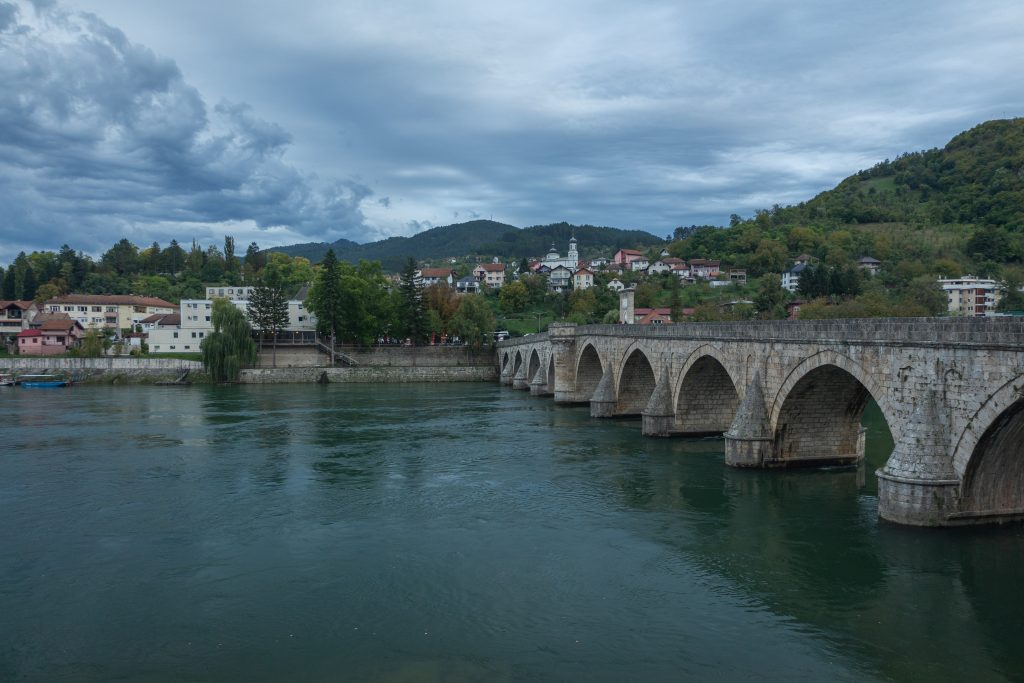
After we came back from Serbia after riding the Šargan 8, the family left and I went to explore Višegrad. To be precise, its train station. If you think that Višegrad, as a historical and rather well known town, would have a lot of old buildings, narrow streets, vibe and the history would breathe from its walls (maybe like in Mostar), you will be sorely disappointed. Besides the famous Ottoman bridge, about which Andrich wrote his most famous book, The Bridge on Drina, and Andricgrad, a tourist location created by filmmaker Emir Kusturica in the 2010s, there is, rather surprisingly, nothing. Just a regular small Balkan town without much going on. Unless you are interested in railways, obviously.
Famous Ottoman bridge in Višegrad
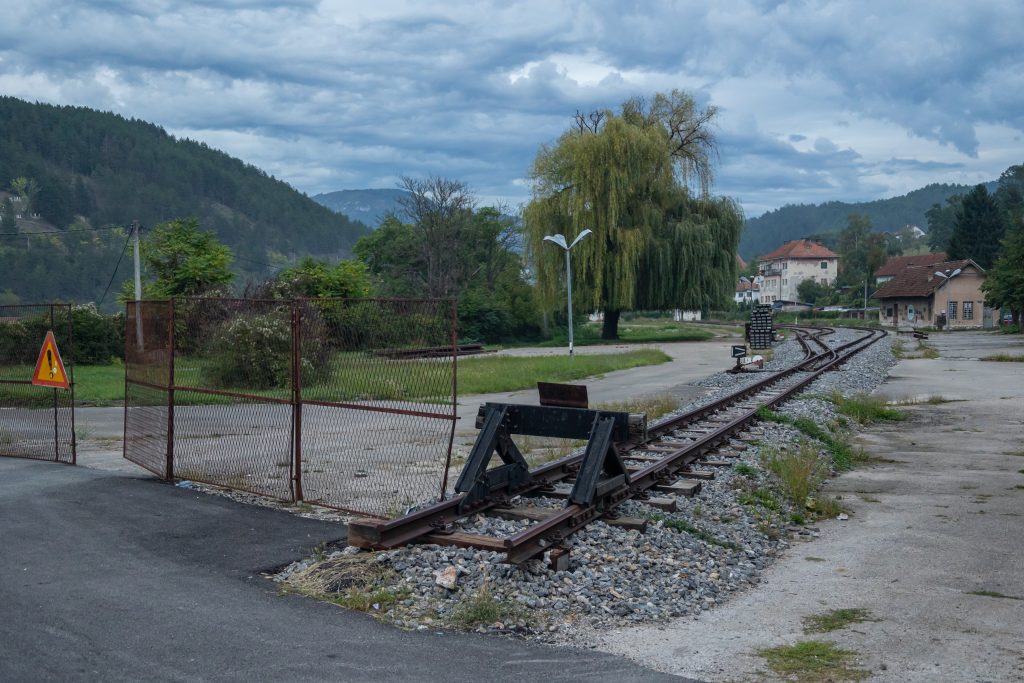
I started with the tunnel near the train station, today used by cars. The station is located just behind, just a stretch where trains had to go a bit down to the vast trainyard plateau. At the height of its fame, it had some 9 parallel tracks. Today, there are three (which is still better than zero). Right before I entered the yard, upon seeing the way the railway was ended, I immediately felt somewhat sad. Here it was, a reminder that this was not where the railway ended, but continued for dozens of kilometres, all the way to Sarajevo, some 130 km away. The rails were protruding above the road, being cut off seemingly unexpectedly right at the edge of the asphalt, like it was just temporary.
Rails end abruptly
Višegrad railway station in its heyday (by Doko Milovanovic)

Tunnel in Višegrad, today used by cars

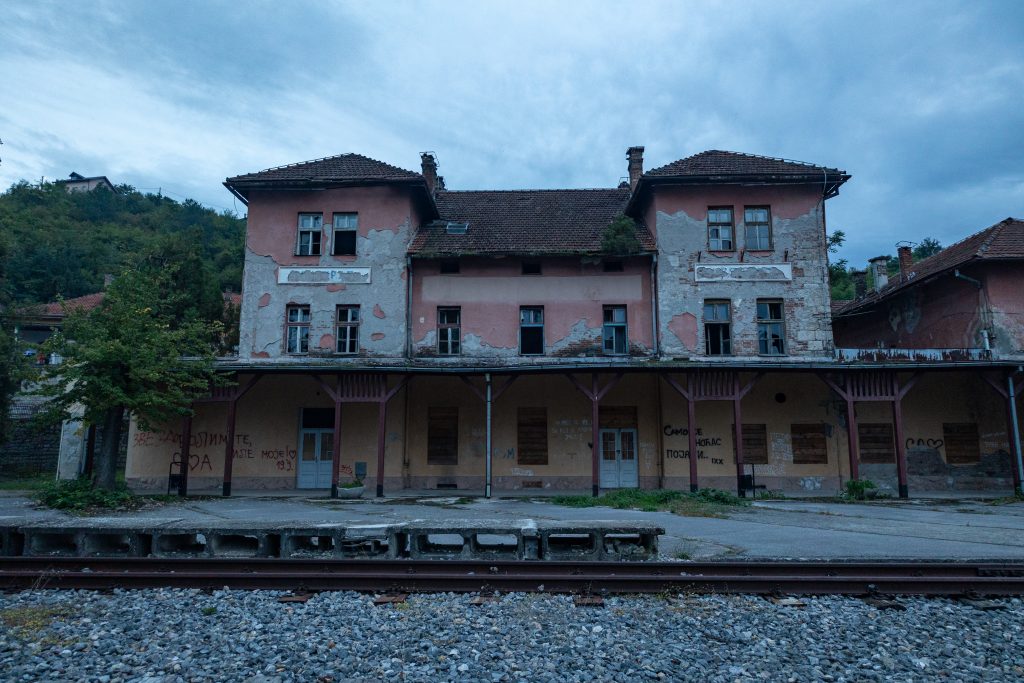
But that was just the beginning of the gloominess that was the Višegrad station. Even though the railway was resurrected in 2010 and trains were running all the way to Višegrad, there was apparently not enough money to restore the old Habsburg train station. It remained in its decrepit state, and the train traffic turned out to be only temporary. Trains are not running from Mokra Gora to Višegrad at least since the pandemic, and the Serbish train conductor in Mokra Gora told me it is because Bosnia did not take care of the rails. I saw it myself when we stopped near Dobrun and almost half of the sleepers seemed to be rotten. The whole station area was abandoned, falling apart, with rusty rails. Being there at dusk did not help much and I felt deeply saddened by the state of it all. This was a glorious building in its hey day, a stunning piece of architecture, and later an important traffic hub where dozens of wagons parked. One of the most important stops on the way to Belgrade. And now just emptiness. It surprised me a bit, as I thought that things got better after the railway reopened 15 years ago.
Sleepers in poor condition (section around Dobrun had them completely rotten)

Višegrad train station
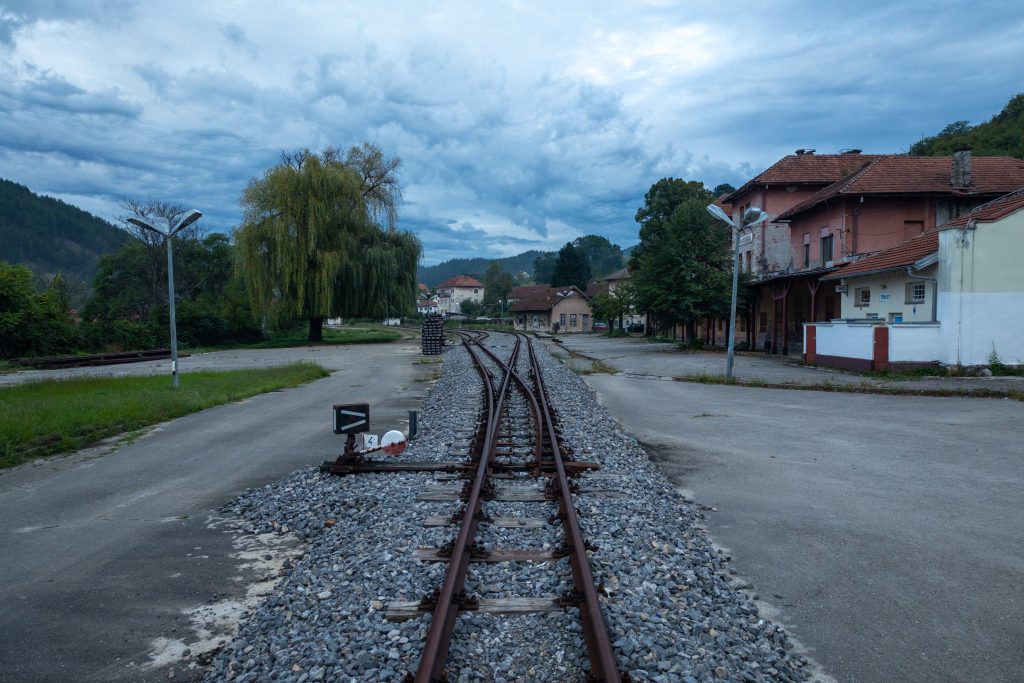
Only train in Višegrad these days
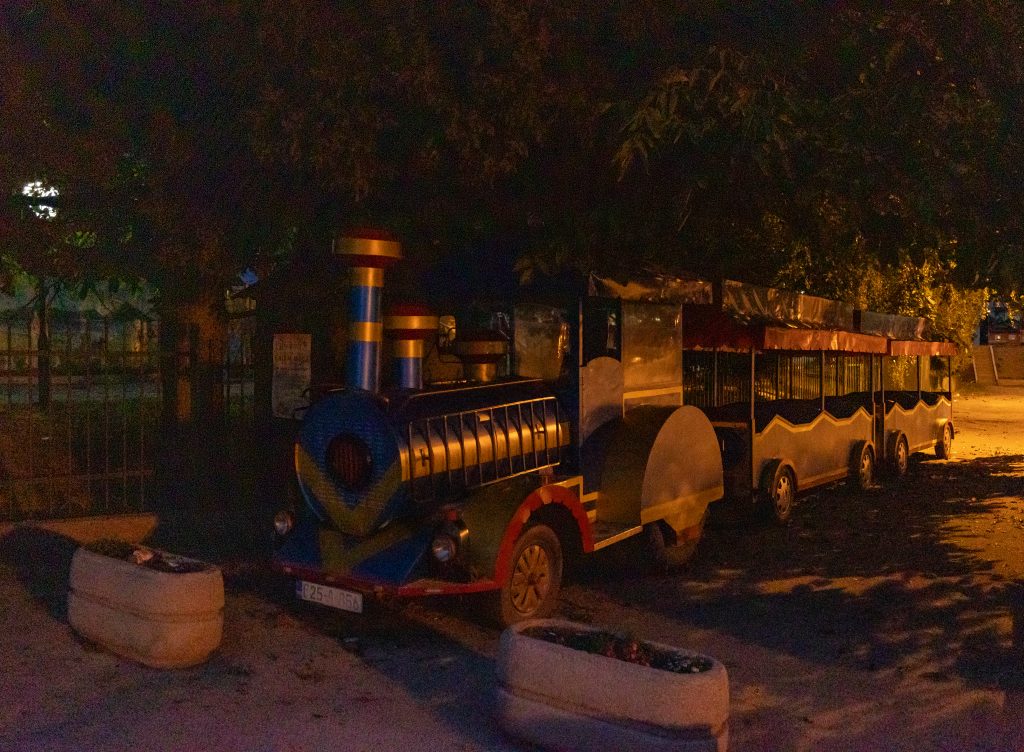
Morning station, only slightly less sad

Tunnel in Višegrad
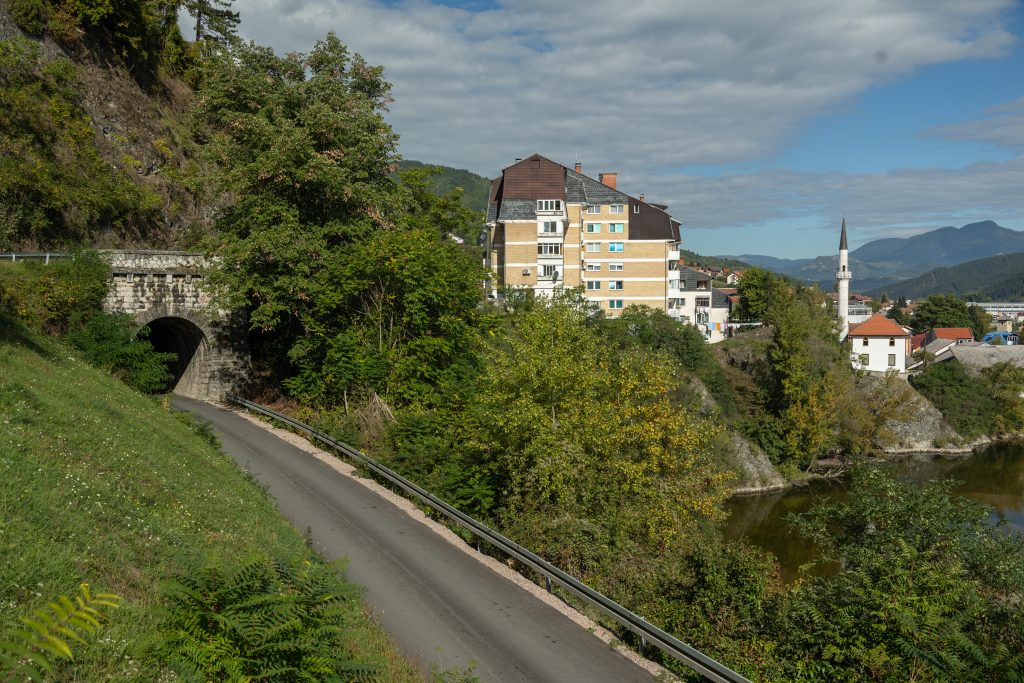
I came back to take some pics the next morning before heading south to photograph Kula, the medieval tower above Drina, under which trains were running right before they entered the town. The whole section of the M5 road between Višegrad and Ustiprača was ahead, and although it offered nothing to a railway enthusiast as the whole portion of Ostbahn ended up flooded here, it had the stunning nature of Drina. And also some 27 poorly lit tunnels with cars driving fast by me. It could be an absolutely stunning cycling path if they build a bike path above Drina. Like this, it was rather dangerous, and a bloated dog corpse on the side of the road reminded me of that. The railway was finding its way through a stunning rocky canyon here all the way to Ustiprača before it left Drina, the first river it followed, and tagged along Prača. There was a branch going to Priboj, separating right where the famous Drina bridge was (well, famous from the railway perspective) with its iconic two tunnel mouths right behind the bridge, today completely flooded (I plan to dive there one day). The cycling was nice, flat, railway-uneventful and full of fear of being run over by a truck in a tunnel.
Kula, railway ran directly under this medieval tower

Stark reminder to beware of trucks

Beautiful valley of Drina. Railway ran on the bottom of the valley, today it is completely flooded.


This is where the famous Drina bridge was located and branch to Priboj went right into the valley on the right.

Drina bridge was right behind.

I was relatively happy to arrive to Ustiprača, where I had a coffee, beer and water, all for not even three EUR. Low prices corresponded to how the village looked: poor, empty, depressing. The train station was gone, no remnants to be found, only a kids playground with garbage, broken down cars and stray dogs. Stark reminder that many people in this country are sadly not doing that well. I did ask locals about the old railway station, but received mixed answers. However, the lovely railway bridge where the branch to Foča/Miljevina started is still standing.
Ustriprača. Not many nice things beside lovely nature around I could say about this settlement so I will not say anything.


Bridge with branch to Foča/Miljevina
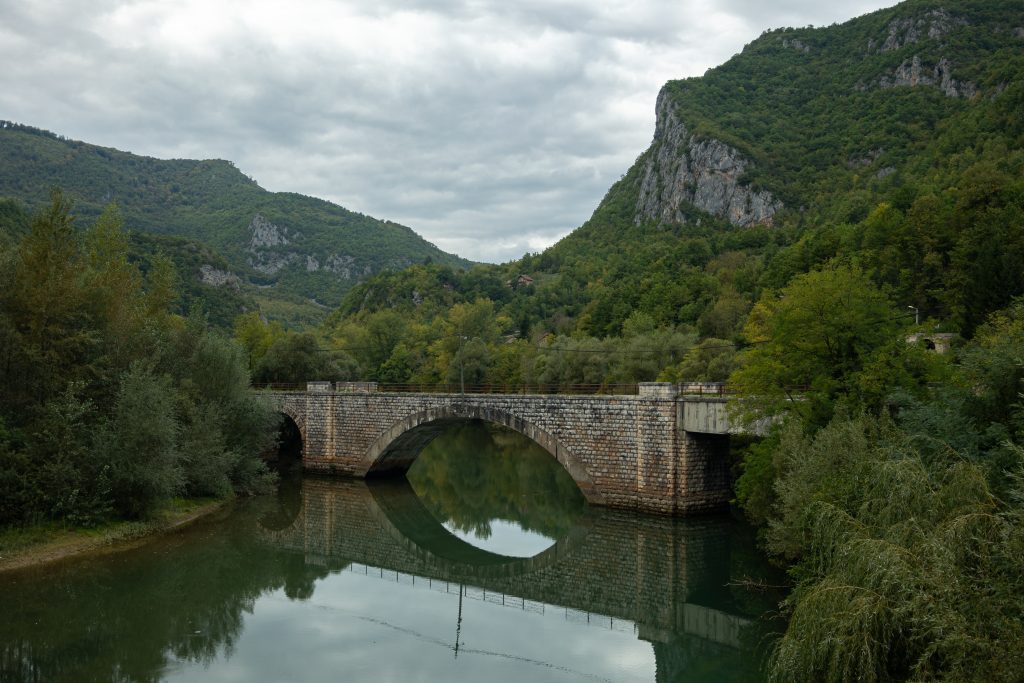
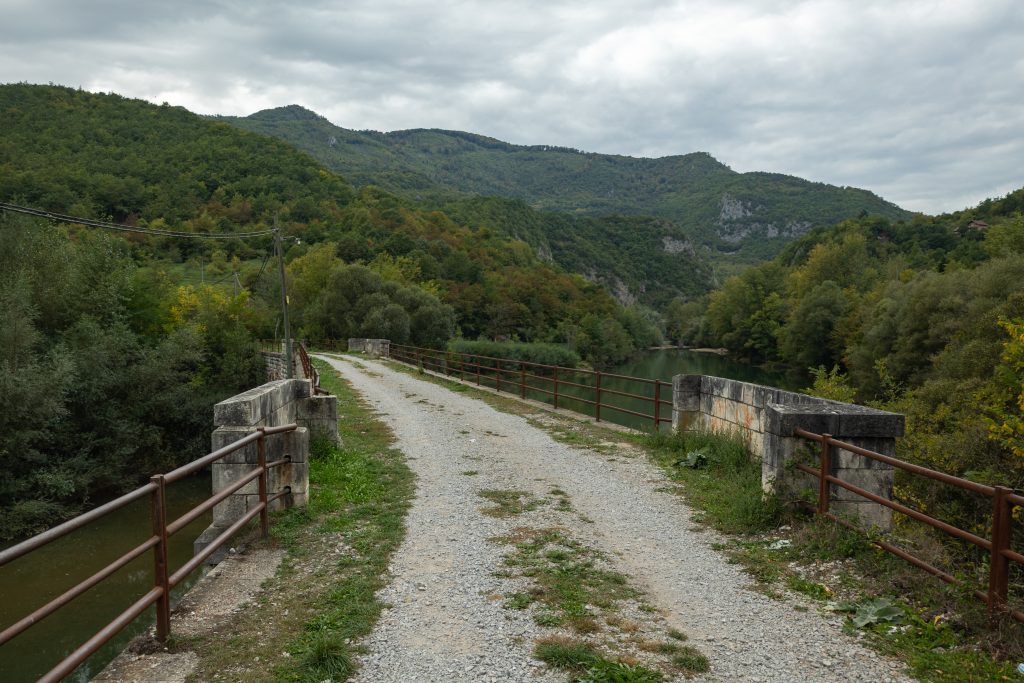
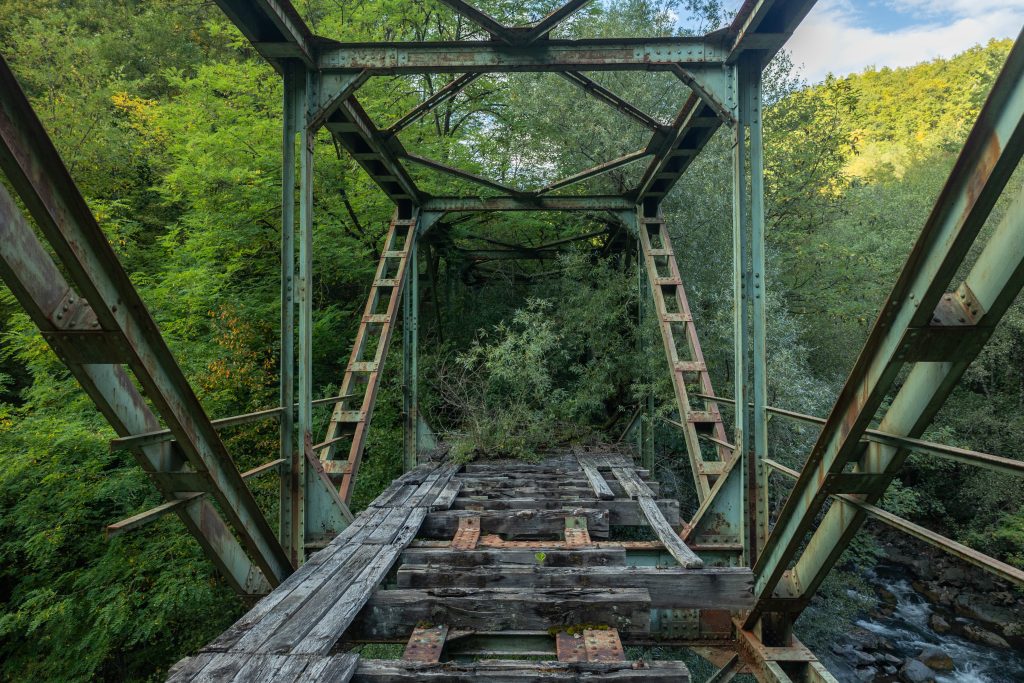
Right after Ustiprača I cycled along what was the railway with some stone embankments, cycling steadily uphill towards Rogatica. I stopped to swim under a small waterfall, located romantically right next to a minefield, hiking a short path along skeleton drawings on signs. The minefield also popped up in my BiH Minefields Map app, so at least I knew it was working. The Ostbahn soon separated from the road and I cycled on a secluded path through a valley, giving me the feel of what was expecting me the next day. The path took me over a small steel bridge and soon neared the road again. I arrived near the Grefov most, a relatively large steel bridge, preserved till today, but completely overgrown. No luck with pictures there.
Railway ran on the right
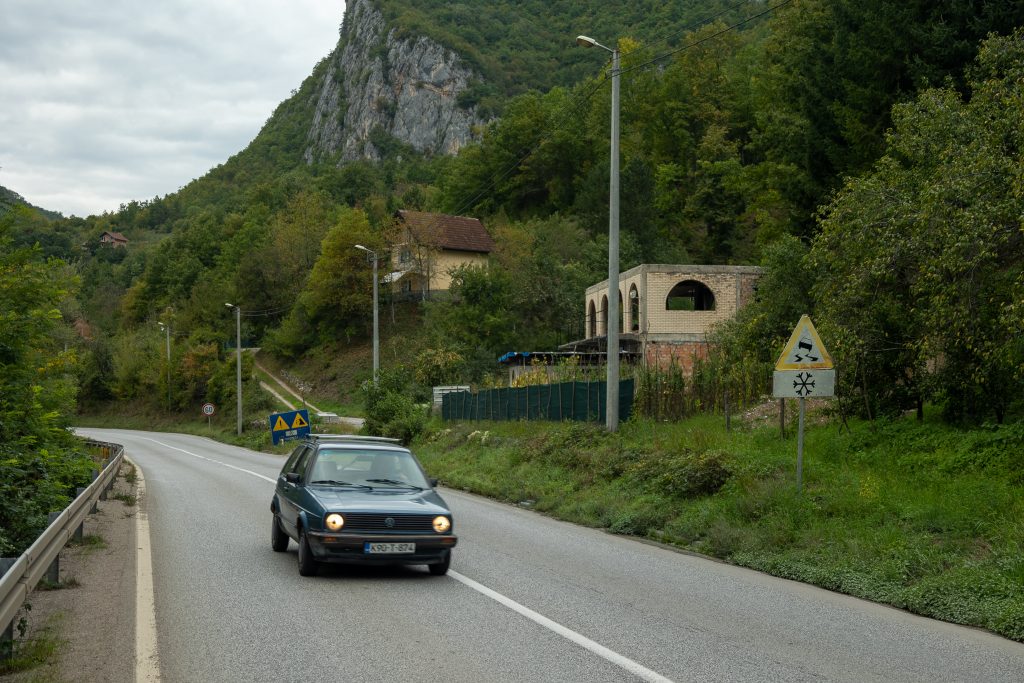
Beautiful nature was a big part of Ostbahn
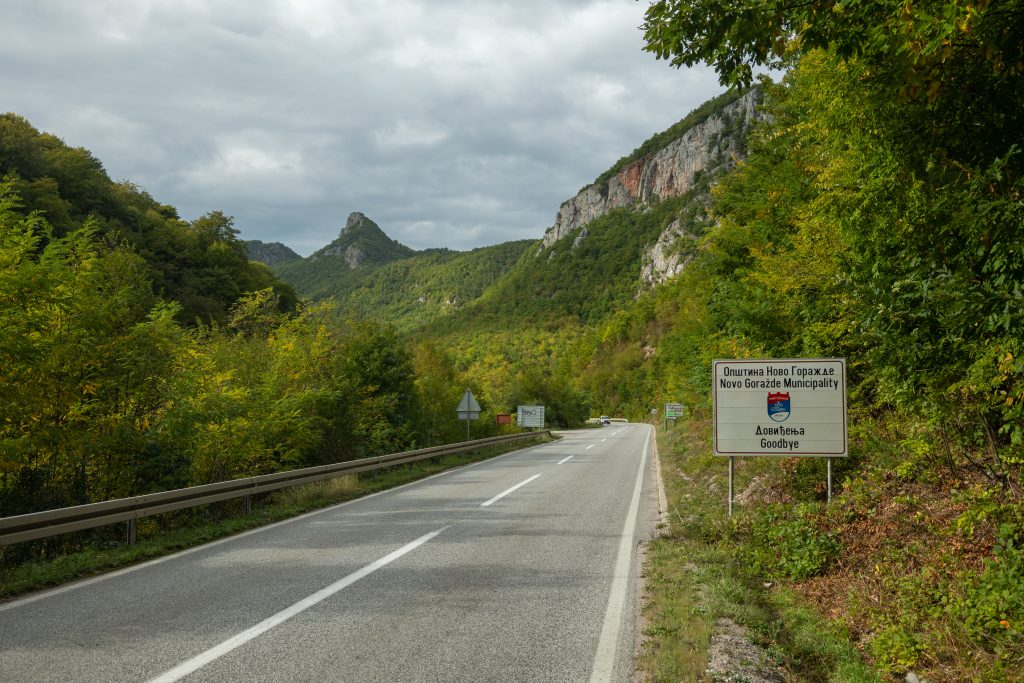
Railway ran under water here.

Waterfall was lovely, minefield not so much.


After leaving the road for a few kilometres, the railway remains became more prominent.
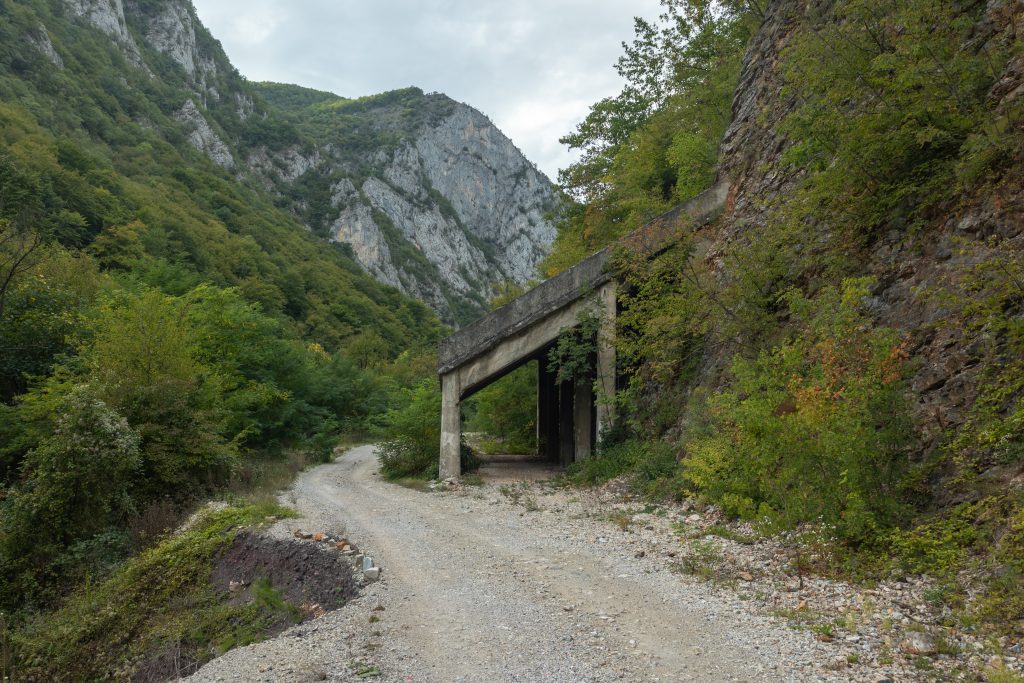
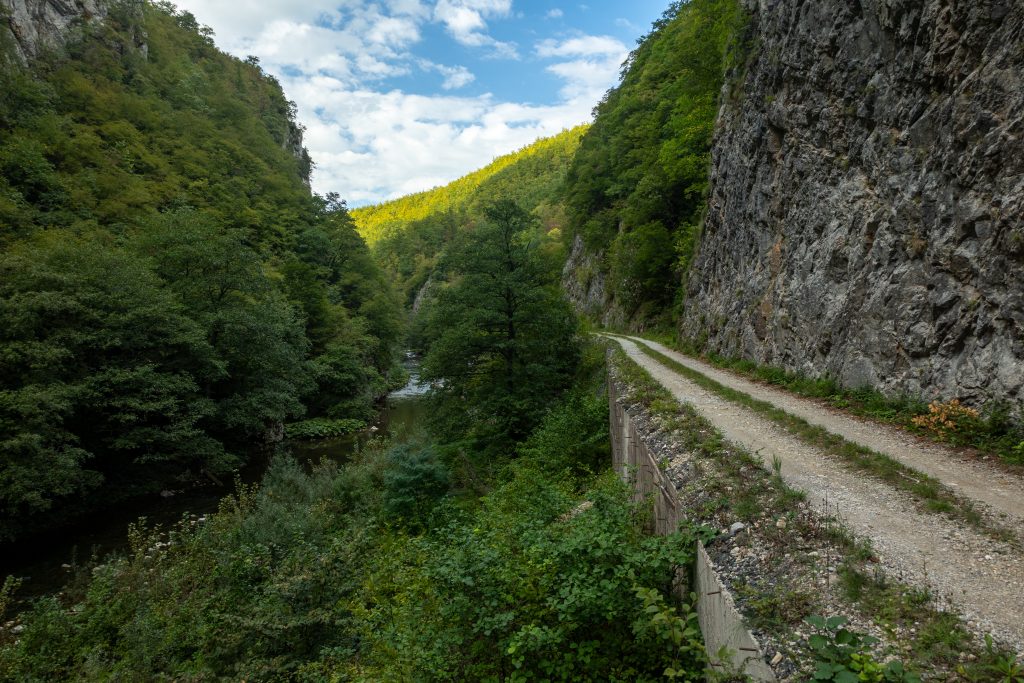
Old bridge still stands
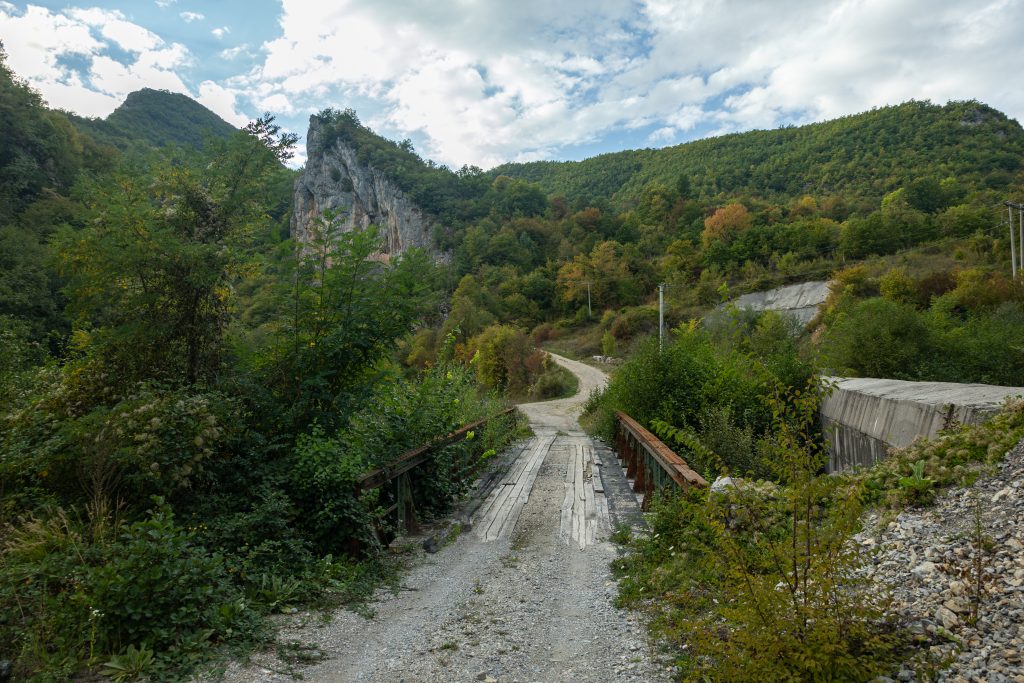
First tunnel gave me a taste what was about to come following day in the Prača canyon.

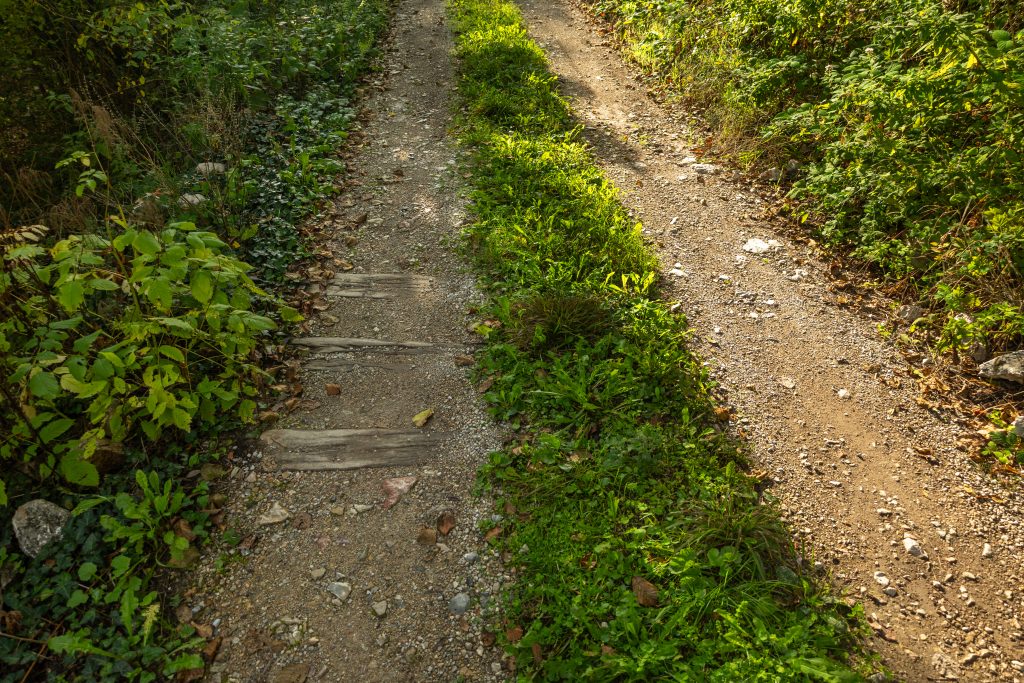
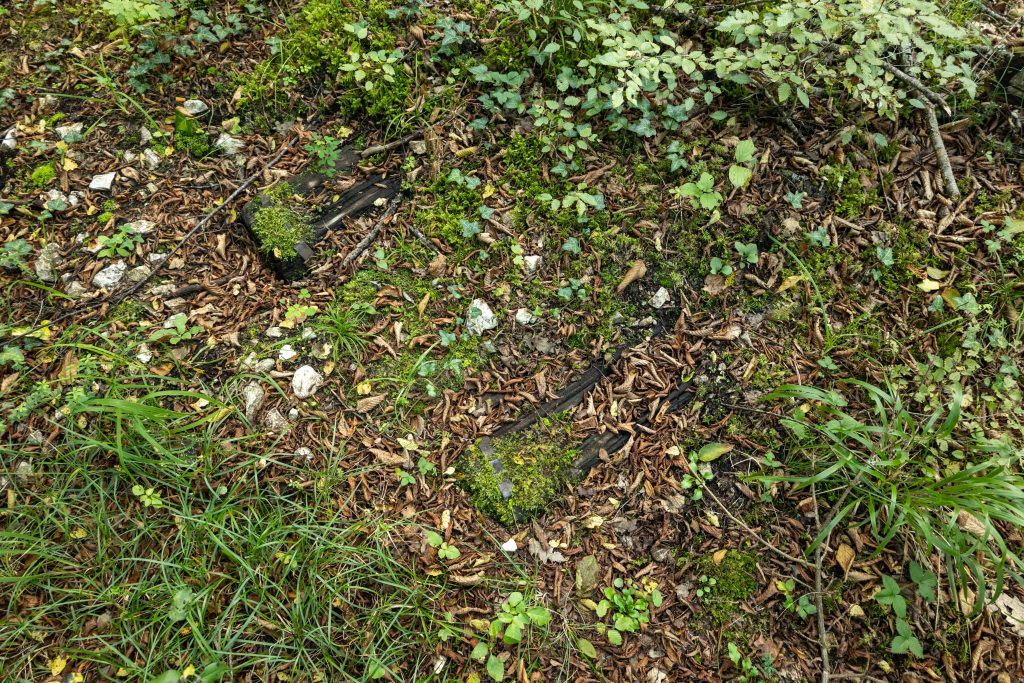
Old sleepers are still visible at some places.
Grefov most (bridge)
And that was it for the day – now I just had to cycle 4 kilometres uphill to a hut which I found on Booking, and lone accommodation in the area. Luckily, the owner met me with a car, loaded me and my bike and took me to the cabin. Vikendica (hut or cabin in Bosnian) was small but fully equipped, with a terrace with views, and elderly couple, a ruin of a house and flock of sheep as neighbors. But rather than just sipping beer, I wanted to see what is left of Borač, a castle and township on rocks above the Prača river, and once a seat of aristocracy that controlled vast lands around. I followed a bull walking the path followed by two barking dogs and soon met a guy who started chasing the bull back, explaining to me that one reckless neighbor lets two bulls roam the village, eat their crops and make a mess. He spoke English well and offered to take me to Borač the next morning, as the sun was setting. I planned to start cycling at 7 AM, so I thanked him and started jogging towards Borač. The unpaved road turned into a path and then disappeared. Borač was on a rocky hill, steep, covered by trees and steep cliffs down to Prača on all sides. Right below, trains used to run. I did manage to find a few walls after scrambling around and eventually headed back at dusk, almost getting lost. I decided to pay a visit to the friendly guy who introduced me to his grandmother and offered me a beer. He showed me how they are making rakija. We had a brief unpleasant conversation about the history in the 1990s, as he was arguing that not everything is black and white and the west paints the Serbs as evil. I was reluctant to discuss this. He eventually shared that both his father and uncle died during the war in a forest just one kilometer away from us, as the front line ran near Varošiště. That made me realize just how awful and recent history this beautiful country has.
On the way to Borač. Start of the Prača canyon is below.

Bull & dogs.

Not much to see at Borač.

He did manage to calm me down a bit – next morning, some 21 kilometers through the abandoned valley of Prača canyon awaited me. Besides regular nervousness coming with cycling through a dead valley with no signal and 23 unlit tunnels, I was mainly scared of bears. The idea of meeting a bear in the forgotten valley was frightening. No signal, no people, no help. And no light in the tunnels, with the longest one being some 400 metres. Could an abandoned railway tunnel be a good place for a bear to shelter? But the guy told me there were no sightings of bears in the area in the last 4 years, so I slept well and in the rather cool morning entered the foggy Prača canyon in Mesici, at 7 AM, where workers were harvesting wood and no traces of the train station could be found. The valley is deeply cut and riding through in a train must have been astonishing. Today, there is just the path, steep cliffs, 23 tunnels and greenery. And luckily no wildlife. Still, I ended up shouting in every tunnel to warn any animal that I was coming, for both of us not to be surprised. Both bridges over Prača near Mesici are long gone.
Woodworks in Mesići, station was nearby


Prača canyon. Bearfree (thank god).


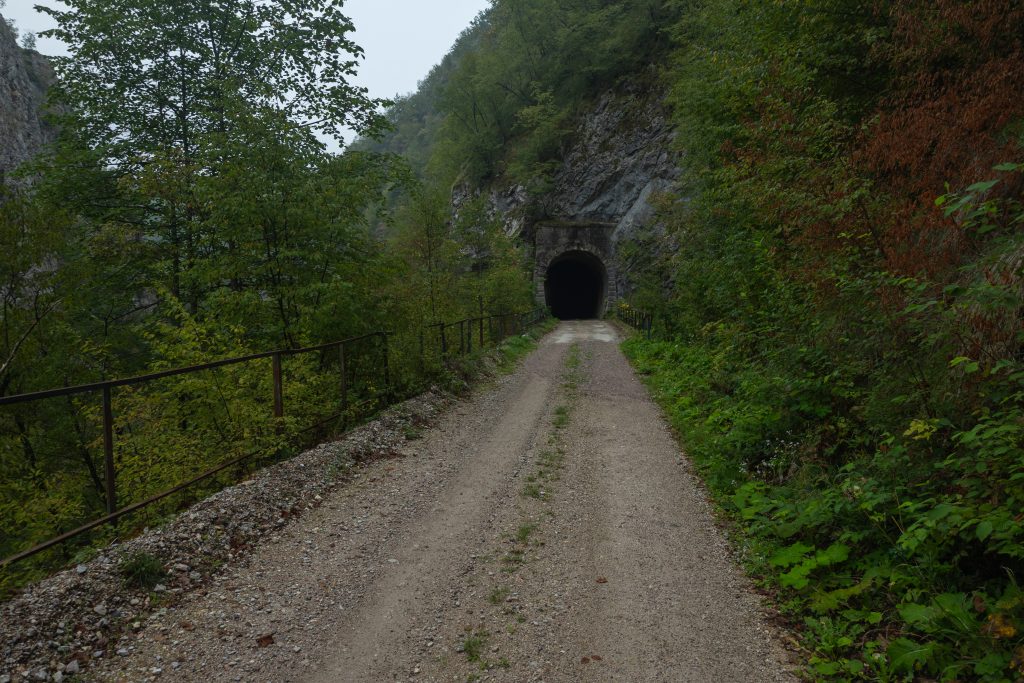
This concrete thing appeared several times near the railway bridges, I saw one in Zenica too. Possibly for some protection.

Tunnels, tunnels, tunnels.


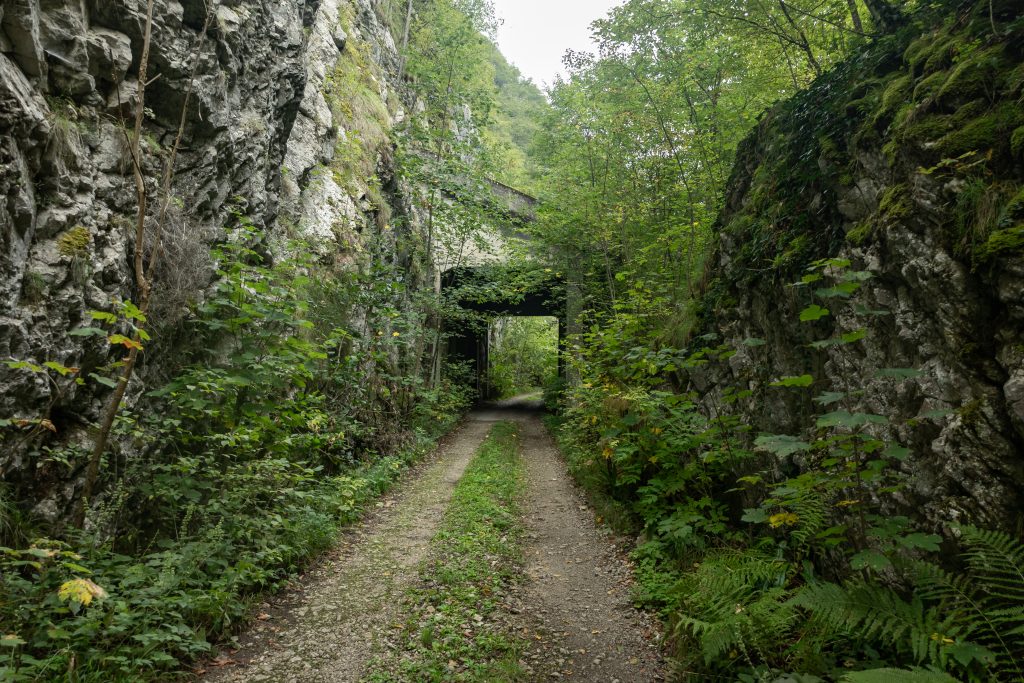
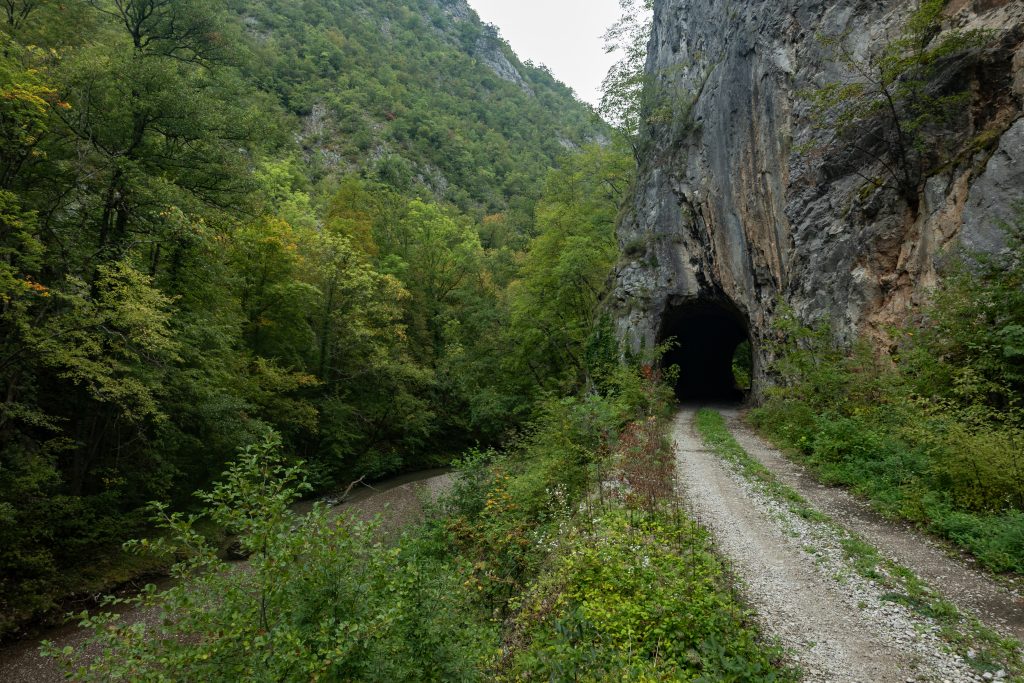
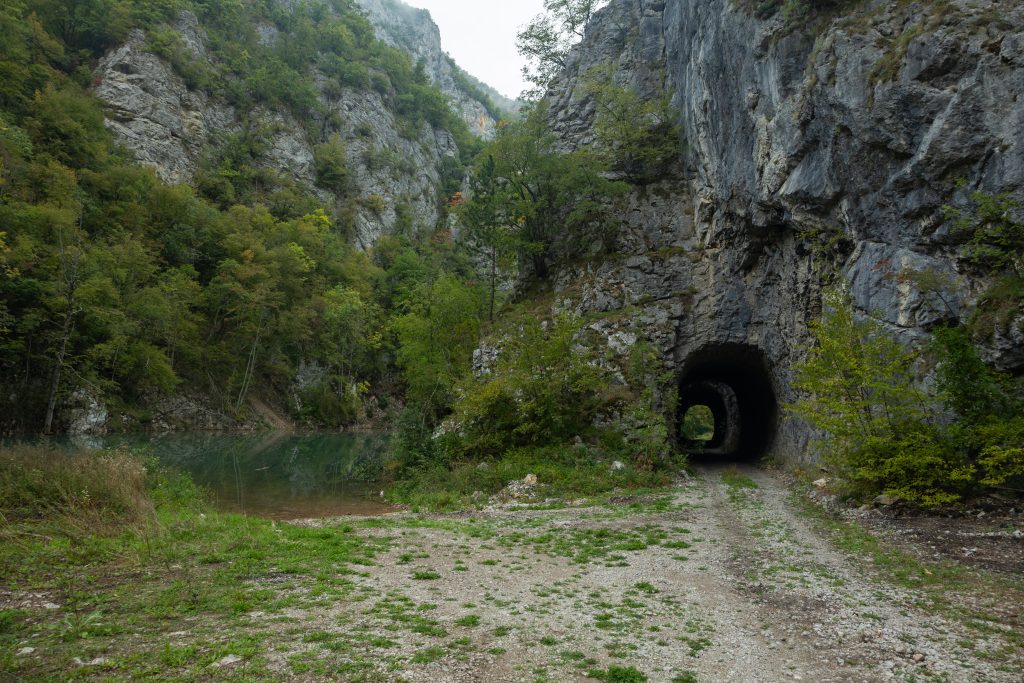
The last river crossing, close to Hrenovica, used to have a remaining bridge which was used by cars. Back then, the Prača valley was occasionally used to drive through, marked as M5 road. Those days are, however, over since 2017, when the bridge collapsed under an overloaded truck. So I was not exactly sure what I was getting myself into, and hoped that in the worst case I will cross through the river barefoot. The idea of cycling the whole canyon back did not seem appealing. I rode quickly through the canyon. Tunnels were so frequent I did not even turn off the headlamp. The longest one felt like an eternity. I did miss one station, but arrived at Banja Stijena, not finding anything. Not even one wall. Just an overgrown pile of rubble and stone wall at the opposite.
Banja Stijena station, a peculiar place as it served no real settlement (the purpose was probably to allow trains to pass each other), is completely gone. Not even a pile of rubble was visible.

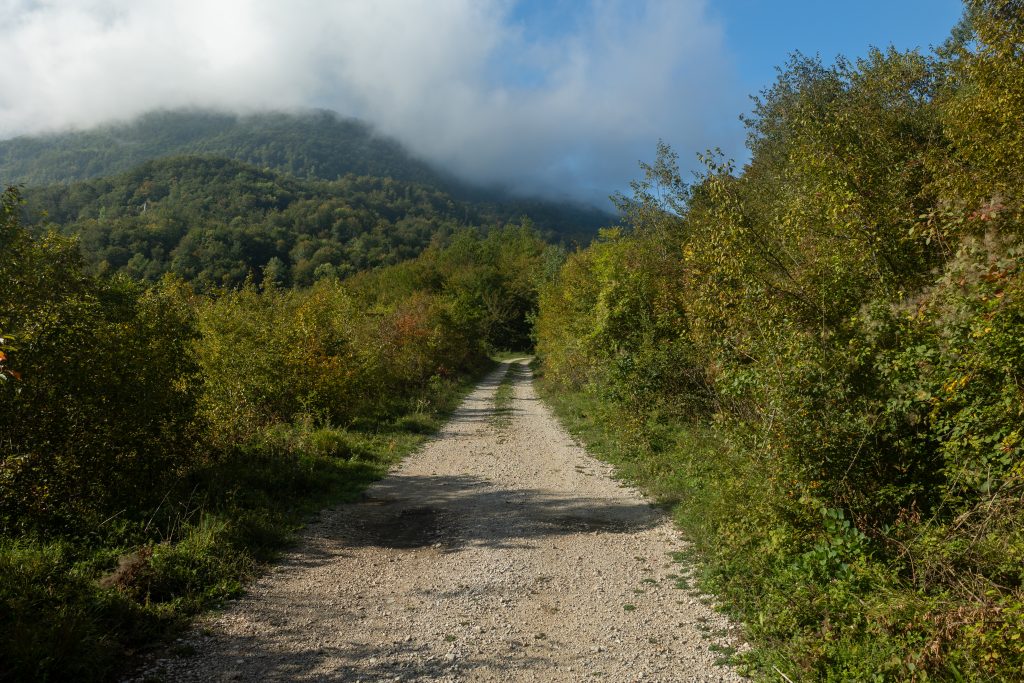
Banja Stijena (or any other station in Prača canyon, actually) made little sense. No settlement, no industry, nothing. Just two parallel tracks and a station building with some refreshments. I believe that the point was to have a place for opposite trains to pass each other, rather than to serve those few houses high above the canyon. After Banja Stijena I soon arrived at the collapsed bridge and tried to jump across stones, eventually managing to soak both my shoes in the river. But soon after the crossing, I emerged from the canyon, after some 21 kilometres. Just as I cycled out, sun was breaking through the clouds, and the Ostbahn trackbed I cycled on became covered with golden sunlight of the late summer. It felt highly symbolic, coming out of the gloomy, foggy canyon, to civilization again. The canyon was still covered in fog, but I cycled west, towards Hrenovica.
Bridge is gone. Courtesy of a Serbian trucker.
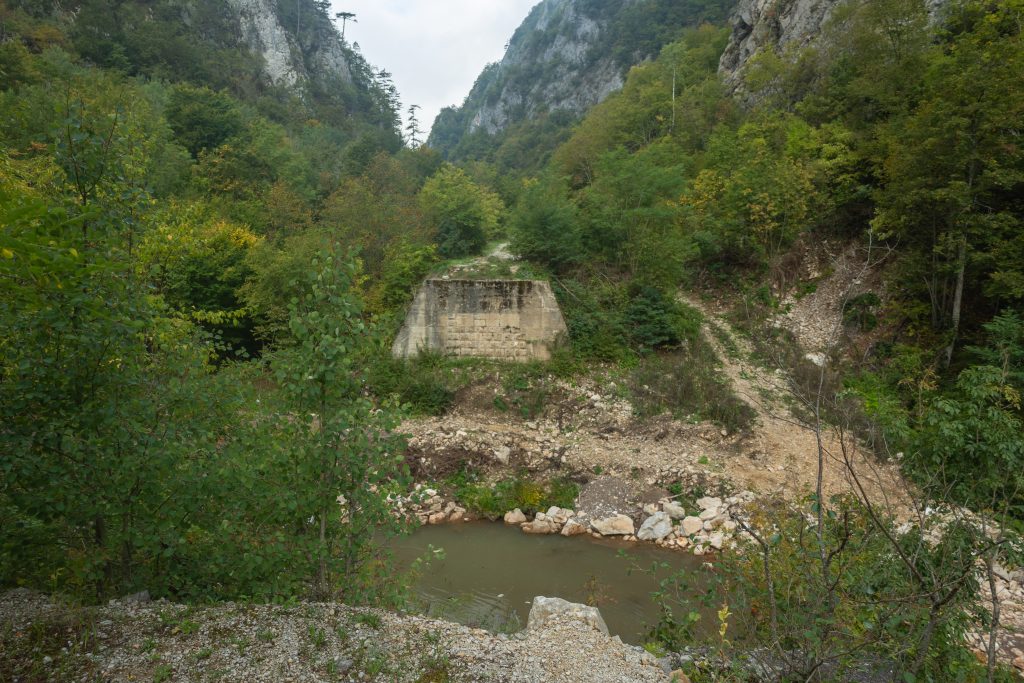
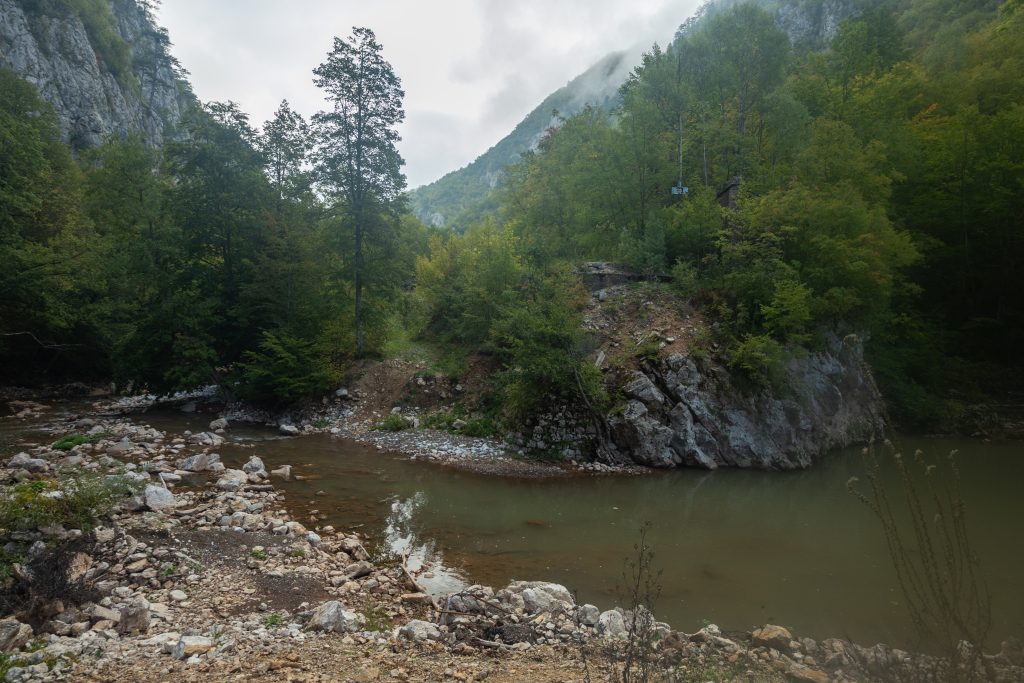
Moment I left the canyon, sun appeared. It was highly symbolical as I was about to enter a civilisation again after 25 km of empty signal-free canyon.
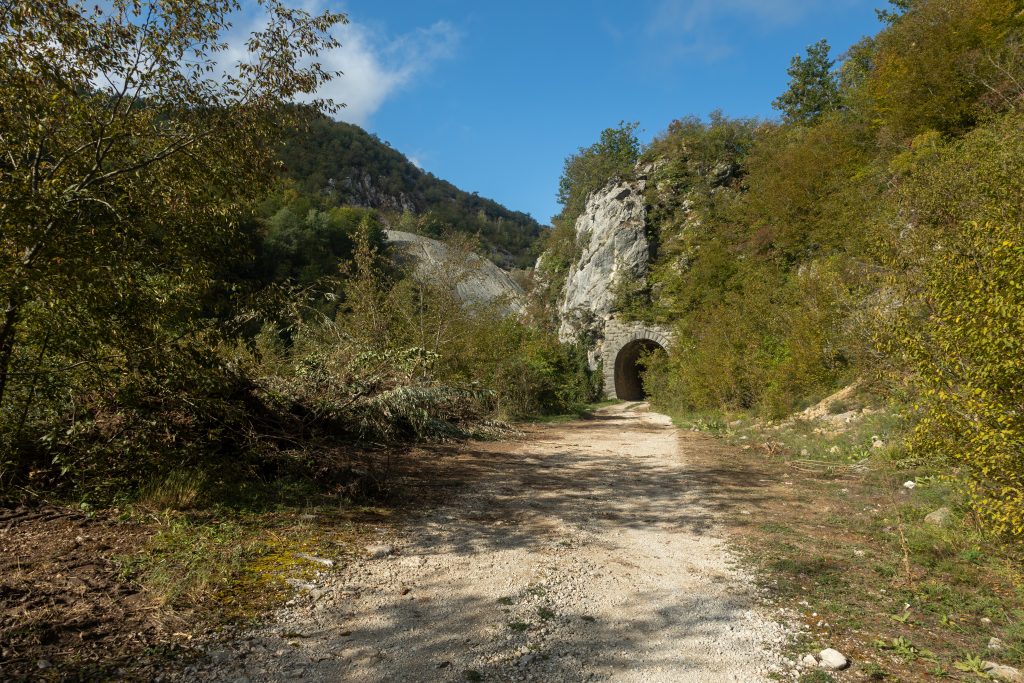
Ah yes, one more tunnel.
Next stop was Prača. Strangely it seems there was no stop in Hrenovica. I shall research this, but my mother in law told me that when going to visit her aunt, they had to get off the train in Prača and walk some 10 kilometres to Hrenovica, which seems odd – there were stations serving basically nobody in Prača canyon, why would not one be here? The train station building in Prača is still standing, just opposite of the abandoned gas station. Completely covered by trees, and falling apart. Continuing through the valley, I stopped near an old viaduct, respectively the walls that remained, and got intensively stared at by a local woman living in a house underneath. On top there was a peculiar sight: it served as a parking lot of car wrecks that would be seen as valuable veterans in the west. Continuing on top, vast woodworks of Podgrab appeared on the left. The railway was running right above the area of the original Feltrinelli & Co forestry company, which is still functioning in some shape till today. Needless to say, the vast network of forestry railways is long gone.
Railway came from the left.
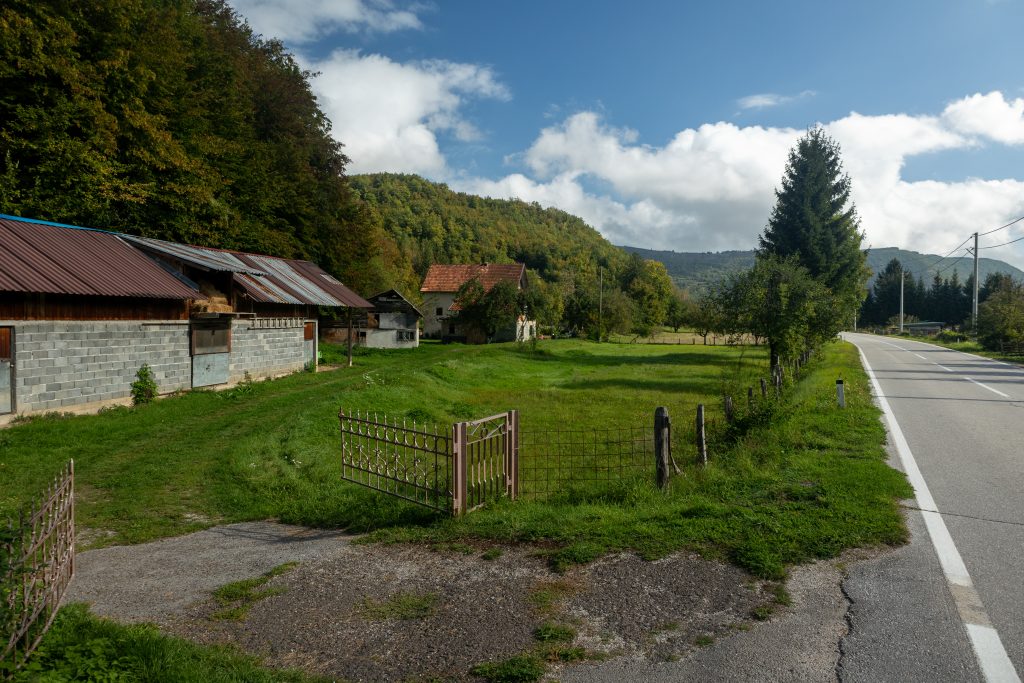
Another one of these
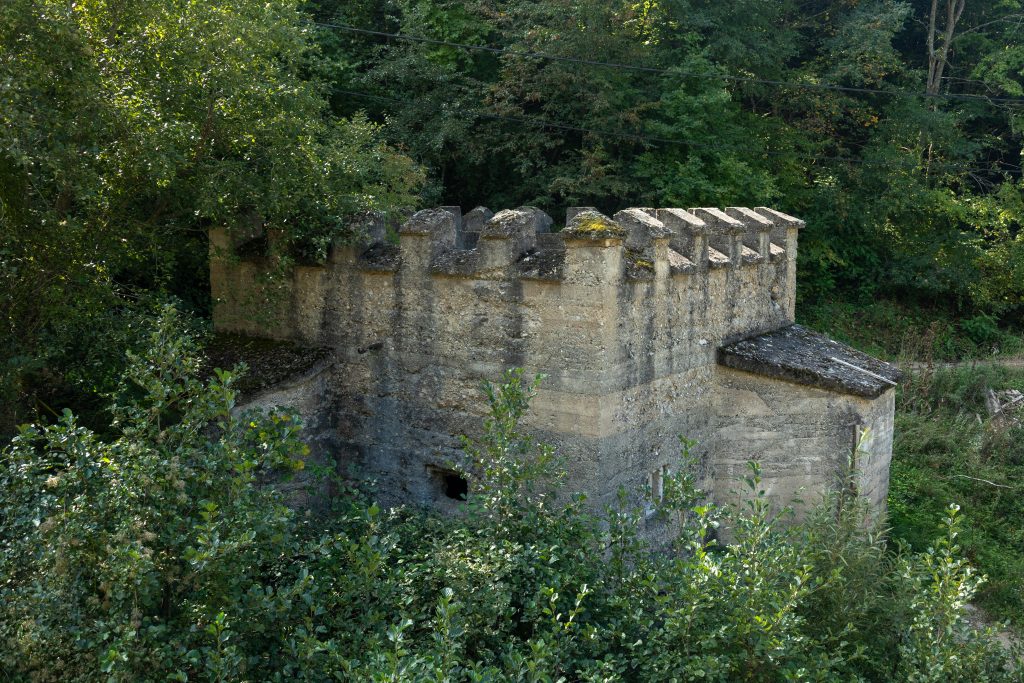
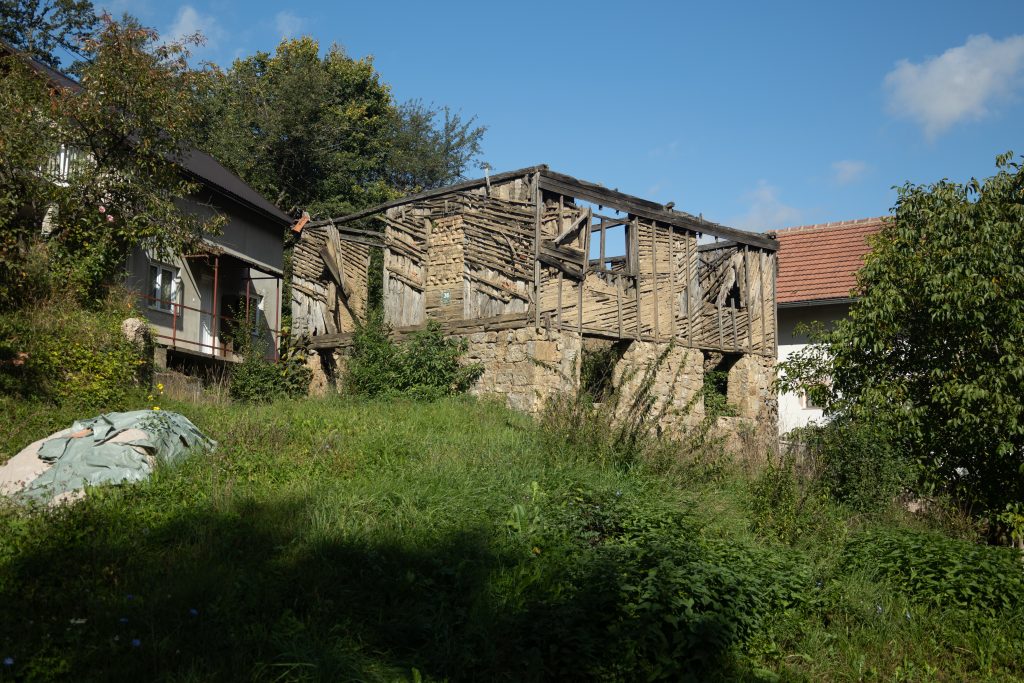
Old ways of building visible.
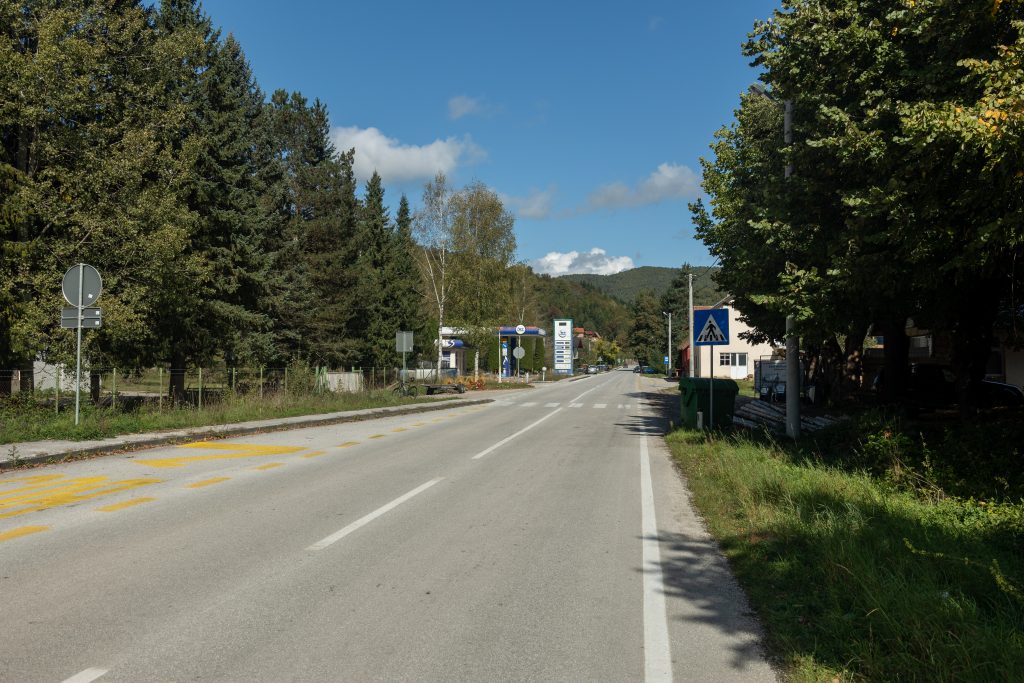
Prača. The railway ran directly where the road is, the train station stands on the right hidden in the trees.
Prača train station

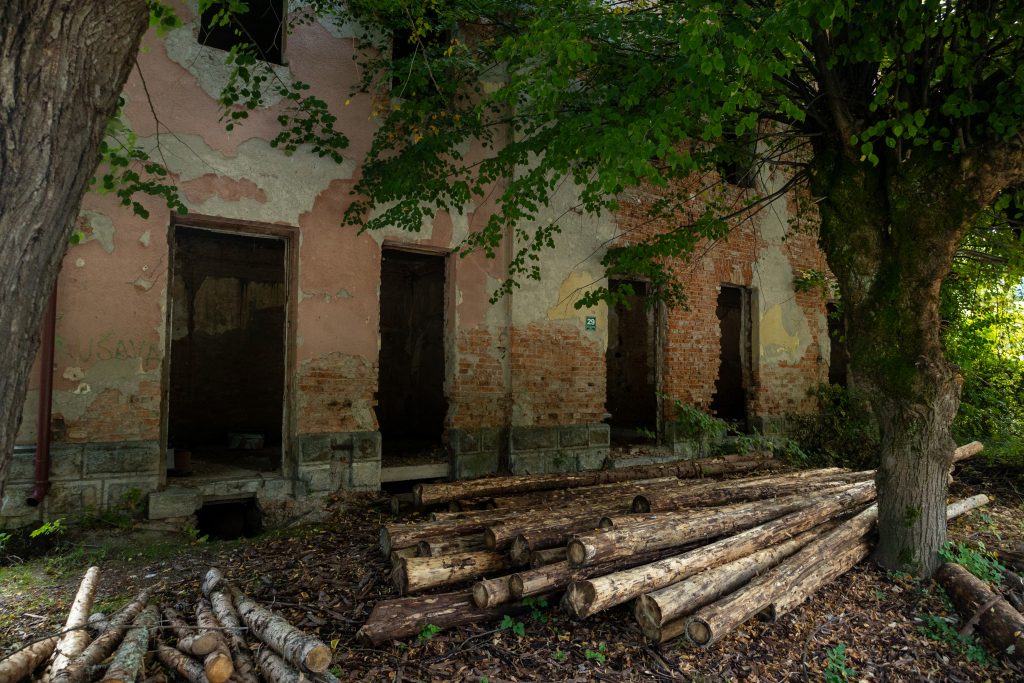
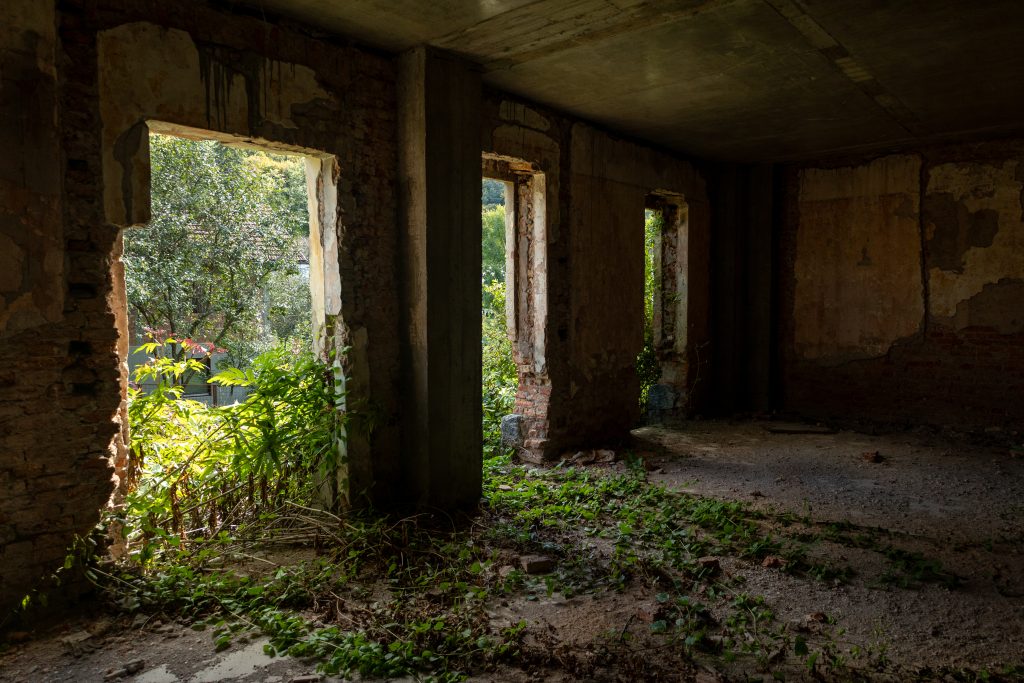
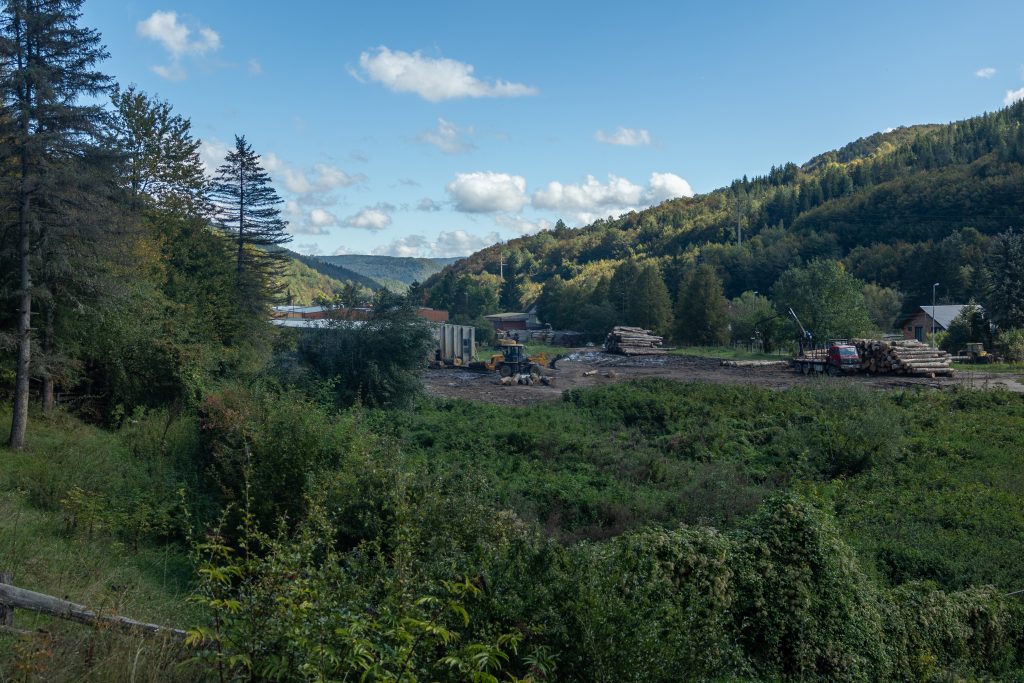
Wood is still processed where large company Feltrinelli was in Podgrab, but much scaled down.
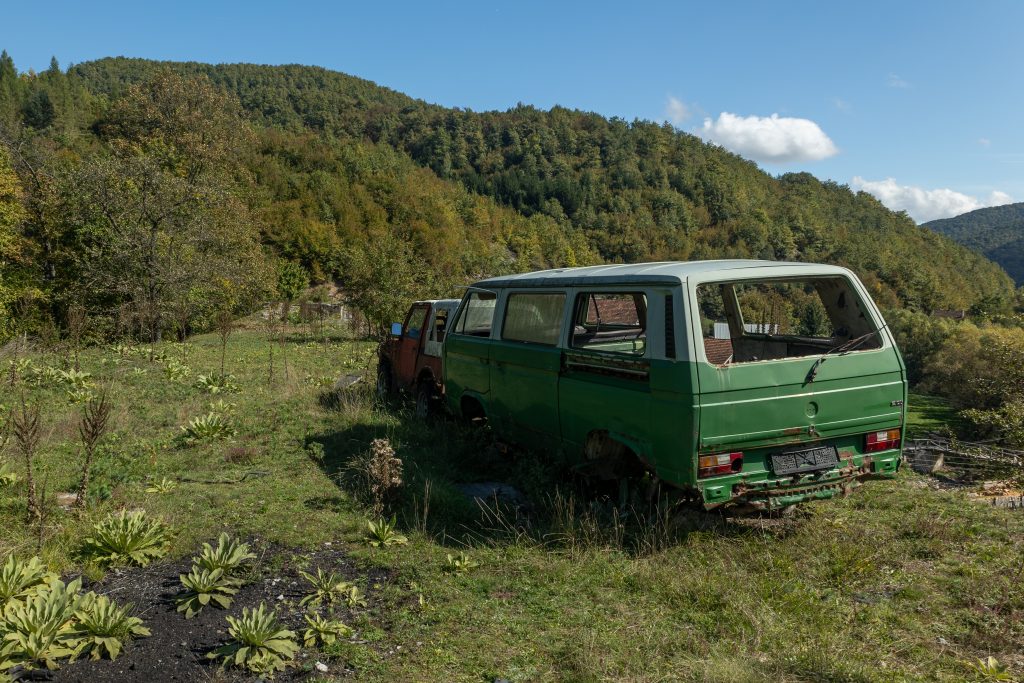
Viaduct in Podgrab with old cars on top

“The best grapes of my life” I thought, as I was feeding myself some sugar from Podgrab convenience store before cycling up to the highest point, Stambolčić pass. There were some other points of interest along the way: more walls of abandoned viaduct in Rakite, preserved and inhabited train station in Sjetlina with still existing railway shack I saw on old pictures, located high above the road, and final tunnel under Stambolčić where the railway joined the road again after climbing up the hill with loops in the forest nearby. The entrance to this tunnel served as a shooting range. Stambolčić station itself was also in a good shape. The entrance to Stambolčić tunnel, the longest one on the whole Ostbahn, was covered in garbage.
Sjetlina
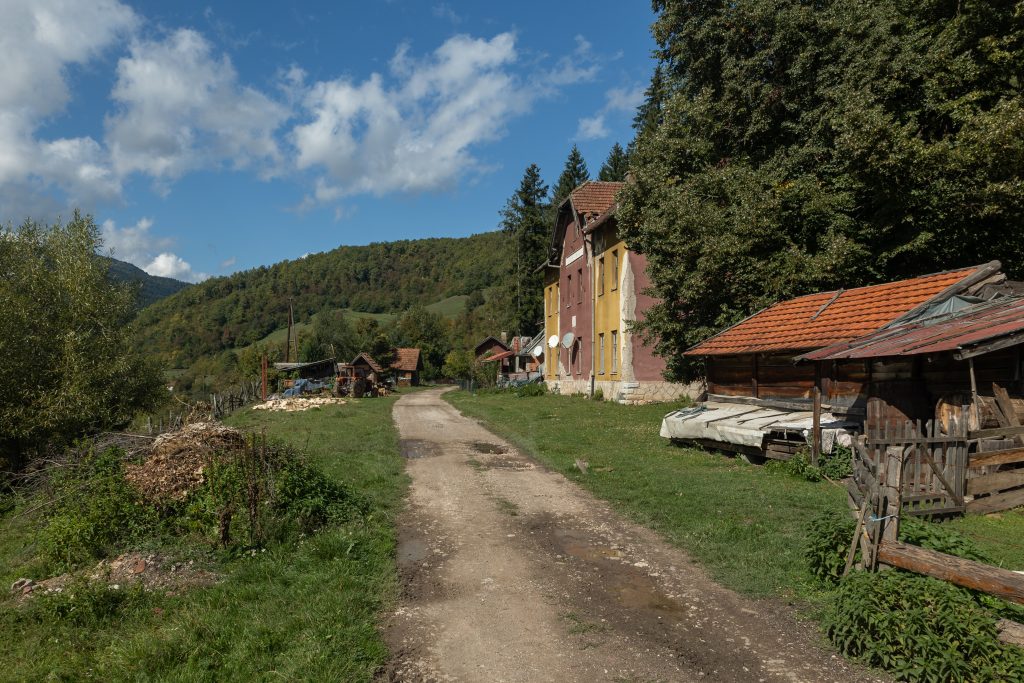
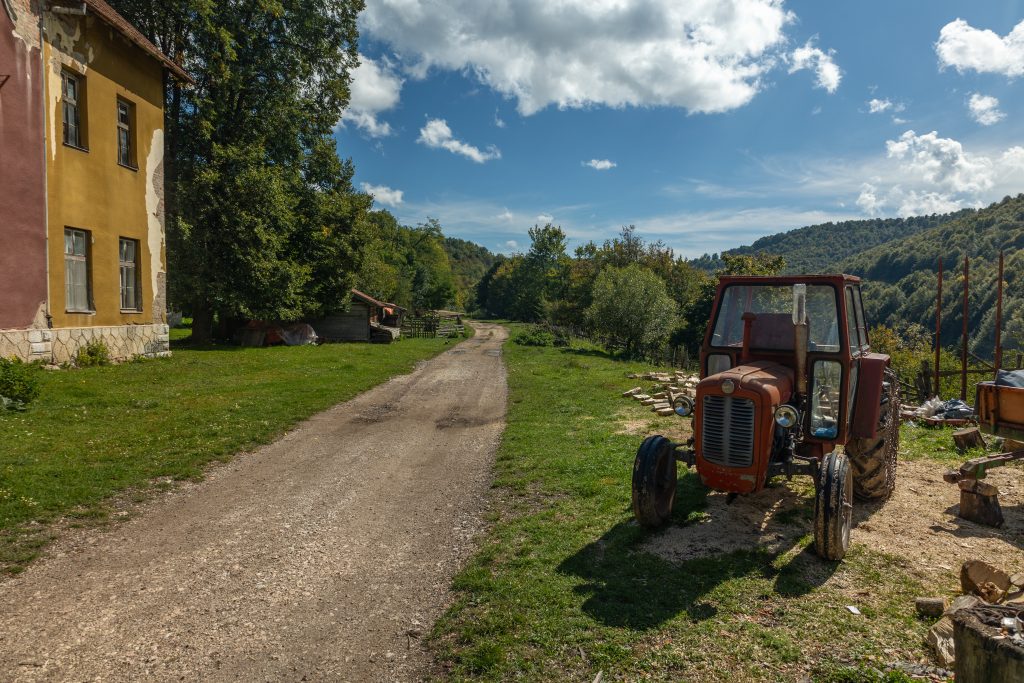
Rakite
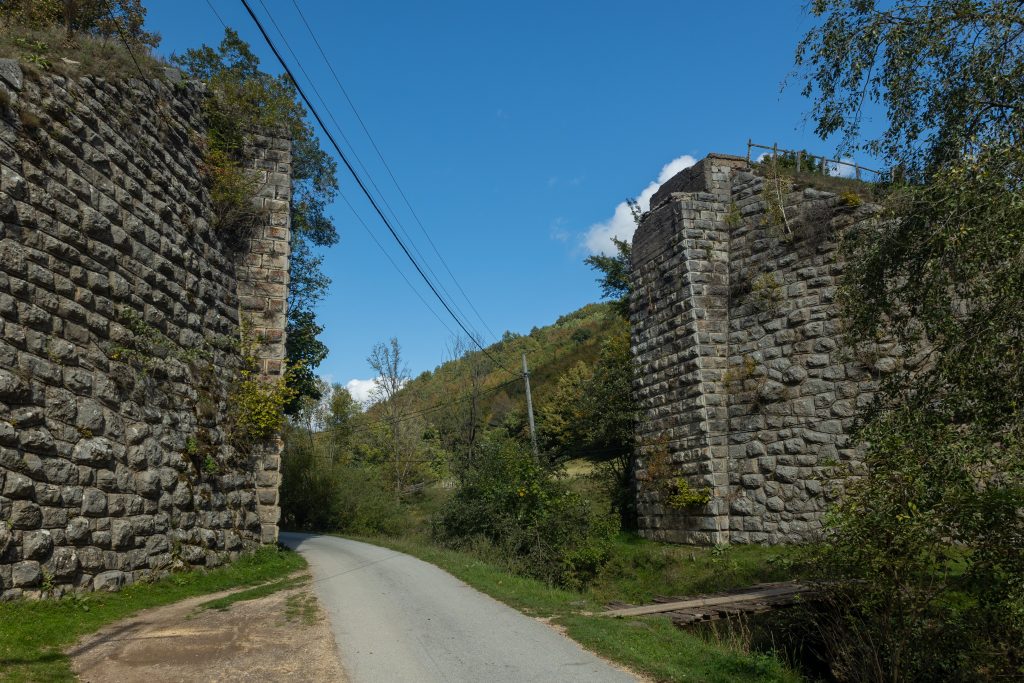
Stambolčić station
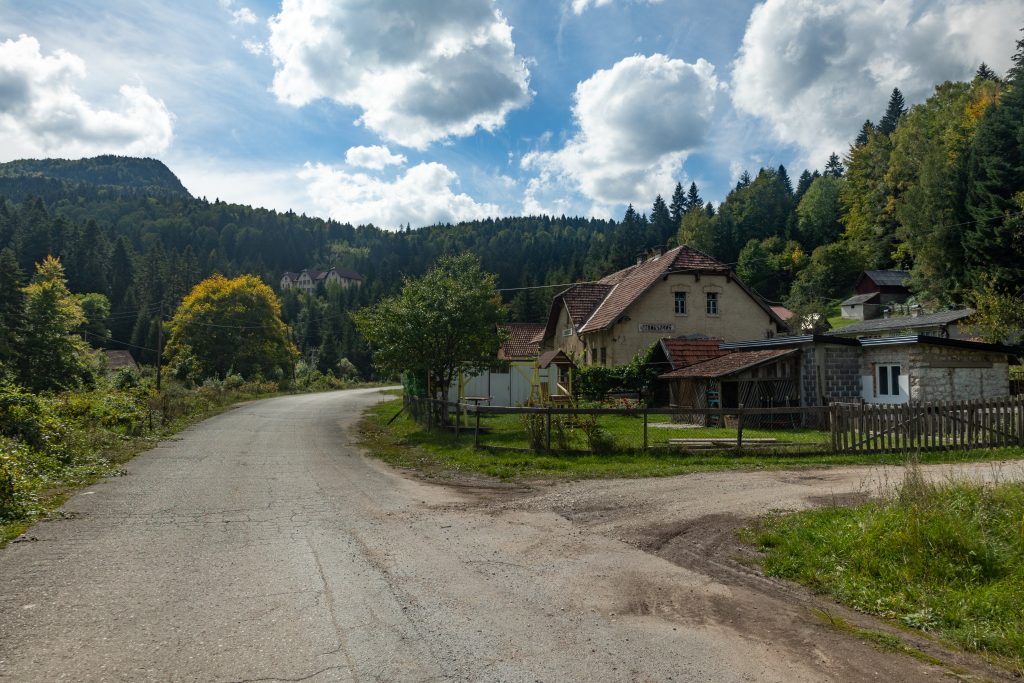
Both Stambolčić tunnels. There was no road in the past, only railway, road was added much later. Previous paths went through other ways.
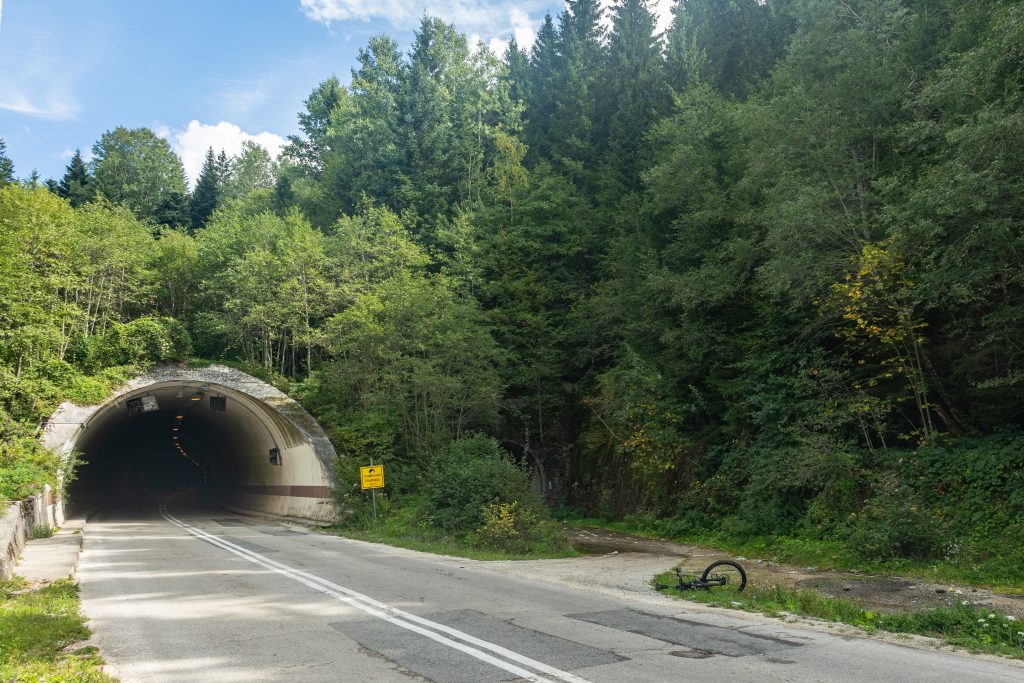
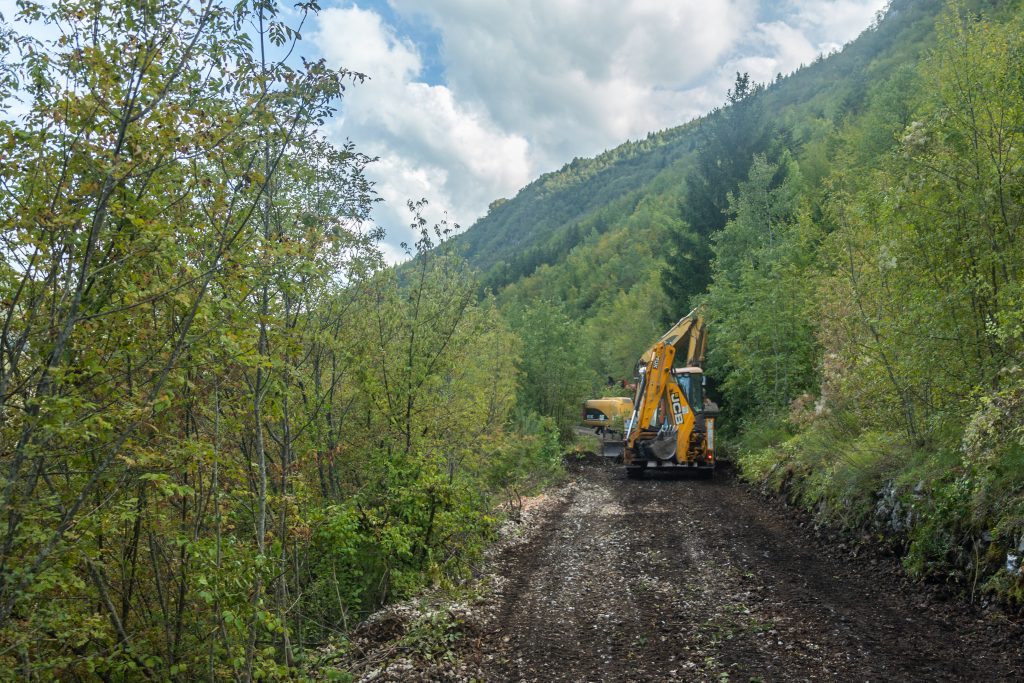
After cycling through the tunnel I was rewarded with a long downhill all the way to Pale. I took some pics of Pale train station and realized how much better those settlements look closer I got to Sarajevo. Pale looked decent, maintained, even with some new construction. You could smell the money. Compared to let´s say Ustiprača, the difference was noticeable. And the nicest surprises were still awaiting me: renovation of the whole section of Bistrik – Pale to a modern cycling path and carefully restored Bistrik train station (I must admit in a high standard, to former Habsburg beauty and glory). I snacked right near the sign forbidding entry to the still-under-construction bike path and went along the third and final river of Ostbahn, Miljacka. There were several places where construction was undergoing: strengthening walls, putting up lights in tunnels, finishing the upper layer of crushed makadam. Workers did not care that I cycled there already. Bridges were restored and painted bright green, ubiquitous fence was added almost everywhere to the point it seemed redundant, and tunnels were well lit. I did not mind not being able to see this section before the work started. I knew the feel was probably similar to what was in Prača canyon and was just happy the works are being done. I talked to one worker and he told me that after they finish next year, there will be an electric bike rental shop, cafe, nice resting areas etc.
Pale train station
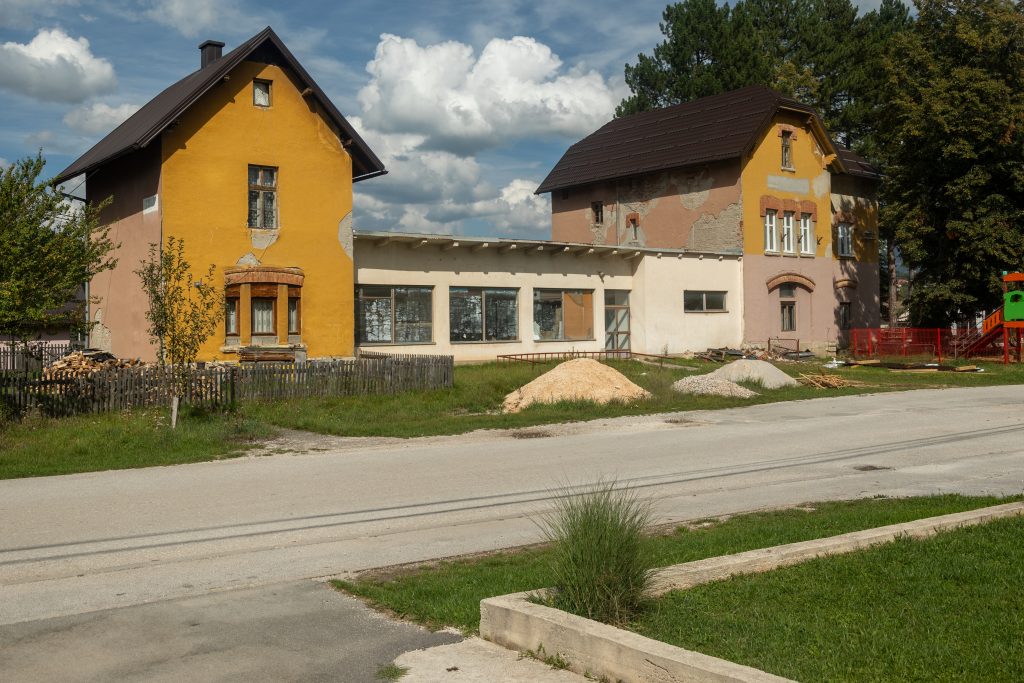
Pale – railway went across this meadow.

And where the road is, direction Sarajevo.
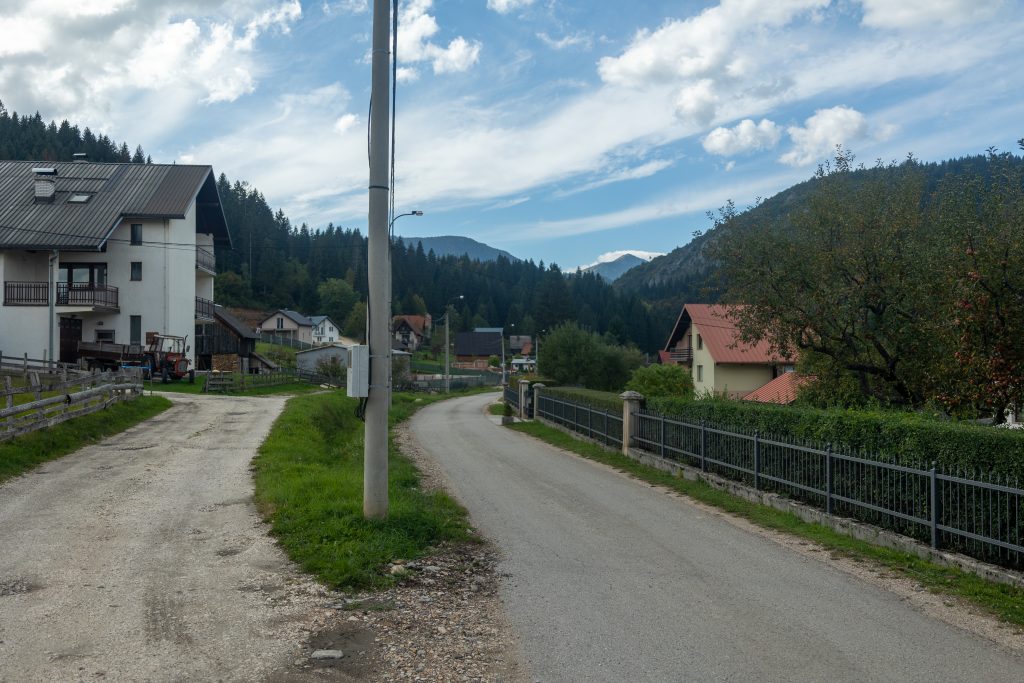
Canyon of Miljačka between Sarajevo and Pale.
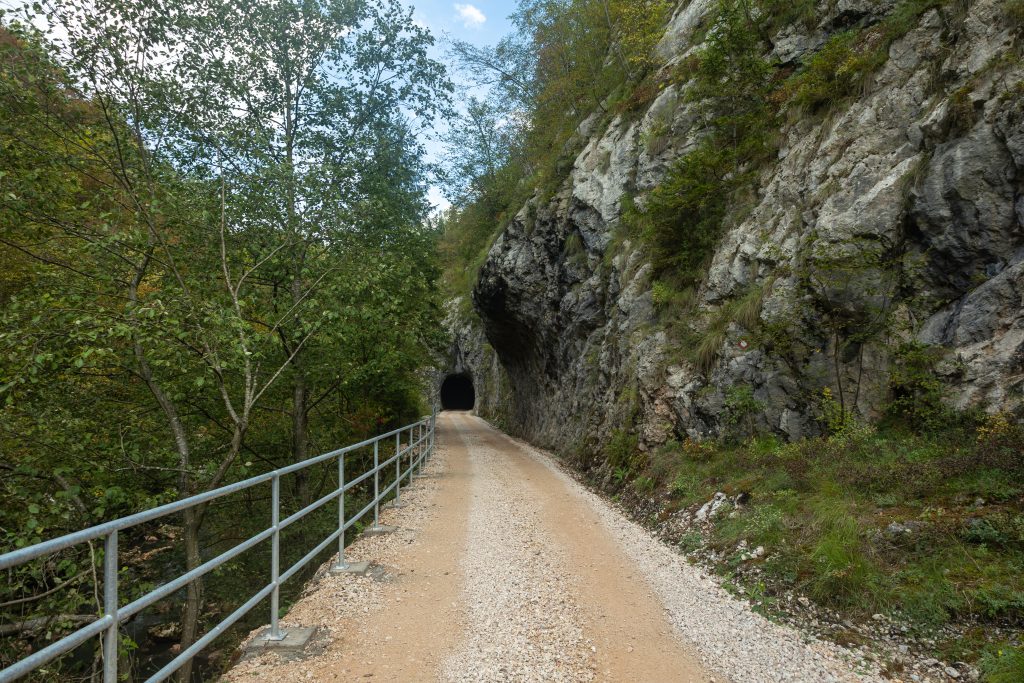
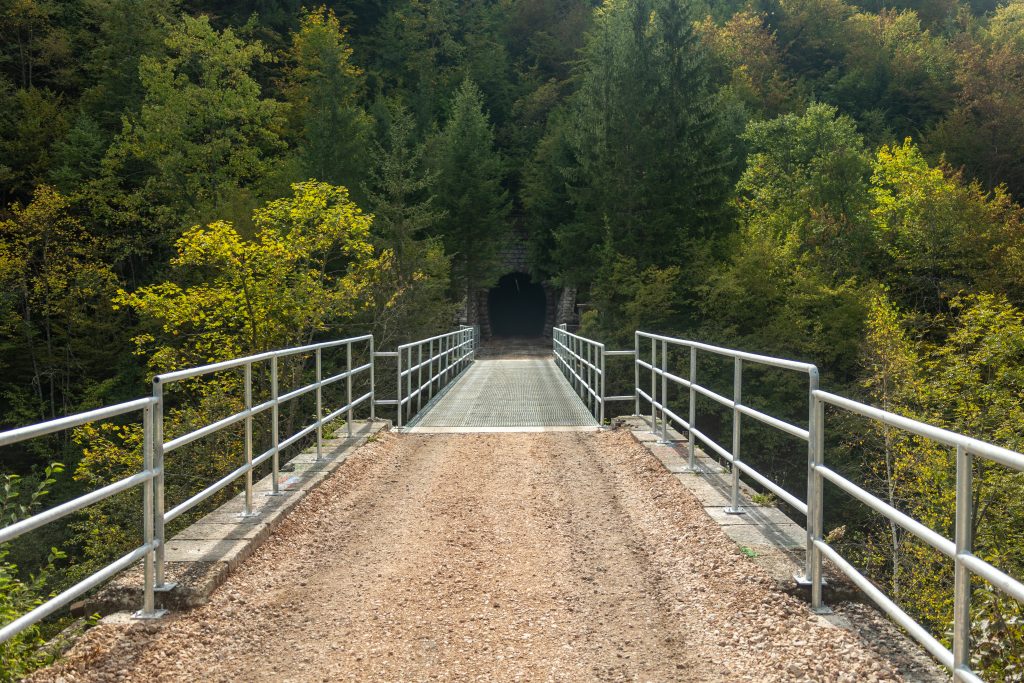
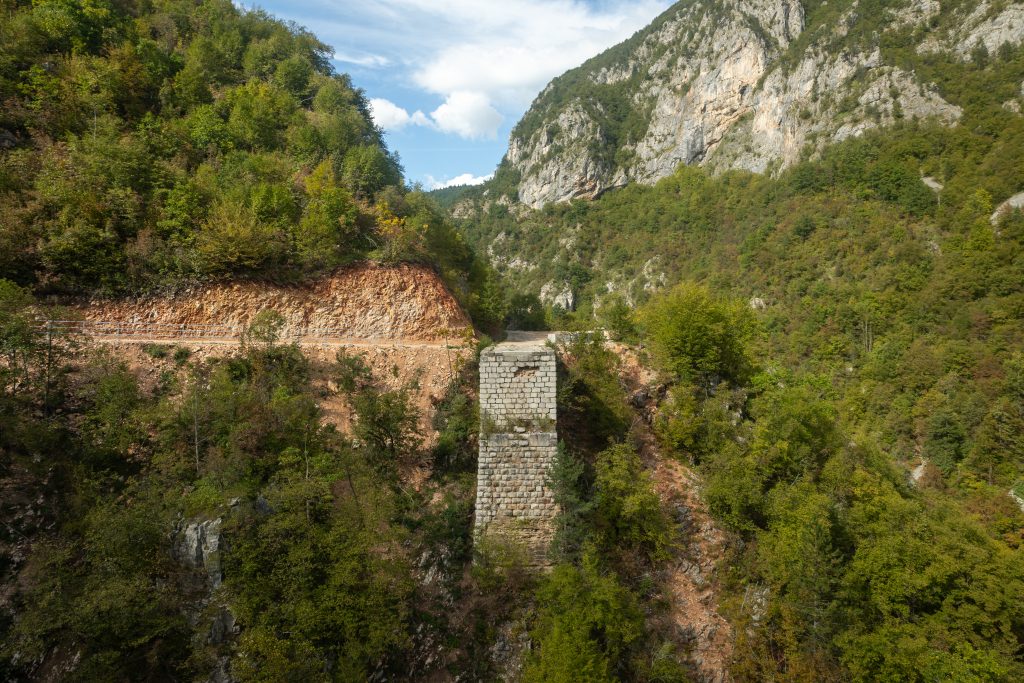
Construction is ongoing, but workers did not care.
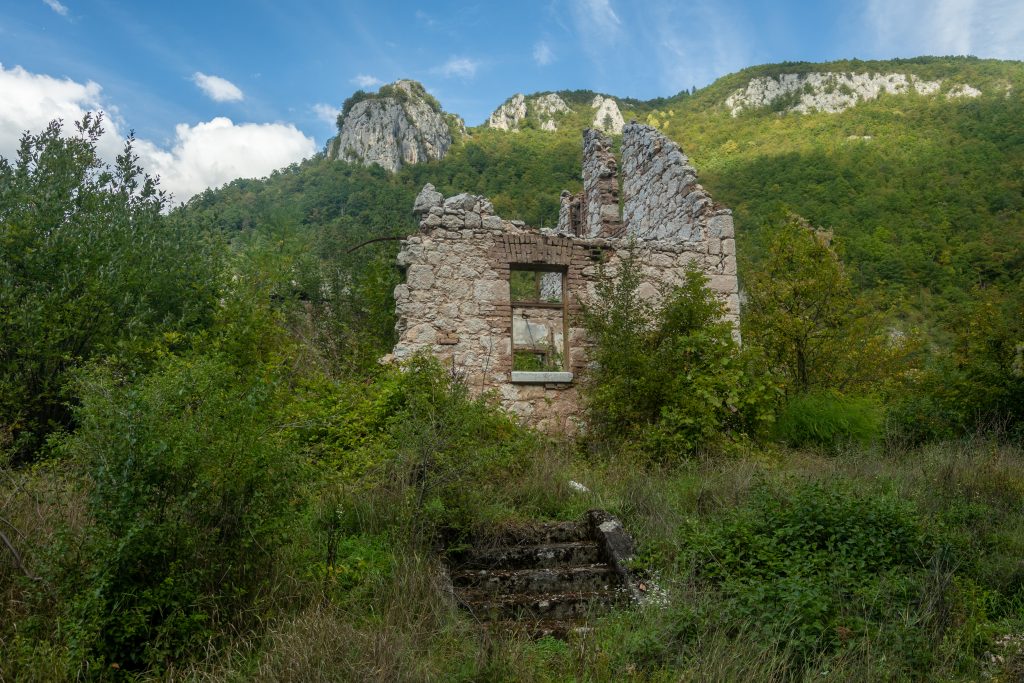
Remnants of station Dovlići (probably)
It was a nice ending of the two day 135 kilometres cycle along the Ostbahn. Probably also better to end it on a positive note of the new bike path and a renovated Bistrik rather than the depression that Višegrad station is. Travelling to Zenica turned out to be less interesting and enjoyable than I expected. The train conductor, a grumpy guy, was giving me a hard time because of my bicycle even though I bought a separate ticket for it. The train was small and dirty to the point you could not see through the windows. It was sad to see how neglected railways in Bosnia are, as all the money for infrastructure is invested into new highways.

Leave a Reply